




When Injection Molding Defects Point to a Material Issue




When injection molding defects keep recurring, the root cause may lie not in tooling or process settings, but in polymer materials quality, sourcing, or compliance. For heavy industry stakeholders navigating energy transition, recycled plastics, and carbon neutrality goals, understanding how material variation affects part performance is essential for faster technical evaluation, smarter procurement, and lower operational risk.
Why recurring injection molding defects often start with the material, not the machine
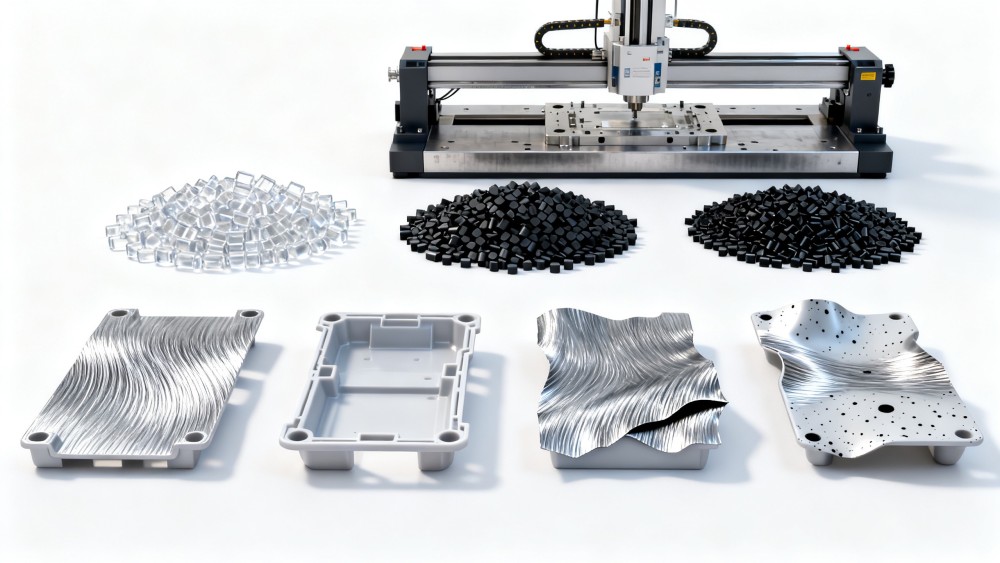
In many factories, the first reaction to short shots, warpage, brittleness, silver streaks, burn marks, or unstable dimensions is to adjust temperature, pressure, cooling time, or mold venting. That is reasonable during the first 1–2 rounds of troubleshooting. However, when the same defect pattern returns across multiple runs, shifts, or resin lots, the investigation must move upstream to the polymer itself.
Material-driven injection molding defects usually come from four sources: inconsistent resin grade, contamination, moisture imbalance, or formulation drift. These issues become more visible when processors use recycled content, bio-based polymers, imported compounds with variable documentation, or multi-source procurement strategies designed to control cost during commodity volatility.
For technical evaluators and quality teams, this changes the diagnostic logic. Instead of asking only whether the process window is correct, they need to ask whether melt flow behavior, filler dispersion, additive package, pellet cleanliness, and storage conditions remained stable across 3 key stages: inbound receipt, drying and handling, and molding conversion.
For procurement, commercial reviewers, and finance approvers, the implication is equally important. A lower resin price does not always mean lower total cost. If one lot creates 2%–5% scrap variation, adds regrind management burden, or causes field risk in regulated applications, the hidden cost can exceed the purchase saving within a single production cycle.
Common signals that point to a material issue
Some defect patterns are especially useful because they persist even after normal machine correction. If drying settings, hold pressure, screw speed, and mold temperature have already been tuned within standard operating ranges, the probability of a material issue rises significantly. This is especially true when defects appear after supplier change, country-of-origin change, or recycled content adjustment.
- Surface streaks or splay that continue after proper drying may indicate contamination, volatile residues, or poor additive compatibility.
- Unexpected brittleness over 24–72 hours after molding can suggest molecular degradation, wrong base resin, or excessive recycled fraction.
- Part-to-part dimensional drift across different lots may reflect unstable shrinkage behavior, filler loading shifts, or inconsistent molecular weight distribution.
- Color shift, black specks, or odor may point to storage exposure, thermal history variation, or unreported formulation differences.
These signals matter across industries, from automotive clips and electrical housings to chemical handling components and energy equipment auxiliaries. In each case, defect interpretation is not just a manufacturing issue. It affects supplier qualification, warranty exposure, inventory policy, and compliance review.
Which material variables most often trigger defect formation?
Not every polymer variable has the same impact. In practical evaluation, teams usually focus on 5 core material dimensions: moisture sensitivity, melt flow consistency, filler or reinforcement dispersion, contamination risk, and formulation stability between lots. These variables directly influence processability, appearance, mechanical integrity, and downstream assembly performance.
Moisture-sensitive materials such as PA, PET, PBT, and some recycled blends can generate hydrolytic degradation if drying is inadequate or if packaging control is weak during transport. For many processors, even a stable dryer cannot compensate for poor bag sealing, long warehouse exposure, or humid-site handling over 8–24 hours before use.
Melt flow inconsistency is another frequent driver. If the actual flow range varies too widely from the expected processing window, gates may freeze differently, packing may become unstable, and the defect may look like a machine issue. In reality, the material may have changed in molecular weight, reprocessed content ratio, or additive balance.
The table below helps cross-reference typical defect patterns with likely material-side causes and the first verification action. It is useful for engineers, buyers, and project managers who need a shared decision framework before escalating to supplier review.
The value of this matrix is speed. It helps teams avoid spending 2–3 production days on repeated machine adjustments when the real issue is lot quality, storage exposure, or non-equivalent substitution. In volatile raw material markets, this speed is often the difference between controlled correction and repeated downtime.
Why recycled and alternative polymers need tighter review
As carbon reduction targets expand, many manufacturers are increasing recycled content or evaluating bio-based and alternative polymer systems. This creates strategic value, but also raises defect sensitivity. Compared with prime material, alternative feedstocks may show wider variation in odor, color, residual contamination, or rheological stability if supplier control is weak.
That does not mean recycled polymers are unsuitable. It means qualification must be stricter. For medium- to high-volume molded parts, teams should verify at least 4 items before approval: source consistency, filtration or decontamination method, documented processing window, and lot-to-lot traceability. Without that discipline, injection molding defects may be misclassified as routine process noise.
How should procurement and technical teams evaluate resin risk before defects reach production?
A reliable sourcing decision is rarely based on price alone. In B2B molding programs, especially for heavy industry, energy, electrical, chemical, and infrastructure applications, the better question is whether a material can hold a repeatable performance window over multiple lots, multiple shipment cycles, and changing raw material conditions. That is a technical and commercial issue at the same time.
A practical procurement review should combine 3 layers: technical fit, supply chain stability, and compliance transparency. This is where many organizations lose time. Engineering may approve one sample run, while procurement later introduces an alternate source with weaker traceability. The first sign of the mismatch then appears as recurring injection molding defects on the production floor.
Before onboarding a resin source, teams should align on a structured checklist rather than relying on isolated documents. The goal is to prevent hidden risk from entering the plant through partial specifications, unclear equivalence claims, or incomplete declarations regarding recycled content, additives, or regional compliance.
A 6-point review checklist for sourcing and approval
- Confirm whether the offered grade is a true grade match or only a “similar application” substitute. These are not the same in molding behavior.
- Request lot-based documentation for key properties such as flow range, filler content, and relevant thermal or mechanical indicators.
- Check packaging format, shelf-life guidance, and moisture control requirements for warehouse and line-side storage over 7–30 days.
- Review whether the supplier discloses recycled content, reprocessed fraction, or formulation changes that could affect long-run consistency.
- Verify compliance statements required by the target market, customer specification, or end-use industry.
- Retain comparison samples from at least 2–3 incoming lots for future root cause analysis if defects appear later.
The table below translates these checks into a practical decision model for buyers, project leaders, quality managers, and finance reviewers. It helps quantify when a lower quoted price may still represent a higher operational risk.
For distributors and agents, this framework also improves channel credibility. It supports better customer conversations about lead time, application fit, and acceptable substitution limits, instead of reacting only after defects create claims or delivery disruption.
What standards, compliance checks, and documentation help reduce defect-related risk?
Material issues in injection molding are not only physical. They are also documentary. In sectors connected to heavy industry, export markets, electrical systems, industrial equipment, or chemical exposure, quality and safety teams often need evidence that the resin supplied today is the same formulation approved months earlier. Without documentation discipline, defect containment becomes slow and expensive.
Common review references may include material data sheets, safety data sheets, certificates of analysis where available, incoming inspection records, and declarations tied to customer or regional requirements. Depending on application, teams may also review broad frameworks such as REACH, RoHS, food-contact or electrical flame performance references, but only when truly relevant to the end use.
A strong compliance process does not guarantee zero injection molding defects, but it shortens root cause analysis. If a defect appears, teams can quickly compare 4 data blocks: approved specification, current lot paperwork, warehouse handling record, and molding conditions. This reduces unnecessary debate between supplier, buyer, and factory operations.
Documentation priorities for quality and project teams
The most useful documentation is not the longest file. It is the set of records that makes material identity and change history visible. For many industrial buyers, that means defining a controlled approval package before the first commercial order and updating it every time the supplier changes source resin, recycled fraction, additive system, or manufacturing location.
- Create a material approval baseline covering grade, intended application, and critical quality markers.
- Require notification before any significant formulation, site, or source change enters normal supply.
- Link incoming lot control to production records so defects can be traced within hours, not weeks.
- Retain molded sample parts and virgin pellet samples from initial, mid, and recent lots for comparison.
This is especially important where low-carbon sourcing and circular material strategies are expanding. Recycled polymers can fit demanding applications, but only if traceability and change control are handled with the same rigor as cost and availability.
How GEMM helps decision-makers connect defect analysis with sourcing, compliance, and market intelligence
When injection molding defects point to a material issue, the problem rarely stays inside the production cell. It quickly reaches sourcing, commercial planning, customer communication, and sometimes board-level risk review. That is why market intelligence and material science need to work together. GEMM is built for exactly this intersection across polymers, chemicals, metals, and energy-linked industrial systems.
For information researchers and technical assessment teams, GEMM provides a structured lens on polymer performance, recycled plastics trends, supply chain shifts, and trade compliance signals. For procurement and business evaluation teams, it helps interpret whether a price move reflects short-term commodity fluctuation, structural feedstock pressure, or supplier-side reformulation risk that could later appear as quality instability.
For enterprise decision-makers, finance approvers, and project leaders, the benefit is practical. A defect event can be assessed through 3 connected questions: Is the material technically stable? Is the supply chain transparent enough for repeat ordering? Is the compliance path strong enough for the target market? This cross-functional view reduces reactive purchasing and supports more resilient material strategy.
Why choose us for material-side defect analysis and procurement support
GEMM focuses on the upstream foundation of industrial performance: oil, metals, chemicals, polymers, and sustainable energy systems. That means our perspective on injection molding defects does not stop at the molding machine. We look at resin source logic, feedstock economics, compliance exposure, recycled material pathways, and the technical-commercial tradeoffs behind supplier selection.
If your team is dealing with repeated molding defects, uncertain resin substitution, or recycled polymer qualification, you can consult us on specific topics such as parameter confirmation, grade comparison, sourcing risk review, expected delivery cycle ranges, compliance document checkpoints, sample evaluation paths, and quotation communication priorities before switching supply.
You can also engage GEMM when you need support across 4 decision layers: technical validation, procurement selection, trade compliance insight, and raw material market interpretation. This is especially valuable for cross-border buyers, distributors, and industrial groups balancing cost control with quality stability under changing commodity conditions.
If you want a clearer view of whether your injection molding defects are material-related, and how that should influence sourcing and approval decisions over the next 2–4 quarters, contact GEMM for a focused discussion on your resin grades, application environment, quality records, and supply chain constraints.
Related News
- Injection molding innovations worth adopting in 2026Apr 28, 2026Injection molding innovations for 2026: adopt circular economy polymers, low-carbon material utilization, and sustainable energy materials to support carbon neutral industry goals, compliance, and resilient growth.
- Injection molding innovations that cut scrap ratesApr 28, 2026Injection molding innovations cut scrap with smarter tooling, process control, and circular economy polymers—supporting low-carbon material utilization and carbon neutral industry goals.
- When Injection Molding Defects Point to a Material IssueApr 28, 2026Injection molding defects may signal polymer materials risk, not process error. Learn how recycled plastics, heavy industry, and carbon neutrality goals affect sourcing, compliance, and part quality.
- Injection Molding Cycle Time Drops for the Wrong ReasonsApr 28, 2026Injection molding cycle time can drop for the wrong reasons. Learn how recycled plastics, polymer materials, and carbon neutrality pressures affect quality, cost, and heavy industry risk.
Related News
- 00
0000-00
Agrochemical regulations: common export compliance mistakes - 00
0000-00
Circular economy polymers: how to avoid quality issues - 00
0000-00
Circular economy polymers: virgin or recycled blends? - 00
0000-00
Bio-based materials still face a performance trust gap - 00
0000-00
Industrial decarbonization targets slip when baselines are weak
Weekly Insights
Stay ahead with our curated technology reports delivered every Monday.