




Injection molding innovations worth adopting in 2026




As manufacturers align with the global energy matrix and carbon neutral industry goals, injection molding innovations are becoming central to smarter production. From circular economy polymers and sustainable energy materials to tighter chemical engineering standards and low-carbon material utilization, 2026 will reward companies that adopt scalable, compliant, and high-performance molding strategies across industrial supply chains.
Why injection molding innovation matters more in 2026
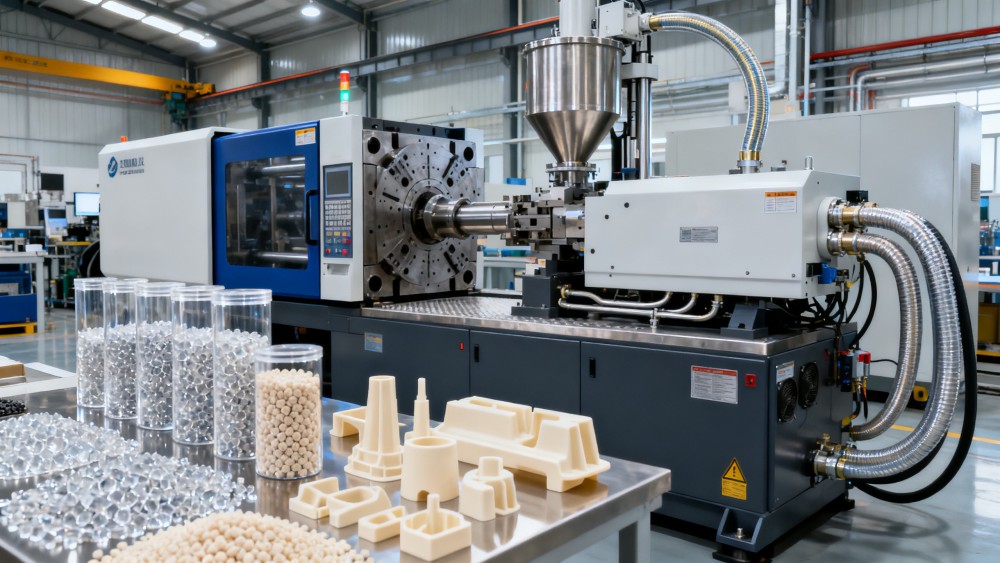
Injection molding is no longer judged only by cycle speed or part appearance. In 2026, procurement teams, plant operators, quality managers, and project leaders will evaluate molding capability through a broader lens: resin availability, energy intensity, traceability, recycled content compatibility, and export-facing compliance risk. For sectors linked to heavy industry, polymer processing now sits inside a larger raw material and energy decision framework.
This shift is especially relevant when commodity pricing remains volatile across oil, metals, and chemicals. A molding line that performs well in stable feedstock conditions may become costly when resin grade substitution, carbon reporting, or regional trade restrictions affect the supply plan. That is why injection molding innovations worth adopting in 2026 are the ones that improve both process resilience and commercial predictability over a 12–24 month planning cycle.
For technical evaluators, the question is not simply which machine or material is newer. The practical question is whether the innovation reduces scrap, tolerates wider feedstock variability, supports 3–5 critical compliance checkpoints, and keeps output stable during continuous operation. For buyers, the focus shifts to total cost of ownership, qualification time, and supplier transparency rather than headline machine specifications alone.
GEMM’s value in this environment comes from connecting polymer science with upstream energy, metals, and chemical engineering intelligence. When an injection molding project depends on recycled polymers, additive packages, mold steel durability, or regional energy pricing, decisions should not be isolated. They should be mapped against raw material trends, trade compliance insights, and realistic implementation windows of 2–4 weeks for trials or 2–3 quarters for broader deployment.
What decision-makers should track first
- Material flexibility: whether the process can handle virgin, recycled, bio-based, or blended polymers without unstable shrinkage or excessive reject rates.
- Energy performance: whether the molding cell can maintain repeatability with lower electricity use across a typical 8–24 hour production window.
- Compliance readiness: whether documentation, traceability, and additive control can support customer audits and export market requirements.
- Supply continuity: whether tooling, resin, colorants, and spare parts can be sourced without creating a single-point failure in the project schedule.
Which injection molding innovations are worth adopting first
Not every trend deserves immediate capital allocation. The most practical injection molding innovations for 2026 usually fall into five categories: advanced process monitoring, recycled and bio-based material adaptation, energy-efficient machine architecture, mold durability upgrades, and digital compliance traceability. These are not abstract technology themes; they directly affect scrap cost, qualification speed, and customer confidence.
Advanced process monitoring helps operators detect pressure drift, melt inconsistency, and cooling imbalance before those issues translate into dimensional instability. Even when the target tolerance is not extreme, repeatability matters. In industrial molded parts, maintaining stable cavity pressure trends and process windows over 500–5,000 shot runs can materially reduce sorting labor and post-production disputes.
Material adaptation is becoming equally important. Many manufacturers want to increase recycled content or evaluate bio-based polymer options, but they often underestimate moisture sensitivity, additive interaction, and lot-to-lot variation. The winning approach is not to switch feedstock abruptly. It is to validate drying, backpressure, screw design, and gate performance in phased trials, often in 3 stages: lab review, pilot molding, and controlled production release.
Energy-efficient equipment and mold upgrades also deserve priority because they create measurable operational stability. Servo-hydraulic or all-electric platforms, optimized cooling channels, and better thermal management can shorten cycle time or reduce variation, but the commercial benefit depends on part geometry and production volume. For high-mix plants, flexibility may be worth more than absolute speed; for long-run programs, small per-shot savings accumulate quickly.
Priority innovations and their practical value
The table below summarizes which injection molding innovations tend to create the fastest operational return in industrial environments where material cost, compliance, and uptime all matter.
The adoption order should match business pressure. If customer complaints are rising, monitoring and tooling stability often come first. If margins are being squeezed by feedstock or energy volatility, material adaptation and machine efficiency deserve earlier budget approval. A balanced roadmap usually starts with one low-disruption trial cell, then expands after the first 30–90 days of verified process data.
A practical sequence for adoption
- Select one product family with stable demand and known quality history.
- Define 4–6 baseline metrics such as cycle time, reject rate, energy use, and dimensional consistency.
- Run short pilot validation before full-scale procurement or customer commitment.
- Expand only after supply chain, maintenance, and compliance teams confirm repeatability.
How to compare materials, process risk, and total cost
Many procurement delays happen because teams compare machine quotations without comparing material behavior and downstream process risk. In injection molding, a lower resin price can be neutralized by extra drying time, higher scrap, color inconsistency, or longer qualification. Likewise, a recycled polymer program may look attractive in principle but fail commercially if lot consistency is weak or documentation does not support customer approval.
A better evaluation model uses three layers. First, check technical fit: flow, thermal stability, moisture control, and expected shrinkage range. Second, check commercial fit: purchase continuity, lead time, and acceptable minimum order structure. Third, check compliance fit: declarations, restricted substance alignment, and traceability from compounder to molded part. These three layers prevent false savings during sourcing.
For operations teams, the hidden cost categories often appear within 30–60 days, not on day one. These include mold fouling, extra purging, inconsistent gloss, regrind limitations, and operator intervention frequency. A sound cost comparison therefore includes setup loss, maintenance burden, and customer requalification exposure rather than looking only at resin cost per kilogram or machine hourly rate.
GEMM’s cross-sector view is useful here because polymer decisions are increasingly tied to oil-derived feedstock shifts, chemical additive access, and regional trade compliance changes. When resin markets move, the most resilient buyers are those who compare not just price but substitution pathways and documentation readiness. That is especially important for distributors, OEM procurement teams, and engineering managers coordinating multiple plants or suppliers.
Comparison table for 2026 sourcing decisions
Use the following matrix to compare common material and process pathways before approving a new injection molding initiative.
The most robust decision is often hybrid rather than binary. A company may keep virgin resin for critical dimensions, test recycled content on lower-risk SKUs, and improve machine efficiency across both. This staged model reduces qualification pressure while still supporting carbon and cost objectives. It also gives buyers clearer negotiation leverage when discussing supply continuity and technical support with vendors.
Five checks before issuing a purchase order
- Confirm the acceptable process window, including drying, melt temperature, and cooling sensitivity for the selected polymer family.
- Review lead times for resin, replacement mold components, sensors, and service support over at least one planning quarter.
- Check whether the supplier can provide material declarations, batch traceability, and change notification practices.
- Estimate downtime risk during installation, validation, and operator training, especially if the line runs high utilization.
- Align cost assumptions with expected reject reduction, not only with nominal cycle or energy claims.
What standards, compliance, and quality teams should not overlook
As injection molding innovations move closer to recycled inputs, low-carbon procurement, and digitally managed supply chains, compliance work becomes more demanding. Quality and safety teams need consistent material identity, additive disclosure discipline, and controlled process documentation. This is not only about regulatory exposure. It also affects customer approval speed, claim handling, and distributor confidence when parts move across regions.
A practical compliance review usually covers 4 areas: material traceability, restricted substance management, process change control, and end-use performance verification. Depending on the application, teams may also need to review sector-specific requirements tied to food contact, electrical performance, or industrial chemical exposure. The exact standard set varies, but the discipline of document control remains constant.
For recycled and bio-based materials, the main risk is not that they are automatically unsuitable. The risk is inconsistency in supporting paperwork or in the relationship between declared composition and actual process behavior. That is why technical files should be reviewed together by procurement, engineering, and quality teams. A 1–2 day internal review can prevent weeks of delay later in customer validation or export documentation.
GEMM supports this discipline by linking polymer processing decisions to broader chemical engineering and trade compliance insight. When a buyer understands upstream additive constraints, material substitution implications, and regional documentation expectations, the injection molding project becomes easier to scale. This cross-functional visibility is valuable for project managers handling multisite deployments or distributors representing multiple product lines.
Common compliance checkpoints for molded industrial parts
The table below outlines a practical checkpoint structure that quality, safety, and sourcing teams can use during supplier evaluation and process qualification.
This checkpoint method is especially helpful when a company plans to adopt 2 or more innovations at once, such as recycled resin plus digital process monitoring. Layered change increases the need for disciplined qualification. Quality managers should define acceptance criteria early, while procurement teams should ask suppliers how revisions, lot changes, and support tickets will be handled over the life of the program.
Common mistakes to avoid
- Assuming recycled content claims are enough without confirming process repeatability and documentation continuity.
- Treating mold and material changes as separate decisions when they can interact strongly in shrinkage, venting, and cycle stability.
- Approving a trial based on appearance only, without checking dimensional drift after several hundred cycles.
- Ignoring operator training needs during digital monitoring deployment or material substitution.
How to build a 2026 adoption roadmap with lower risk
A successful injection molding innovation strategy is usually staged, not rushed. The strongest roadmap balances technical ambition with procurement reality. If a plant tries to replace material, change tooling, and digitize process control in a single launch, the probability of delayed qualification increases. A better plan uses controlled sequencing, cross-functional accountability, and measurable gates before expansion.
For most industrial manufacturers, a practical roadmap has 4 phases over roughly 90–180 days. Phase one screens candidate products and supplier readiness. Phase two runs pilot validation on a limited line or mold family. Phase three compares cost, compliance, and quality data against the baseline. Phase four formalizes rollout criteria, training, and commercial terms. This structure helps project leaders protect schedule without blocking innovation.
This is where GEMM can support beyond simple trend watching. Because the platform tracks technological evolution, raw material logic, and trade compliance across oil, metals, chemicals, and polymers, decision-makers can assess whether a molding innovation is structurally aligned with future supply conditions. That reduces the chance of adopting a process that looks attractive in the short term but becomes exposed to feedstock volatility or documentation gaps later.
The result is a more disciplined business case. Engineering can validate feasibility, procurement can compare commercial resilience, and leadership can connect low-carbon goals to actual operating control. Distributors and agents also benefit because they can communicate a clearer value proposition to end users when product performance, supply continuity, and compliance language are all aligned from the beginning.
Recommended implementation flow
- Map the current baseline using 5 core indicators: scrap rate, cycle stability, energy exposure, material sourcing risk, and documentation readiness.
- Select one innovation with the clearest business pressure, such as recycled resin adaptation or in-mold monitoring.
- Run a controlled pilot for 2–8 weeks with engineering, quality, and procurement participating in the same review loop.
- Approve rollout only after cost, quality, and compliance criteria are documented and understood by operations teams.
FAQ for buyers, engineers, and project teams
Which injection molding innovation usually gives the fastest payback?
In many plants, process monitoring and mold cooling optimization produce the fastest operational benefit because they target visible production loss. They are often easier to validate within 2–6 weeks than a full material switch. However, if your main exposure is volatile resin cost or carbon-related customer pressure, recycled-content adaptation may deserve earlier priority despite a longer validation cycle.
Are recycled polymers suitable for technical molded parts?
They can be suitable in selected applications, but suitability depends on property consistency, documentation quality, and process control. The best approach is to define acceptable risk by part type. Non-cosmetic housings and medium-demand industrial components are common starting points. Critical parts should move only after pilot data confirms stable processing, dimensional behavior, and supply continuity.
What should procurement ask suppliers before approving a 2026 upgrade?
Ask about batch consistency, service lead time, spare parts access, change notification practice, and documentation support. Also ask how the supplier handles trials, rejected lots, and process troubleshooting during the first 30–90 days. These questions reveal whether the proposal is commercially supportable, not just technically attractive.
How long does qualification usually take?
Simple machine-side monitoring additions may be reviewed in 2–4 weeks. Material transitions or combined tooling and material changes often need 4–12 weeks, depending on customer approval, documentation review, and trial complexity. Multisite standardization naturally takes longer because training and change control must be synchronized.
Why work with GEMM on injection molding strategy and sourcing decisions
Injection molding innovation decisions are now tied to much more than machine capability. They depend on the global energy and material matrix behind polymers, additives, tooling inputs, and trade routes. GEMM helps organizations connect these variables so that sourcing, engineering, and compliance teams can make decisions with stronger upstream awareness and lower downstream risk.
For information researchers and business evaluators, GEMM can support technology trend analysis, raw material movement interpretation, and trade compliance insight across oil, metals, chemicals, and polymers. For operators, technical evaluators, and quality managers, this means clearer context for process selection, material substitution, and risk screening. For buyers and decision-makers, it means more confidence when balancing cost, continuity, and carbon-related expectations.
You can contact GEMM to discuss concrete issues rather than generic market talk. Typical consultation topics include parameter confirmation for recycled or bio-based polymer trials, product and process selection for specific molded parts, realistic delivery and qualification timelines, documentation and compliance checkpoints, sample support planning, and quotation communication aligned with project risk.
If your team is preparing a 2026 injection molding upgrade, a sourcing review, or a low-carbon materials roadmap, start with the variables that matter most: feedstock resilience, process stability, compliance readiness, and implementation timing. GEMM is positioned to help you read those variables together and turn them into a practical adoption plan that supports sustainable industrial growth.
Related News
- Injection molding innovations worth adopting in 2026Apr 28, 2026Injection molding innovations for 2026: adopt circular economy polymers, low-carbon material utilization, and sustainable energy materials to support carbon neutral industry goals, compliance, and resilient growth.
- Injection molding innovations that cut scrap ratesApr 28, 2026Injection molding innovations cut scrap with smarter tooling, process control, and circular economy polymers—supporting low-carbon material utilization and carbon neutral industry goals.
- When Injection Molding Defects Point to a Material IssueApr 28, 2026Injection molding defects may signal polymer materials risk, not process error. Learn how recycled plastics, heavy industry, and carbon neutrality goals affect sourcing, compliance, and part quality.
- Injection Molding Cycle Time Drops for the Wrong ReasonsApr 28, 2026Injection molding cycle time can drop for the wrong reasons. Learn how recycled plastics, polymer materials, and carbon neutrality pressures affect quality, cost, and heavy industry risk.
Related News
- 00
0000-00
Agrochemical regulations: common export compliance mistakes - 00
0000-00
Circular economy polymers: how to avoid quality issues - 00
0000-00
Circular economy polymers: virgin or recycled blends? - 00
0000-00
Bio-based materials still face a performance trust gap - 00
0000-00
Industrial decarbonization targets slip when baselines are weak
Weekly Insights
Stay ahead with our curated technology reports delivered every Monday.