




Agrochemical regulations: common export compliance mistakes




Navigating agrochemical regulations in global trade means more than paperwork—it requires precision across chemical engineering standards, labeling, documentation, and destination-specific rules. This article examines the most common export compliance mistakes, helping procurement teams, technical evaluators, quality managers, and decision-makers reduce risk, protect market access, and align operations with a smarter global energy matrix and low-carbon material utilization strategy.
Why agrochemical export compliance fails even in experienced organizations
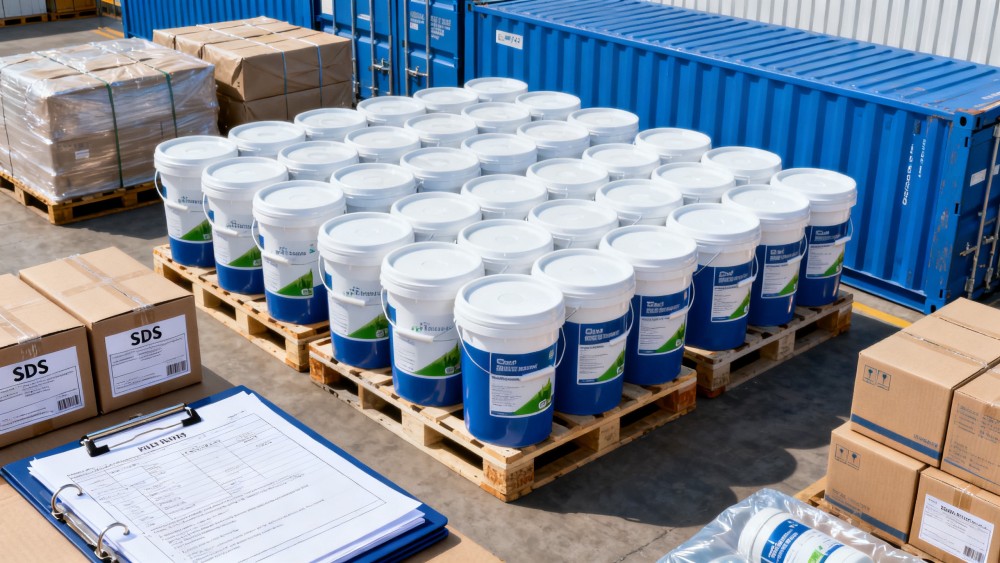
Agrochemical export compliance often breaks down not because companies ignore regulations, but because teams treat compliance as a final shipping task instead of a cross-functional control process. In practice, one shipment may involve 4 core checkpoints at minimum: product classification, country-specific registration status, transport documentation, and label-language alignment. If any one of these is incomplete, customs delays, distributor rejection, or downstream storage refusal can follow.
This problem is especially common in B2B supply chains where procurement, technical, quality, and commercial teams work on different timelines. A buyer may focus on lead time of 2–4 weeks, while the compliance reviewer may need 7–15 days to verify SDS format, ingredient disclosure scope, and import restrictions. When these timelines are not synchronized, commercial pressure pushes incomplete files into export execution.
For agrochemicals, compliance is not limited to one law or one certificate. Requirements can involve hazardous goods classification, pesticide registration status, packaging suitability, residue-related market expectations, and local label wording. Exporters that sell into multiple regions often make the mistake of assuming one “global file” is enough. It rarely is. In many cases, the same formulation needs different supporting documents for 3 different markets.
GEMM’s industry perspective is useful here because agrochemical compliance does not sit in isolation. It connects with raw material sourcing, polymer packaging selection, chemical processing controls, and the trade logic of heavy industry materials. When a company understands compliance through a wider energy and material matrix, it can identify risks earlier and make more stable export decisions.
Where operational teams usually lose control
The most frequent breakdown points are not always highly technical. They are often process failures hidden in ordinary routines. A product name used in a quotation may not match the name used on the commercial invoice. A revised SDS may be updated in one department but not in the export file. A distributor may request local artwork, but warehouse staff ship older stock. These look minor, yet they create material compliance exposure.
- Classification errors caused by using outdated composition data or failing to review impurities, concentration ranges, and transport categories.
- Document inconsistency across SDS, invoice, packing list, label, and certificate files submitted within the same export batch.
- Assuming destination acceptance based on prior shipments, even though registration validity, language, or local packaging rules have changed in the last 6–12 months.
- Poor handover between sales, quality, regulatory, and logistics teams during urgent orders or tender-driven supply windows.
For decision-makers, this means compliance should be reviewed as a margin-protection function, not a back-office cost center. One delayed container can affect customer confidence, contract penalties, and inventory carrying costs across an entire quarter.
What are the most common agrochemical export compliance mistakes?
When companies search for common export compliance mistakes, they usually want a practical answer: which errors are most likely to stop a shipment or create commercial risk? In agrochemical trade, the pattern is consistent. Most failures fall into 5 high-frequency categories: classification, registration, labeling, packaging, and document integrity. These are the areas procurement and quality teams should audit first.
The table below summarizes typical mistakes, the operational reason behind them, and the most likely export consequence. It is designed for buyers, safety managers, project leaders, and distributors evaluating shipment readiness before goods leave the plant or bonded warehouse.
These mistakes are not theoretical. They reflect the normal friction of cross-border chemical trade. The key lesson is that export compliance mistakes usually emerge from disconnected data rather than from a single dramatic error. Companies that create a 3-stage review process—pre-sale screening, pre-shipment validation, and final document lock—tend to reduce repeat issues significantly.
Mistake 1: treating registration and market access as someone else’s job
Many exporters assume the importer or local distributor will handle destination regulatory access. That assumption is risky. In agrochemicals, market access may depend on active ingredient status, formulation type, intended crop use, pack size, and local license ownership. A shipment can be technically sound and still be commercially unusable if the destination registration scope does not match the product offered.
Procurement and commercial teams should confirm 5 points before order release: registered product identity, approved concentration range, label language requirement, importer role, and validity period. This review may take only 3–5 working days when data is organized, but far longer when teams start after the goods are packed.
Mistake 2: assuming one SDS and one label work everywhere
A safety data sheet and label are not simply translation documents. They are regulated communication tools. Different markets may require different section emphasis, emergency wording, supplier identification format, or hazard statement logic. Even when a harmonized system exists in principle, local execution details still matter. Exporters should review every new market entry and every major artwork revision at least once per launch cycle.
This is where GEMM’s chemical and polymer expertise adds value. Packaging, storage conditions, and material compatibility are inseparable from label and hazard communication. A technically correct label on an unsuitable container is still an export compliance failure.
How should buyers and project teams evaluate agrochemical compliance before shipment?
For procurement teams, the best compliance strategy is not to memorize every regulation. It is to build a repeatable screening method. In practical terms, pre-shipment evaluation should cover 3 categories: legal market access, technical document consistency, and physical shipment readiness. This approach is efficient for both recurring purchases and first-time sourcing projects.
The following table can be used as a procurement and technical evaluation checklist. It is especially useful when comparing multiple suppliers, planning contract manufacturing, or validating a new distributor route. Instead of asking only for a quotation, buyers should ask for verifiable compliance evidence tied to the exact formulation and destination country.
This checklist helps teams separate “quote-ready” from “shipment-ready.” Many suppliers can provide a price within 24–48 hours, but a compliant export file usually needs a more disciplined timeline. Buyers who compress all checks into the last 1–2 days before departure create avoidable risk for themselves.
A practical 4-step internal review flow
A workable review flow should be simple enough for operations teams to repeat and strict enough for quality managers to defend. The most effective frameworks usually contain 4 steps, each assigned to a named owner rather than a general department.
- Commercial screening: confirm destination, Incoterms, customer role, and intended use before final quotation or contract signature.
- Technical-regulatory review: verify formulation identity, hazard communication files, registration relevance, and any restricted claims.
- Packaging and warehouse check: validate container type, label version, batch coding, and segregation requirements for loading.
- Document lock and release: issue the final export set only after cross-checking all shipment references, dates, and product descriptions.
If a company exports frequently, these 4 steps can be digitized into a standard workflow. That reduces dependence on memory and makes onboarding easier for new project coordinators, procurement staff, and regional distributors.
Questions buyers should ask suppliers early
To avoid late surprises, buyers should request answers to a short but meaningful set of questions within the first week of engagement. This is more effective than sending long compliance questionnaires after production starts.
- Has this exact agrochemical formulation been exported to the target market before, and if yes, under what documentation structure?
- Which documents are available now, and which require 5–10 working days for preparation or revision?
- What packaging materials are used, and have compatibility and storage conditions been reviewed for the shipping route and season?
- Who is responsible for confirming destination-specific registration or local acceptance if the importer asks for changes?
Which standards, documents, and cross-border details deserve the closest attention?
Agrochemical export compliance is built on a documentation chain rather than a single certificate. The exact document set varies by product and destination, but most projects involve at least 6 core file types: commercial invoice, packing list, SDS, certificate of analysis, label artwork, and transport-related declarations where applicable. Missing one file can be manageable; conflicting information across files is much more dangerous.
For technical evaluators and quality managers, the main issue is version discipline. A file that is technically correct but not current can create the same level of export risk as a wrong file. Teams should use one controlled reference point for formulation data, batch identity, and declared hazard information. This is particularly important when reformulation, raw material substitution, or packaging changes occur within a 1–3 month period.
Key compliance details that are often underestimated
Exporters often focus on visible documents and overlook context. Yet regulators, carriers, and importers evaluate consistency. A product packed for tropical transit may need packaging and storage wording suitable for elevated temperature exposure. A low-volume sample shipment may still trigger the same hazard communication expectations as a larger commercial batch. Small quantity does not mean small compliance responsibility.
- Check whether product description is identical across PO, label, invoice, shipping mark, and SDS reference sections.
- Review batch coding and traceability structure so quality complaints can be investigated within hours, not days.
- Verify whether destination language, emergency contacts, or local importer information must appear on immediate or outer packaging.
- Confirm packaging material compatibility, especially where aggressive solvents, emulsifiable concentrates, or long sea transit are involved.
Within GEMM’s broader industrial lens, this is where compliance connects to material science and low-carbon operational thinking. Better packaging selection reduces leakage risk, product waste, rework, and unnecessary reverse logistics. Compliance is therefore not only a regulatory issue, but also an efficiency and sustainability issue.
Common misconceptions in multi-market agrochemical trade
One misconception is that compliance complexity only applies to large-volume exporters. In reality, small and mid-sized traders face even greater risk because they often rely on manual controls and distributor assurances. Another misconception is that a compliant factory automatically guarantees a compliant export. Factory quality systems are essential, but destination legality and documentation accuracy still require market-by-market review.
A third misconception is that faster shipping always improves customer satisfaction. If speed removes the final compliance check, the result may be a 2-day gain in dispatch but a 2-week delay at the port. Smart exporters measure success by cleared delivery, not by loading date alone.
How to reduce risk, improve decision quality, and build a scalable compliance process
The most resilient companies do not wait for a failed shipment to improve agrochemical export compliance. They design a system that supports repeatability across suppliers, products, and regions. For most organizations, that system should include 3 operating principles: early screening, controlled documentation, and accountability by role. These principles work whether a company exports once per quarter or manages weekly container movements.
A scalable process also supports better procurement decisions. When compliance evidence is visible early, sourcing teams can compare suppliers more accurately. A low price with incomplete registration support, weak label control, or unclear packaging compatibility may become more expensive after rework, delay, or destination rejection. Total landed risk matters as much as quoted unit cost.
A realistic improvement roadmap for exporters and buyers
Companies do not need to solve everything at once. A phased roadmap over 30–90 days is often more practical than a full compliance overhaul. Start with high-frequency products and the top 2–3 destination markets, then extend the control logic to secondary SKUs and regional channels.
- Map the current export file set for each major agrochemical line and identify duplicated or uncontrolled document sources.
- Build a destination rule register that captures registration status, label requirements, and transport considerations by country or region.
- Assign final approval authority for technical, quality, and logistics release so urgent orders cannot bypass mandatory checks.
- Review packaging and raw material implications with a broader material-efficiency lens, especially where leakage, waste, or repacking costs are recurring.
This broader view aligns with GEMM’s mission of understanding upstream materials, compliance pathways, and industrial decision logic together. Agrochemical trade does not operate separately from commodity volatility, polymer packaging performance, chemical process discipline, and carbon-aware supply chain design.
FAQ: the questions teams ask before committing an export order
How long does agrochemical export compliance review usually take?
For repeat destinations with controlled files, a routine review may take 3–7 working days. For a new market, changed formulation, or updated artwork, 1–3 weeks is a more realistic planning window. The timing depends less on document quantity and more on whether the required data already exists in a validated form.
What should procurement prioritize when comparing suppliers?
Look beyond price and MOQ. Focus on 4 decision points: destination documentation readiness, consistency of technical files, packaging suitability for the shipping route, and response speed for compliance clarification. A supplier that answers technical questions clearly in the first 48–72 hours usually reduces later project friction.
Are samples exempt from most compliance risks?
No. Samples may move in smaller quantities, but they still require correct classification, proper communication of hazards, and alignment with destination rules. In some cases, samples create more risk because teams handle them informally and skip the normal export review process.
How often should exporters review labels and SDS files?
At minimum, review them when entering a new market, changing formulation, changing packaging format, or receiving a distributor compliance query. For active multi-market programs, a periodic review every 6–12 months is a practical control measure, especially when regulatory interpretation or transport routes change.
Why work with GEMM for trade compliance insight and export decision support?
Agrochemical regulations are easier to manage when companies can connect compliance review with upstream materials, packaging science, logistics constraints, and shifting trade conditions. GEMM supports that wider view. Our strength is not limited to a single regulatory checkpoint. We help industry teams interpret how compliance decisions interact with commodity volatility, chemical engineering practice, polymer packaging performance, and cross-border execution risk.
For information researchers, technical assessors, procurement managers, safety leaders, distributors, and executive teams, that means faster issue identification and better internal alignment. Instead of reacting to shipment problems one by one, you can build a decision framework that supports product selection, market screening, documentation planning, and supply chain resilience.
If you are evaluating an agrochemical export program, preparing a new market entry, or trying to reduce repeated documentation errors, you can consult GEMM on practical topics such as formulation-related compliance risk, packaging compatibility considerations, expected review timelines, destination-specific file preparation, and trade workflow optimization. These discussions are especially useful during the early 7–10 days of project planning, when correction costs are still manageable.
Contact us to discuss parameter confirmation, product and packaging selection, typical delivery timelines, documentation readiness, certification-related questions, sample shipment planning, or quotation alignment for regulated export trade. With GEMM, you gain a more connected view of materials, compliance, and industrial decision-making—so your next shipment is not only booked, but genuinely ready to move.
Related News
Related News
- 00
0000-00
Agrochemical regulations: common export compliance mistakes - 00
0000-00
Circular economy polymers: how to avoid quality issues - 00
0000-00
Circular economy polymers: virgin or recycled blends? - 00
0000-00
Bio-based materials still face a performance trust gap - 00
0000-00
Industrial decarbonization targets slip when baselines are weak
Weekly Insights
Stay ahead with our curated technology reports delivered every Monday.