




Injection molding innovations that cut scrap rates




From rising material costs to tighter quality targets, injection molding innovations are no longer optional for manufacturers that want to cut scrap, protect margins, and stay competitive. The most effective improvements are not usually a single machine upgrade or a new resin alone. In practice, lower scrap rates come from combining smarter tooling, tighter process control, better material handling, and data-driven quality management. For decision-makers, the key question is not whether innovation helps, but which innovations reduce waste fastest, where the return on investment is strongest, and how those changes support broader low-carbon manufacturing and carbon neutral industry goals.
For processors, buyers, quality teams, and project leaders, the practical takeaway is clear: scrap reduction in injection molding is increasingly tied to three priorities at once—cost control, production stability, and sustainable material utilization. Companies that treat scrap as a process intelligence problem rather than only a shop-floor defect problem tend to see the best results.
Which injection molding innovations reduce scrap rates the fastest?
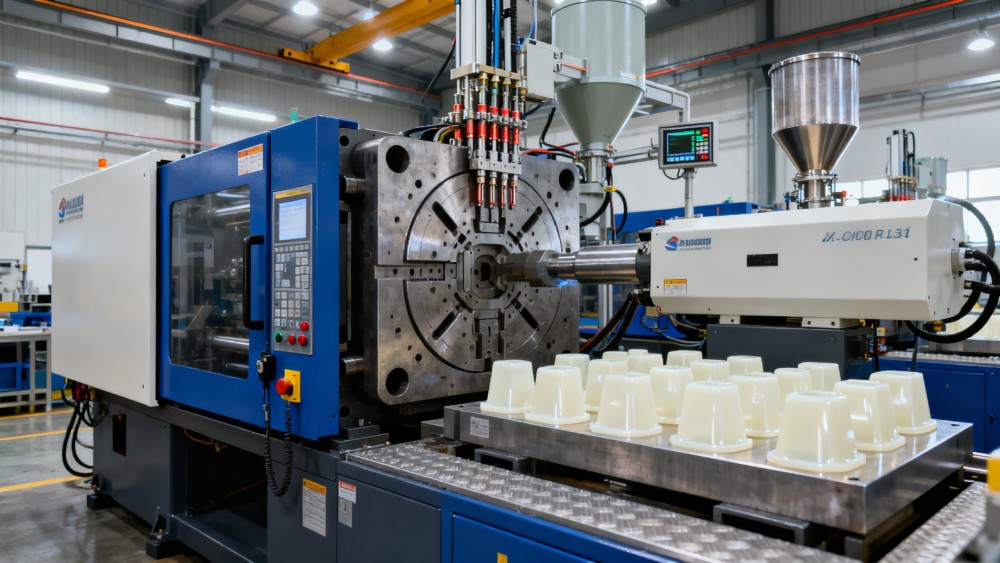
The fastest gains usually come from innovations that stabilize variation at its source. In most molding operations, scrap is driven by recurring issues such as short shots, flash, sink marks, warpage, contamination, dimensional drift, burn marks, or inconsistent surface finish. These are often symptoms of unstable melt behavior, uneven cooling, poor venting, resin inconsistency, or operator-dependent setup decisions.
The following innovations typically deliver the quickest scrap reduction:
- In-mold sensors and cavity pressure monitoring: These tools detect process variation in real time and help identify bad parts before they move downstream.
- Closed-loop process control: Machines that automatically adjust fill, hold pressure, or temperature based on live feedback can reduce part-to-part variation.
- Advanced hot runner systems: Better thermal balance and gate control reduce stringing, cold slugs, and filling inconsistency.
- Improved mold cooling design: Conformal cooling and optimized channel layout reduce warpage and cycle imbalance.
- Material drying and conveying automation: Moisture-related defects remain a major hidden source of polymer scrap.
- Scientific molding methods: Structured setup based on material behavior rather than trial and error improves repeatability.
- Machine vision inspection: Automated detection catches visual defects early and generates defect trend data.
- Digital process analytics: Statistical monitoring highlights drift patterns that are difficult to see through manual checks alone.
For many plants, the best first step is not a full equipment overhaul. It is often a targeted combination of sensor-based monitoring, mold maintenance discipline, and resin handling improvements. These areas usually expose the largest avoidable scrap sources with relatively manageable investment.
Why are traditional scrap reduction efforts often not enough?
Many operations still approach scrap reduction mainly through operator experience, periodic inspection, and post-defect troubleshooting. That method can work in low-complexity production, but it becomes less reliable when manufacturers face tighter tolerances, thinner margins, recycled content variability, or multi-cavity production at scale.
Traditional approaches often fall short for four reasons:
- They detect defects too late. If scrap is only found at final inspection, the process may already have produced hours of nonconforming parts.
- They treat symptoms instead of causes. Repeated adjustments without root-cause analysis can hide underlying tooling or material problems.
- They depend too heavily on individuals. When process stability relies on one experienced technician, consistency becomes fragile.
- They do not connect quality with material economics. Scrap is not just a quality issue; it is a direct raw material, energy, labor, and carbon efficiency issue.
In a global polymer and energy cost environment shaped by commodity fluctuations, every kilogram of scrap matters more than before. Companies that want resilience need systems that predict and prevent defects, not just react to them.
How do smarter tooling and mold innovations cut waste?
Tooling remains one of the biggest leverage points in reducing injection molding scrap. Even a high-end molding machine cannot compensate fully for a poorly balanced or poorly cooled mold. For technical evaluators and project managers, this is often the area where upfront engineering has the highest long-term payoff.
Key tooling innovations include:
- Conformal cooling: Often enabled through additive manufacturing, conformal cooling follows the shape of the part more closely than traditional drilled channels. This improves heat removal uniformity, reducing warpage, sink, and cycle variation.
- Enhanced venting systems: Better venting reduces gas traps, burn marks, incomplete filling, and cosmetic defects.
- Valve gate control: More precise gate timing can improve flow balance and lower defects in multi-cavity molds.
- Mold flow simulation before production: Predictive modeling helps identify weld lines, hesitation, pressure imbalance, and cooling issues before steel is cut or modified.
- Wear-resistant coatings and materials: For abrasive or filled polymers, improved mold materials reduce dimensional drift and defect growth over time.
From a procurement and business evaluation perspective, mold innovation should be judged not only on tooling cost but on lifecycle scrap reduction, maintenance frequency, uptime stability, and compatibility with future recycled or bio-based materials.
How does process control technology improve part consistency?
Process control is where many of today’s most practical injection molding innovations are delivering measurable results. The goal is simple: reduce uncontrolled variation between shots, shifts, operators, and resin lots.
Modern process control technologies help by:
- Monitoring cavity pressure and temperature: These variables reflect what is actually happening inside the mold, often more accurately than machine settings alone.
- Using automatic adjustment loops: When fill pressure or hold behavior shifts, closed-loop systems can compensate before defects increase.
- Tracking process signatures: Each good part tends to share a stable profile. Deviations can be flagged immediately.
- Supporting statistical process control: Data trends reveal whether variation is random, material-related, maintenance-related, or operator-related.
For quality and safety managers, this matters because stable processes reduce rework, customer complaints, and the risk of defective parts entering critical applications. For executives, it matters because process stability improves forecastable output and lowers cost volatility.
What role do materials and resin strategy play in scrap reduction?
Material selection and handling are frequently underestimated in scrap discussions. Yet polymer behavior directly affects filling, shrinkage, cooling, moisture sensitivity, and defect rates. This is particularly relevant as manufacturers increase use of recycled content, regrind, or bio-based polymers in support of circular economy and low-carbon material goals.
Important material-related innovations include:
- Better resin consistency from qualified suppliers: Variability in melt flow, additives, or moisture can create unstable molding windows.
- Inline blending and dosing systems: These improve consistency when using colorants, additives, virgin/recycled blends, or regrind.
- Advanced drying systems: Engineering resins and hygroscopic materials can generate high scrap if drying is uncontrolled.
- Material-specific process databases: Documented parameter ranges reduce startup waste and setup errors.
- Recycled polymer qualification protocols: Companies using circular economy polymers need stronger incoming inspection and process validation to avoid hidden variability.
For companies evaluating sustainable energy materials trends and carbon neutral industry strategies, recycled and lower-carbon polymers can support long-term goals, but only if process capability matches material variability. Scrap reduction and sustainability must be managed together. Otherwise, a sustainability initiative can fail financially if defect rates rise too sharply.
How should manufacturers evaluate ROI before investing in new molding technology?
Not every innovation delivers equal value in every plant. A medical molder, an automotive supplier, and a commodity packaging producer will have different scrap drivers and different return thresholds. The best evaluation framework starts with identifying where scrap originates and what that scrap actually costs.
A practical ROI review should include:
- Current scrap rate by product, mold, machine, shift, and resin
- Material loss cost, including virgin polymer, additives, and energy
- Labor and downtime associated with scrap, sorting, rework, and restarts
- Customer quality risk, returns, and compliance exposure
- Tooling maintenance costs linked to instability or wear
- Potential carbon and sustainability reporting benefits from waste reduction
For many operations, the highest-confidence investments are those that either reduce chronic defects on high-volume programs or improve process visibility across multiple molds. Examples include cavity pressure sensing, resin drying control, mold cooling optimization, and machine vision for defect capture.
Decision-makers should also distinguish between capital-heavy innovation and discipline-heavy innovation. Some gains require new hardware, but others come from standardizing process development, documenting golden parameters, and enforcing preventive maintenance.
What are the most common implementation risks?
Even strong technologies can underperform when implementation is weak. The most common reasons scrap reduction projects disappoint include:
- No baseline measurement: If the original scrap drivers are unclear, post-project results become hard to verify.
- Technology added without process discipline: Sensors and software do not replace weak setup practices.
- Poor cross-functional ownership: Production, tooling, quality, procurement, and engineering often need to act together.
- Ignoring material variability: A process tuned for one resin lot may fail with another if controls are too narrow or incoming checks are weak.
- Undertraining operators and technicians: Innovation creates value only when people know how to use it correctly.
For project leaders, this means scrap reduction should be managed as a structured improvement program, not as a one-time equipment purchase.
What does a practical roadmap for lower injection molding scrap look like?
For organizations looking to act without overcomplicating the journey, a phased approach usually works best:
- Map scrap by defect type and source. Separate material, tooling, machine, and handling causes.
- Fix the basics first. Drying, maintenance, setup control, and parameter documentation often yield immediate gains.
- Add visibility. Use sensors, machine monitoring, and inspection data to understand variation in real time.
- Upgrade tooling where chronic instability exists. Focus on cooling, venting, gating, and balance.
- Validate materials strategically. Especially important when introducing recycled or new low-carbon polymers.
- Scale what works across programs. Turn successful settings and methods into plant standards.
This approach helps both technical teams and business stakeholders align around measurable outcomes: less scrap, better throughput, improved raw material efficiency, and stronger resilience against polymer cost volatility.
Conclusion: the best scrap reduction innovations combine quality, economics, and sustainability
Injection molding innovations that cut scrap rates are most valuable when they solve operational problems and strategic pressures at the same time. Smarter molds, better process control, stronger material handling, and data-based quality systems can reduce waste substantially, but the biggest gains come when those tools are applied to the plant’s real defect patterns rather than adopted as generic upgrades.
For manufacturers across the polymer value chain, lower scrap is now a business performance issue as much as a production issue. It improves raw material efficiency, supports circular economy polymer adoption, reduces avoidable energy use, and strengthens progress toward broader carbon neutral industry targets. The companies best positioned to benefit are those that evaluate innovations through a practical lens: where is scrap created, which technologies remove the root causes, and how quickly can those improvements convert into lower cost and more reliable output?
In short, cutting injection molding scrap is no longer just about making fewer bad parts. It is about building a more efficient, more intelligent, and more sustainable manufacturing system.
Related News
- Injection molding innovations worth adopting in 2026Apr 28, 2026Injection molding innovations for 2026: adopt circular economy polymers, low-carbon material utilization, and sustainable energy materials to support carbon neutral industry goals, compliance, and resilient growth.
- Injection molding innovations that cut scrap ratesApr 28, 2026Injection molding innovations cut scrap with smarter tooling, process control, and circular economy polymers—supporting low-carbon material utilization and carbon neutral industry goals.
- When Injection Molding Defects Point to a Material IssueApr 28, 2026Injection molding defects may signal polymer materials risk, not process error. Learn how recycled plastics, heavy industry, and carbon neutrality goals affect sourcing, compliance, and part quality.
- Injection Molding Cycle Time Drops for the Wrong ReasonsApr 28, 2026Injection molding cycle time can drop for the wrong reasons. Learn how recycled plastics, polymer materials, and carbon neutrality pressures affect quality, cost, and heavy industry risk.
Related News
- 00
0000-00
Agrochemical regulations: common export compliance mistakes - 00
0000-00
Circular economy polymers: how to avoid quality issues - 00
0000-00
Circular economy polymers: virgin or recycled blends? - 00
0000-00
Bio-based materials still face a performance trust gap - 00
0000-00
Industrial decarbonization targets slip when baselines are weak
Weekly Insights
Stay ahead with our curated technology reports delivered every Monday.