



Carbon neutral industry: what projects pay off first?




In the carbon neutral industry, the first projects to pay off are those that align sustainable energy materials, refining equipment upgrades, and low-carbon material utilization with measurable operational gains. From energy transition pathways to circular economy polymers and injection molding innovations, companies need a data-driven global energy matrix to evaluate risk, compliance, and ROI before scaling decarbonization investments.
Which carbon neutral industry projects usually pay off first?
For most heavy-industry and process-industry operators, the fastest payback rarely comes from the most ambitious decarbonization headline. It usually comes from projects that reduce fuel consumption, cut raw material loss, improve process stability, or avoid compliance costs within 12–36 months. This matters to procurement teams, technical evaluators, and project managers who must justify capital allocation under uncertain commodity prices.
In practical terms, early-payoff carbon neutral industry projects often sit in four categories: energy efficiency retrofits, feedstock optimization, circular material substitution, and emissions-linked process control. These are easier to measure because they affect energy intensity, maintenance frequency, throughput stability, and scrap rate in weekly or quarterly operating data rather than only in long-term sustainability reporting.
This is where GEMM becomes useful. A carbon-neutral investment is not only an engineering decision; it is also a commodity intelligence decision. A refinery burner upgrade, a recycled polymer switch, or a metallurgy heat recovery project can look attractive on paper, yet the real outcome depends on supply chain reliability, trade compliance, material specification consistency, and exposure to oil, metal, or chemical price volatility.
For decision-makers, the key question is not “Which project is the greenest?” but “Which project creates measurable operational value first, while preserving future decarbonization options over the next 2–5 years?” That framing helps enterprises avoid locking capital into projects with long approval cycles, uncertain permitting, or weak integration with existing production assets.
Fast-return project types in industrial decarbonization
The projects below are often prioritized because they combine lower implementation complexity with clearer operating gains. They are especially relevant across oil and gas processing, metals, chemicals, plastics, and mixed manufacturing environments where energy and material costs are tightly linked.
- Combustion and thermal system upgrades, including burner controls, waste heat recovery, insulation renewal, and steam optimization, typically show benefits within 6–24 months depending on load factor and fuel mix.
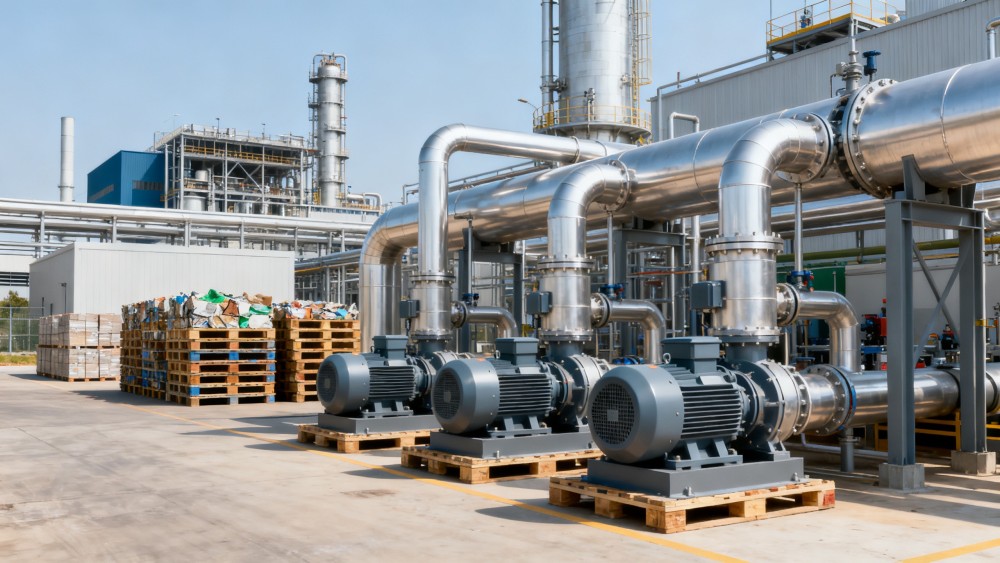
- Motor, pump, and compressed-air optimization can reduce electricity waste quickly, especially where assets run 16–24 hours per day and maintenance teams already track downtime.
- Low-carbon feedstock or recycled material substitution pays off first when it reduces disposal costs, import dependency, or process scrap without triggering major line redesign.
- Digital process monitoring and emissions-linked controls create value by turning scattered plant data into actionable decisions for quality, energy, and compliance teams.
By contrast, large CCUS hubs, greenfield hydrogen conversion, or full-site electrification may be strategically important, but they often require longer lead times of 18–48 months, more complex permitting, and stronger external infrastructure. They are not always the first projects to pay off, particularly for companies under tight budget controls or variable export demand.
How should buyers compare project options before approving budget?
A strong carbon neutral industry roadmap needs a comparison method that joins engineering feasibility with procurement logic. Buyers should not evaluate projects only by estimated carbon reduction per ton. They should also compare shutdown requirements, material availability, maintenance burden, operator training needs, and exposure to future compliance changes across different regions and commodity chains.
For example, a metallurgy plant considering a furnace efficiency upgrade and a recycled alloy input strategy may face very different risk profiles. One depends on equipment integration and outage planning; the other depends on feedstock purity, traceability, and trade restrictions. A chemicals producer faces similar trade-offs when comparing process heat recovery against bio-based raw material substitution.
The most useful decision model generally includes 5 core dimensions: payback period, implementation disruption, commodity exposure, compliance burden, and scalability. If a project performs well in at least 3 out of 5 dimensions, it usually deserves detailed financial modeling. If it scores weakly in 3 dimensions, it may still be strategic, but it should not be treated as an early-payoff initiative.
Comparison of early-payoff carbon neutral industry projects
The table below gives a practical comparison framework for procurement teams, technical reviewers, and business evaluators deciding which decarbonization projects should move first from concept to budget approval.
A key insight from this comparison is that early-payoff projects usually rely on existing plant boundaries, existing staff capabilities, and measurable utility or material baselines. That makes them easier to validate during capital review and easier to defend when commodity markets become volatile.
Why commodity intelligence changes the ranking
The same project can move up or down the priority list depending on regional feedstock cost, polymer availability, metal quotas, or refining margin pressure. GEMM’s cross-sector view helps buyers test whether a project still makes sense if oil prices rise, recycled resin quality tightens, or rare-earth supply becomes constrained during the next 2–3 procurement cycles.
This matters for distributors and agents as well. Channel partners that understand market timing can recommend solutions with better adoption potential, lower substitution risk, and smoother customer onboarding. In a carbon neutral industry, timing is often as important as technology.
What should technical and procurement teams check before selection?
A common failure point in industrial decarbonization is approving a concept before confirming plant-level fit. Technical teams may focus on process gains, while procurement focuses on vendor cost. The missing layer is cross-functional validation: compatibility, compliance, delivery timing, and operational control. In most sectors, 4 checkpoints should be completed before final selection.
First, confirm the operating baseline over at least 3–6 months. Without a stable baseline for energy use, scrap rate, throughput, and downtime, payback projections become unreliable. Second, define the acceptable implementation window. Many projects look attractive until they require a 7–10 day production stoppage during a peak order period.
Third, review specification and compliance requirements. For recycled plastics, bio-based materials, or alternative chemical inputs, technical fit alone is not enough. Quality managers and safety teams need traceability records, material declarations, and a practical test plan for batch consistency, contamination, storage, and downstream performance.
Fourth, assess supplier resilience and market exposure. If a low-carbon material depends on a narrow import route or unstable regional policy, the project may transfer cost from utilities to procurement risk. GEMM’s strength lies in connecting technical trend analysis with trade compliance insights so enterprises do not treat supply security as an afterthought.
Selection checklist for early-payoff projects
- Verify whether the project changes only one subsystem or requires cross-line integration involving utilities, controls, safety, and quality documentation.
- Check if material or equipment lead time is within the practical project window, commonly 4–12 weeks for standard components and longer for specialized process items.
- Define at least 3 acceptance indicators, such as energy per unit output, reject rate, or unplanned downtime frequency, before installation starts.
- Map compliance requirements by destination market, especially for chemicals, polymers, metals, and energy-linked exports where documentation can delay commercialization.
Procurement evaluation table
The next table is designed for procurement managers, project leaders, and business evaluators who need a balanced way to score carbon neutral industry investments before issuing RFQs or approving pilot orders.
When teams use this kind of structured review, they reduce two common mistakes: overvaluing theoretical carbon savings and undervaluing implementation friction. The best early projects are usually those that survive both tests.
Which projects fit different industrial scenarios best?
Not every carbon neutral industry project works equally well across sectors. A practical roadmap should reflect whether the plant is energy-intensive, feedstock-sensitive, quality-critical, or export-dependent. This matters to operators, quality managers, and distributors who need solutions that work under real production constraints rather than generic sustainability claims.
In oil, gas, and energy engineering, the earliest returns often come from burner optimization, heat integration, flare reduction, and refinery equipment upgrades that improve efficiency without rewriting the entire process scheme. These projects are easier to justify when energy use is concentrated and continuous, often over 20 hours per day.
In ferrous and non-ferrous metallurgy, material yield and thermal efficiency dominate the business case. Waste heat recovery, advanced controls, and alloy recovery projects can pay faster than larger decarbonization assets because they directly affect fuel intensity, rework rates, and raw material utilization under volatile ore and metal markets.
In chemicals, rubber, plastics, and polymer science, the priority often shifts toward feedstock substitution, process optimization, recycled content integration, and injection molding efficiency. Here, the cost benefit depends not only on energy savings but also on defect reduction, cycle-time control, compliance documentation, and consistent material behavior under heat, pressure, or chemical exposure.
Scenario-based project matching
- If your plant has high thermal load and stable operation, start with heat recovery, combustion tuning, and steam system optimization before larger fuel-switching investments.
- If your operation suffers from resin, solvent, or alloy price swings, prioritize feedstock flexibility, recycled content validation, and material intelligence over highly specialized low-volume technologies.
- If compliance is the biggest bottleneck, begin with traceability systems, emissions monitoring, and process documentation upgrades that support both commercial access and future carbon reporting.
- If product quality is highly sensitive, use pilot-scale validation for 2–8 weeks before rolling out low-carbon inputs across full production lots.
Why the matrix view matters
A project that looks optimal inside one department can fail at the enterprise level if it increases raw material risk or slows international trade compliance. GEMM’s value is the matrix view: oil strategists, metallurgy specialists, and polymer experts read the same project from different angles. That helps enterprises compare operational savings against material science limits and regulatory reality.
For project owners, this cross-functional perspective is often the difference between a pilot that stays isolated and a program that scales across multiple sites within 1–3 fiscal cycles.
What are the most common mistakes and how can companies avoid them?
The first mistake is treating carbon neutral industry investments as separate from commodity strategy. In reality, low-carbon materials, process equipment, and energy systems all depend on markets that can shift quickly. A project with good engineering logic may weaken if imported inputs become harder to source or if quality variations create hidden rework costs.
The second mistake is relying on average assumptions rather than plant-specific data. Payback calculated from generic load factors or nameplate efficiency often fails during real operation. A better approach is to validate at least 3 plant variables: actual runtime, part-load behavior, and maintenance interruption frequency. This usually gives a more reliable investment picture within 30–90 days of baseline review.
The third mistake is underestimating implementation friction. Even a promising project can lose value if it requires operator retraining, multiple permit revisions, or inconsistent feedstock handling. That is why procurement, safety, quality, and operations should review the same project scope before signing supply agreements or finalizing shutdown plans.
The fourth mistake is pushing major flagship technologies too early. CCUS, hydrogen, and deep electrification may become essential in some sectors, but many enterprises should first capture lower-risk gains from efficiency, material yield, and digital visibility. Early wins generate cash flow, internal trust, and better data for later-stage decarbonization.
FAQ for buyers and project teams
How do we know whether a carbon neutral project is truly “early-payoff”?
Check whether benefits can be measured in monthly utility consumption, scrap reduction, throughput stability, or maintenance savings within the first 2–4 quarters. If the project depends mainly on future policy incentives or long-chain infrastructure that is not yet available, it is usually strategic rather than early-payoff.
Are recycled or bio-based materials always the best first step?
Not always. They are attractive when the process can tolerate grade variation and when documentation is manageable. In high-spec applications, the better first step may be process efficiency or digital monitoring, followed by gradual substitution after qualification testing and supplier validation.
What procurement signals usually indicate hidden risk?
Watch for unclear origin records, unstable lead times beyond 8–12 weeks, inconsistent technical datasheets, or projects that require undocumented changes to safety or quality procedures. These are common signs that the project may create downstream cost even if the purchase price looks reasonable.
How long should a pilot or validation stage last?
For process controls or efficiency upgrades, 2–6 weeks can be enough if baseline data is already available. For material substitution in metals, chemicals, or polymers, validation often needs 4–8 weeks to confirm stability across multiple batches, operating temperatures, and quality checkpoints.
Why work with GEMM when planning carbon neutral industry investments?
Carbon neutral industry decisions are no longer isolated engineering choices. They sit at the intersection of raw material volatility, energy transition pathways, equipment modernization, trade compliance, and industrial economics. GEMM is built for that intersection. Its intelligence system covers oil, metals, chemicals, polymers, and sustainable energy assets, giving buyers and decision-makers a more complete basis for prioritization.
This matters when your team needs more than a generic decarbonization recommendation. You may need to confirm whether a refining equipment upgrade still makes sense under changing fuel spreads, whether recycled polymer inputs can meet application demands, or whether a low-carbon sourcing plan introduces hidden compliance risk in a cross-border supply chain. These are matrix decisions, not single-point decisions.
GEMM helps enterprises translate market intelligence into project sequencing. That includes identifying which initiatives are likely to pay off first, which projects require more pilot validation, and which sourcing pathways may become unstable under commodity fluctuations. For executives and project leaders, this shortens the distance between sustainability intent and operationally sound execution.
If you are evaluating early-payoff carbon neutral industry projects, you can consult GEMM on 6 practical issues: parameter confirmation, material and technology selection, indicative delivery windows, compliance screening, pilot or sample support planning, and quotation alignment with current market conditions. This is especially valuable when your project must balance decarbonization goals with budget discipline, production continuity, and long-term supply security.
- global energy matrix
- energy transition
- ferrous metallurgy
- sustainable energy
- refining equipment
- injection molding
- bio-based materials
- recycled plastics
- material intelligence
- energy transition pathways
- injection molding innovations
- sustainable energy materials
- carbon neutral industry
- industrial decarbonization
- circular economy polymers
- low-carbon material utilization
Related News
- Carbon neutral industry: what projects pay off first?Apr 28, 2026Carbon neutral industry projects that pay off first: compare refining equipment, sustainable energy materials, injection molding innovations, and circular economy polymers to cut risk and speed ROI.
- Carbon Capture Projects Often Stall at the Cost StageApr 28, 2026Carbon capture in heavy industry often stalls on cost. Explore impacts on ferrous metallurgy, non-ferrous metals, polymer materials, recycled plastics, and the energy transition toward carbon neutrality.
- Carbon Capture Without Utilization Still Worth It?Apr 28, 2026Carbon capture in heavy industry: is storage-only still worth it? Explore carbon neutrality, energy transition, ferrous metallurgy, non-ferrous metals, polymer materials and recycled plastics.
- Carbon capture projects often stall at the energy penaltyApr 28, 2026Carbon capture in heavy industry often stalls at the energy penalty. Learn how carbon neutrality, sustainable energy, and industrial decarbonization shape viable CCUS decisions.
Related News
- 00
0000-00
Agrochemical regulations: common export compliance mistakes - 00
0000-00
Circular economy polymers: how to avoid quality issues - 00
0000-00
Circular economy polymers: virgin or recycled blends? - 00
0000-00
Bio-based materials still face a performance trust gap - 00
0000-00
Industrial decarbonization targets slip when baselines are weak
Related tags
- global energy matrix
- energy transition
- ferrous metallurgy
- sustainable energy
- refining equipment
- injection molding
- bio-based materials
- recycled plastics
- material intelligence
- energy transition pathways
- injection molding innovations
- sustainable energy materials
- carbon neutral industry
- industrial decarbonization
- circular economy polymers
- low-carbon material utilization
Weekly Insights
Stay ahead with our curated technology reports delivered every Monday.