




Carbon Capture Projects Often Stall at the Cost Stage




Carbon capture projects often look compelling on paper: they align with decarbonization targets, can preserve industrial asset value, and may help companies meet customer, investor, or regulatory expectations. Yet in practice, many carbon capture projects stall when they reach the cost stage. The reason is rarely a single issue. More often, project teams discover that capital expenditure is higher than expected, integration into existing plants is more disruptive, energy penalties are larger, and the commercial case is too fragile without strong policy support or secure offtake for captured carbon.
For decision-makers in heavy industry, this is the key judgment: carbon capture is not failing because the technology is always invalid. Projects stall because the path from technical feasibility to bankable execution is much harder than early-stage studies suggest. For companies in metallurgy, chemicals, polymers, refining, energy engineering, and circular materials, understanding where costs escalate—and how to screen projects before committing major capital—is essential.
Why do carbon capture projects stall specifically at the cost stage?
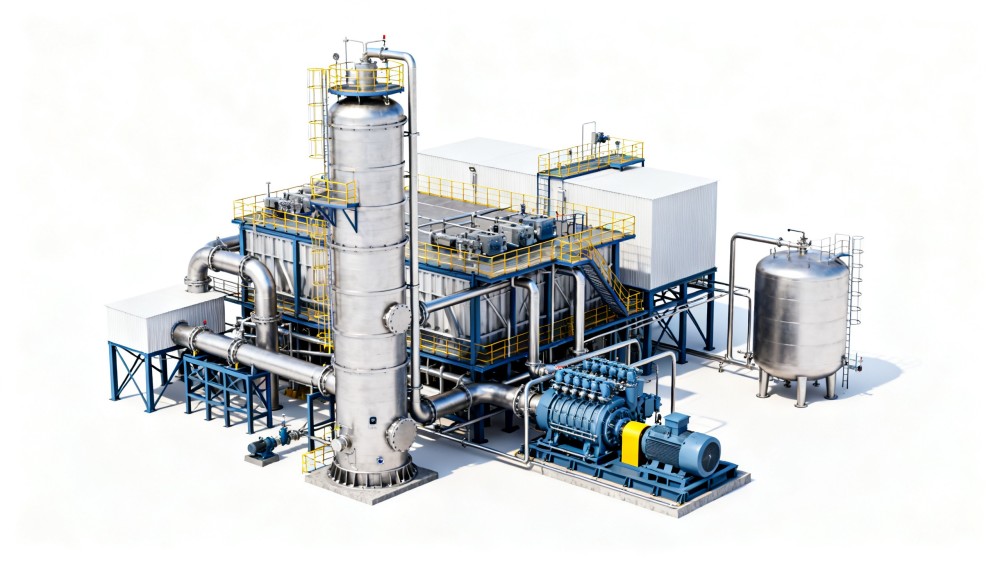
The cost stage is where ambition meets engineering reality. Early decarbonization discussions often focus on emissions reduction potential, but procurement teams, finance approvers, and project managers must eventually answer tougher questions: What is the installed cost? What is the operating cost over time? What is the cost per ton of CO2 captured? What new utilities, compressors, storage links, and compliance systems are required?
Projects commonly stall at this point for five practical reasons:
- High upfront capital expenditure: Capture units, solvent systems, compression trains, dehydration systems, heat integration upgrades, and CO2 transport interfaces can push total installed cost far beyond initial estimates.
- Retrofit complexity: Existing industrial plants were not designed for carbon capture. Space constraints, shutdown timing, piping reroutes, flue gas variability, and utility bottlenecks can sharply increase engineering and construction costs.
- Energy penalty: Capturing CO2 requires energy. In many facilities, the extra steam, electricity, or fuel demand materially reduces project economics.
- Uncertain transport and storage costs: Capture is only one part of CCUS. If pipeline access, shipping logistics, or storage permits are unresolved, the full chain becomes commercially uncertain.
- Weak revenue certainty: If the project depends on volatile carbon prices, unclear incentives, or immature utilization markets, investment committees often hesitate.
In other words, cost-stage failure usually reflects a mismatch between conceptual promise and whole-system economics.
What costs are most often underestimated in early carbon capture planning?
Many project teams underestimate carbon capture cost because they focus too narrowly on the absorber and solvent package. In reality, the largest surprises often come from balance-of-plant and site-specific integration work.
The most commonly underestimated cost categories include:
- Flue gas conditioning: Particulate removal, sulfur control, moisture handling, and temperature adjustment may require upstream modifications before the capture unit can operate reliably.
- Steam and power upgrades: Additional boilers, cogeneration changes, electrical infrastructure, and waste heat recovery systems may be needed.
- Compression and dehydration: CO2 must often be compressed to transport or storage specifications, adding substantial equipment and energy cost.
- Civil and structural work: Retrofit foundations, pipe racks, access platforms, and congestion management in brownfield sites can be expensive.
- Plant downtime and installation disruption: Lost production during tie-ins or shutdown windows can materially affect total project economics.
- Monitoring, safety, and compliance systems: CO2 handling introduces new process safety, leak detection, permitting, and reporting requirements.
- Long-term solvent and maintenance costs: Solvent degradation, corrosion management, spare parts, and operator training can raise lifecycle OPEX.
For procurement personnel and finance reviewers, this means one thing: if the initial estimate does not show site integration, utilities, logistics, and lifecycle cost in enough detail, the project is likely still too immature for approval.
Why are heavy industry carbon capture projects harder than generic decarbonization case studies suggest?
Heavy industry facilities rarely operate under textbook conditions. Steel plants, non-ferrous smelters, refineries, chemical units, polymer plants, and waste-derived material systems often have variable streams, harsh operating environments, aging equipment, and interdependent energy balances. That makes carbon capture implementation highly specific.
Several sector realities make projects more difficult:
- Process variability: CO2 concentration, contaminants, and load changes affect capture performance and solvent stability.
- Complex heat integration: Energy-intensive sectors already optimize steam and heat recovery tightly; adding capture can disrupt the entire utility system.
- Asset age and layout constraints: Brownfield plants may have no efficient location for large new capture trains.
- Commodity margin pressure: Sectors exposed to volatile oil, metal, polymer, and chemical pricing often cannot absorb large decarbonization costs easily.
- Cross-border compliance pressure: Export-oriented manufacturers may need carbon reduction, but still must justify investment against uncertain market pass-through.
This is why carbon capture projects in heavy industry should not be assessed as standalone sustainability initiatives. They must be evaluated as industrial system modifications with direct effects on competitiveness, operating continuity, and supply chain resilience.
How should companies judge whether a carbon capture project is economically viable?
For enterprise decision-makers, the right question is not “Does carbon capture reduce emissions?” It is “Under what conditions does this project become investable?”
A useful evaluation framework includes the following checkpoints:
- Cost per ton captured and cost per ton avoided: These are not the same. A project may capture CO2 efficiently but still have poor avoided-emissions economics once energy use is included.
- Source concentration and scale: High-concentration, large-volume CO2 streams are generally more attractive than dilute and fragmented sources.
- Energy availability: If low-cost steam or power is unavailable, capture economics may deteriorate quickly.
- Transport and storage certainty: Without a credible downstream CO2 pathway, even technically sound projects can stall.
- Policy support and incentives: Tax credits, carbon contracts, emissions trading, grants, or regulated returns may determine whether the project is bankable.
- Impact on product competitiveness: Can the added cost be passed to customers, offset by green premiums, or justified by compliance necessity?
- Execution risk: Brownfield complexity, shutdown dependence, contractor availability, and equipment lead times all affect final viability.
If several of these conditions remain unclear, the project is not ready for final approval, no matter how strong its strategic narrative appears.
What should procurement, engineering, and finance teams check before moving forward?
Carbon capture decisions often fail when internal teams assess the project in silos. Engineering may confirm technical feasibility, sustainability teams may support emissions value, but procurement and finance later identify cost and delivery risks that were not fully modeled. A stronger front-end review should include:
- Technology maturity review: Has the proposed capture process been proven at similar scale, gas composition, and operating profile?
- Vendor and supply chain mapping: Are critical equipment packages available within schedule, and are there concentration risks among suppliers?
- Materials and corrosion assessment: Will the process introduce accelerated corrosion, solvent compatibility issues, or metallurgy upgrades?
- HAZOP and safety implications: CO2 compression and transport require detailed hazard assessment, emergency procedures, and monitoring systems.
- Constructability review: Can the system be installed without excessive shutdown or conflict with existing operations?
- Scenario-based economic model: Financial analysis should test carbon price changes, utility cost increases, lower capture rates, and schedule overruns.
- Storage and liability clarity: Who owns long-term storage responsibility, monitoring obligations, and leakage risk?
For project managers and business evaluators, this cross-functional review is often the difference between an investable project and a stalled concept.
Where are carbon capture projects more likely to succeed?
Not all carbon capture opportunities are equal. Projects tend to perform better when they start from favorable industrial and commercial conditions.
Higher-probability cases often include:
- High-purity CO2 streams: Such as some hydrogen, ammonia, natural gas processing, or certain chemical applications.
- Large stationary emitters: Where scale supports lower unit cost and easier infrastructure justification.
- Sites near storage or transport networks: Proximity reduces one of the most uncertain cost components.
- Regions with strong policy frameworks: Incentives, carbon pricing, permitting clarity, and industrial cluster support improve bankability.
- Assets with strategic life extension value: If carbon capture preserves the long-term viability of a major industrial site, the investment case may strengthen.
For sectors like steel, refining, petrochemicals, and bulk materials, cluster-based carbon capture may be more realistic than isolated site-by-site development because shared infrastructure can lower transport and storage costs.
What does this mean for companies planning low-carbon industrial strategy?
The main lesson is not that carbon capture should be dismissed. It is that companies need sharper screening discipline. In many organizations, CCUS enters the strategy conversation as a decarbonization commitment issue, but it should quickly become a structured industrial investment question.
That means companies should:
- prioritize sources with the strongest technical and economic fit,
- model full-chain costs rather than capture-unit costs alone,
- compare carbon capture with alternative abatement pathways such as fuel switching, electrification, efficiency upgrades, feedstock changes, or process redesign,
- evaluate carbon capture as part of commodity competitiveness, not separate from it,
- and align engineering, procurement, finance, compliance, and executive teams early.
For industrial stakeholders navigating energy transition decisions, the most valuable insight is simple: many carbon capture projects stall at the cost stage because cost is not a late-stage detail. It is the central filter that determines whether technical potential can become a real operating asset.
Carbon capture can still play a meaningful role in decarbonizing heavy industry, especially where process emissions are hard to eliminate. But successful projects usually share the same traits: realistic costing, clear infrastructure access, strong policy support, disciplined execution planning, and a credible business case beyond sustainability messaging alone.
For companies evaluating CCUS in oil, metals, chemicals, polymers, and broader industrial supply chains, the right approach is not to ask whether carbon capture is promising in theory. It is to ask whether this specific project can survive real-world capital scrutiny, operational integration, and long-term commercial logic.
Related News
- Carbon neutral industry: what projects pay off first?Apr 28, 2026Carbon neutral industry projects that pay off first: compare refining equipment, sustainable energy materials, injection molding innovations, and circular economy polymers to cut risk and speed ROI.
- Carbon Capture Projects Often Stall at the Cost StageApr 28, 2026Carbon capture in heavy industry often stalls on cost. Explore impacts on ferrous metallurgy, non-ferrous metals, polymer materials, recycled plastics, and the energy transition toward carbon neutrality.
- Carbon Capture Without Utilization Still Worth It?Apr 28, 2026Carbon capture in heavy industry: is storage-only still worth it? Explore carbon neutrality, energy transition, ferrous metallurgy, non-ferrous metals, polymer materials and recycled plastics.
- Carbon capture projects often stall at the energy penaltyApr 28, 2026Carbon capture in heavy industry often stalls at the energy penalty. Learn how carbon neutrality, sustainable energy, and industrial decarbonization shape viable CCUS decisions.
Related News
- 00
0000-00
Agrochemical regulations: common export compliance mistakes - 00
0000-00
Circular economy polymers: how to avoid quality issues - 00
0000-00
Circular economy polymers: virgin or recycled blends? - 00
0000-00
Bio-based materials still face a performance trust gap - 00
0000-00
Industrial decarbonization targets slip when baselines are weak
Related tags
Weekly Insights
Stay ahead with our curated technology reports delivered every Monday.