




Carbon Capture Without Utilization Still Worth It?




As heavy industry moves from carbon ambition to carbon accountability, the short answer is yes: carbon capture without utilization can still be worth it—but only in specific regulatory, operational, and strategic contexts. For industrial decision-makers, the right question is not whether captured CO₂ can be sold, but whether standalone capture reduces compliance exposure, protects market access, improves long-term asset viability, and supports capital planning under tightening climate rules.
In sectors such as refining, cement, steel, chemicals, polymers, and power-intensive manufacturing, utilization is not always technically available, commercially scalable, or geographically practical. In those cases, capture paired with transport and storage may still create value through avoided carbon costs, permitting resilience, ESG-linked financing, and future-proofing of industrial assets. The business case is rarely simple, but it is often stronger than it first appears.
What Is the Real Search Intent Behind “Carbon Capture Without Utilization Still Worth It?”
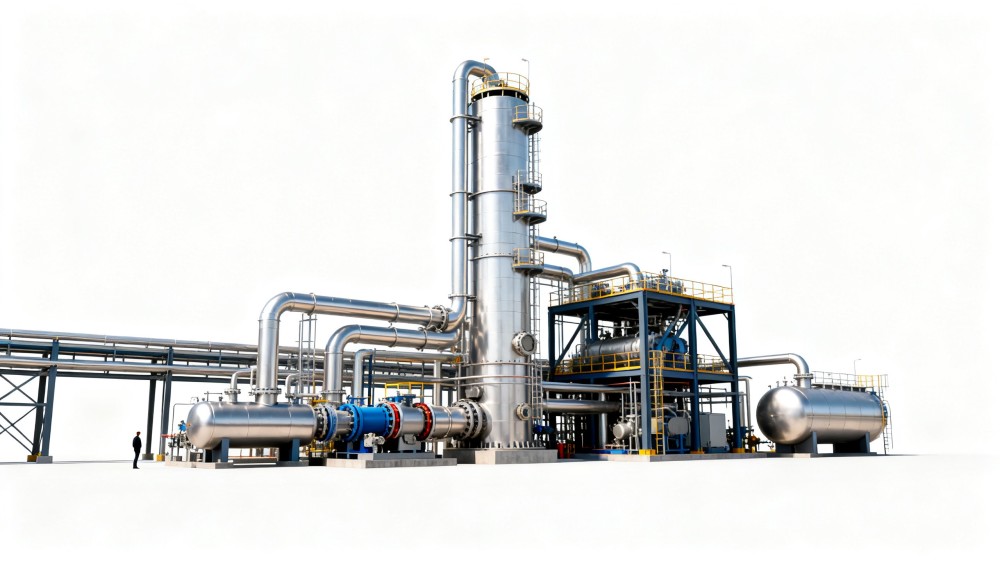
Readers searching this topic are usually not looking for a generic definition of CCUS. They are trying to answer a practical investment question: if CO₂ cannot be turned into fuels, chemicals, building materials, or other saleable outputs, does carbon capture still make economic and strategic sense?
For the target audience—research teams, technical evaluators, procurement specialists, commercial analysts, project managers, compliance leads, and senior executives—the decision hinges on a few real-world concerns:
- Whether capture-only projects can generate acceptable returns or at least justified strategic value
- How to compare carbon capture and storage against other decarbonization pathways
- What policy, carbon pricing, and compliance drivers make non-utilization capture viable
- Which industrial sectors are better candidates for storage-focused carbon management
- How to assess technology risk, infrastructure dependency, and future market uncertainty
That is why the most useful discussion is not “utilization good, no utilization bad.” The real analysis is about fit: fit with regulation, fit with emissions profile, fit with capital cycle, and fit with long-term commodity and industrial strategy.
When Carbon Capture Without Utilization Makes Sense
Standalone carbon capture is most defensible when emissions are hard to eliminate, carbon penalties are rising, and decarbonization alternatives are limited or more expensive. In those settings, storage-based carbon management can be a rational industrial choice even without a downstream CO₂ product.
1. When the emissions are process-related, not just energy-related
Some sectors generate CO₂ as part of core chemistry, not merely from fuel combustion. Cement clinker production, hydrogen from steam methane reforming, ammonia, refining, lime, and several metallurgical processes fall into this category. Electrification alone cannot solve these emissions. If a company must continue operating such assets, capture and storage may be one of the few technically credible pathways.
2. When compliance costs are becoming material
If a facility operates in a market with emissions trading systems, carbon taxes, product carbon disclosure rules, or strict permitting frameworks, the value of capture can come from avoided cost rather than monetized CO₂ sales. In other words, the project may not generate revenue from utilization, but it can still protect margins by reducing exposure to carbon liabilities.
3. When access to low-carbon markets matters
In global supply chains, especially for steel, chemicals, plastics, and energy-intensive materials, buyers increasingly ask for verified carbon intensity data. A producer that captures and permanently stores CO₂ may improve its competitiveness in markets where low-carbon sourcing standards influence procurement, financing, or contract awards.
4. When utilization pathways are weak or geographically unavailable
Not every industrial site is close to viable CO₂ offtake markets. Many utilization routes also consume only limited volumes or depend on unstable economics. In contrast, storage can sometimes provide a clearer route for large-scale emissions management—provided transport and sequestration infrastructure exist or are developing.
Why Utilization Is Not Always the Best Benchmark
Utilization sounds attractive because it implies circularity and revenue generation. But in practice, CO₂ utilization is not always the right benchmark for judging project value.
First, many utilization markets are too small relative to industrial emissions volumes. A steel, refining, or petrochemical asset may emit millions of tons of CO₂ annually, while nearby utilization demand may absorb only a small fraction.
Second, not all utilization provides durable carbon abatement. In some pathways, CO₂ is used and then re-released later. That may still have industrial merit, but it does not always satisfy the same decarbonization objective as permanent storage.
Third, utilization economics often depend on subsidies, specialized offtake contracts, or immature product markets. If the end-use market is uncertain, a utilization-based business case may actually be riskier than a storage-led one.
For many industrial operators, the correct comparison is not “capture with utilization versus capture without utilization.” It is “capture plus storage versus paying for emissions, losing permit flexibility, or risking future asset impairment.”
How Decision-Makers Should Evaluate the Business Case
For enterprise decision-makers and finance approvers, the business case should be built around total industrial value, not only direct project revenue. A robust evaluation framework typically includes five dimensions.
1. Avoided carbon cost
Estimate current and future exposure to carbon taxes, emissions trading, border adjustment mechanisms, and customer-driven carbon penalties. In many scenarios, avoided liability is the primary economic driver.
2. Asset life extension
If carbon capture allows an existing plant to continue operating under future environmental standards, that may preserve significant value. This is especially important in capital-intensive sectors such as refining, steelmaking, chemicals, and gas processing.
3. Market access and customer preference
Lower embedded emissions can improve competitiveness in procurement processes, export markets, and supply agreements with multinational buyers that have science-based targets or Scope 3 reduction commitments.
4. Financing and investor alignment
Projects with credible decarbonization impact may improve access to sustainability-linked finance, transition finance, public support, or strategic partnerships. For some firms, this can materially affect the weighted cost of capital.
5. Infrastructure and execution risk
The strongest carbon capture economics can still fail if transport, injection, monitoring, and liability frameworks are unresolved. Therefore, technical feasibility must be evaluated alongside regional storage availability, permitting pathways, and long-term stewardship rules.
Which Industries Are Most Likely to Benefit
The answer varies sharply by sector. A cross-industry view helps clarify where carbon capture without utilization is more likely to hold value.
Oil, gas, and refining
These sectors often have concentrated CO₂ streams and major compliance pressure. Capture without utilization can be justified where refineries, gas processing facilities, or hydrogen units need emissions reduction but local utilization demand is limited.
Ferrous and non-ferrous metallurgy
Steel and metals producers face rising pressure from low-carbon procurement standards and industrial decarbonization policies. In some routes, especially where process emissions are difficult to eliminate quickly, capture and storage can act as a transition tool while breakthrough technologies mature.
Chemical raw materials and fine chemicals
Ammonia, methanol, syngas, and other chemical value chains may benefit from carbon capture when product carbon intensity becomes a market differentiator. Even without utilization, storage may help protect export competitiveness and compliance standing.
Polymers, plastics, and recycled materials
Polymer and plastics value chains may not be the first sectors associated with carbon capture, but upstream feedstock emissions increasingly matter. Resin buyers, packaging brands, and circular economy stakeholders are paying more attention to embodied carbon. For integrated sites, capture at energy or feedstock processing stages can support lower-carbon product positioning.
What Technical and Commercial Risks Need the Most Attention
Not every capture project deserves approval. The weakest projects usually underestimate non-capture risks.
- Transport and storage dependency: Capture equipment is only one part of the chain. Without reliable CO₂ transport and sequestration access, the project remains incomplete.
- Policy uncertainty: If economics rely heavily on incentives or forecasted carbon prices, sensitivity analysis is essential.
- Energy penalty: Capture systems consume energy and may affect plant efficiency, operating cost, and utility integration.
- Measurement, reporting, and verification: Carbon value depends on credible accounting. Weak MRV systems can undermine both compliance and financing value.
- Long-term liability: Storage projects must address monitoring responsibility, legal ownership, and post-closure obligations.
For technical evaluators and project leaders, these issues are often more decisive than the headline capture rate.
How to Decide Whether a Standalone Carbon Capture Project Is Worth Approving
A practical approval framework should begin with a simple sequence of questions:
- Are the emissions hard to abate by efficiency, fuel switching, or electrification?
- Will carbon regulation, customer requirements, or financing conditions materially penalize continued unabated emissions?
- Is there access to transport and permanent storage at acceptable cost and legal certainty?
- Does capture support asset continuity, strategic market access, or long-term decarbonization positioning?
- Is the project still defensible under conservative assumptions for incentives, carbon prices, and operating costs?
If the answer to most of these questions is yes, then carbon capture without utilization may be strategically justified even if it does not create a visible CO₂ product revenue stream.
Final Assessment: Yes, But Only If You Evaluate It as an Industrial Strategy, Not a Product Business
Carbon capture without utilization is still worth it in many heavy-industry settings—but not because captured CO₂ has no value issue has been ignored. It is worth it because carbon management value increasingly comes from compliance resilience, asset preservation, market access, and decarbonization credibility.
For sectors tied to energy transition, metallurgy, chemicals, polymers, and other foundational materials, the decision should be made through a full-system lens. If utilization is available and economic, it can strengthen the case. But if it is not, that alone does not invalidate capture. In a world of tighter carbon rules and more transparent industrial supply chains, permanent emissions reduction can be valuable in its own right.
The companies most likely to benefit will be those that treat carbon capture not as an isolated technology purchase, but as part of a broader raw-material, energy, compliance, and capital-allocation strategy.
Related News
- Carbon neutral industry: what projects pay off first?Apr 28, 2026Carbon neutral industry projects that pay off first: compare refining equipment, sustainable energy materials, injection molding innovations, and circular economy polymers to cut risk and speed ROI.
- Carbon Capture Projects Often Stall at the Cost StageApr 28, 2026Carbon capture in heavy industry often stalls on cost. Explore impacts on ferrous metallurgy, non-ferrous metals, polymer materials, recycled plastics, and the energy transition toward carbon neutrality.
- Carbon Capture Without Utilization Still Worth It?Apr 28, 2026Carbon capture in heavy industry: is storage-only still worth it? Explore carbon neutrality, energy transition, ferrous metallurgy, non-ferrous metals, polymer materials and recycled plastics.
- Carbon capture projects often stall at the energy penaltyApr 28, 2026Carbon capture in heavy industry often stalls at the energy penalty. Learn how carbon neutrality, sustainable energy, and industrial decarbonization shape viable CCUS decisions.
Related News
- 00
0000-00
Agrochemical regulations: common export compliance mistakes - 00
0000-00
Circular economy polymers: how to avoid quality issues - 00
0000-00
Circular economy polymers: virgin or recycled blends? - 00
0000-00
Bio-based materials still face a performance trust gap - 00
0000-00
Industrial decarbonization targets slip when baselines are weak
Weekly Insights
Stay ahead with our curated technology reports delivered every Monday.