




Sustainable energy materials: what affects cost most?




As demand grows for sustainable energy materials, the biggest cost drivers extend far beyond supply alone. From refining equipment and chemical engineering standards to energy transition pathways and low-carbon material utilization, every variable shapes pricing power across the global energy matrix. This article unpacks the factors that matter most for buyers, engineers, and decision-makers navigating a carbon neutral industry.
Why do sustainable energy materials costs move so differently across sectors?
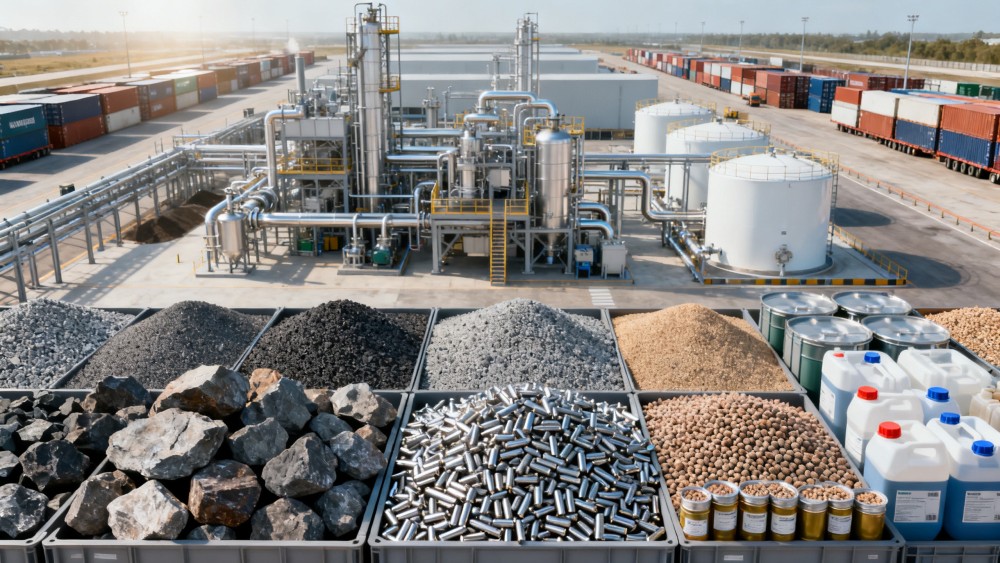
Sustainable energy materials do not behave like a single commodity class. Bio-based feedstocks, battery minerals, industrial polymers, process chemicals, recycled materials, and carbon-related inputs each respond to different cost pressures. In practice, the largest price changes usually come from a combination of 4 core variables: raw material availability, process intensity, compliance burden, and logistics resilience.
For procurement teams, the key mistake is to focus only on spot price. A lower quotation may hide higher conversion loss, stricter storage needs, unstable origin documentation, or longer lead times of 2–6 weeks. For technical evaluators, the challenge is different: one substitute material may reduce unit cost but increase energy consumption, maintenance frequency, or reject rates during continuous operation.
Across heavy industry, cost volatility often starts upstream. Mining output, refinery operating rates, catalyst availability, and energy tariffs can all affect the final landed cost. In sectors linked to oil, metals, and polymers, one disruption in feedstock flow can quickly propagate through 3 stages: extraction, processing, and conversion. That is why sustainable energy materials pricing must be read as a supply-chain system, not as an isolated purchase line.
This is where GEMM creates practical value for information researchers and business decision-makers. By tracking oil, metallurgy, polymer science, chemical engineering, and carbon assets in one integrated matrix, GEMM helps teams interpret not only what costs more, but why it costs more, how long that pressure may last, and which alternatives remain commercially workable.
- Raw material exposure: ore grades, biomass quality, recycled content consistency, and regional resource concentration.
- Processing exposure: refining temperature ranges, separation complexity, solvent use, and yield loss during purification.
- Compliance exposure: trade restrictions, origin traceability, carbon reporting, hazardous handling, and documentation workload.
- Delivery exposure: storage sensitivity, packaging requirements, shipping class, and multimodal transport constraints.
What makes cost analysis harder in sustainable energy supply chains?
Unlike conventional materials with mature trading benchmarks, sustainable energy materials may carry moving premiums for recycled content, lower emissions, or traceable sourcing. Those premiums are not fixed. They can narrow during oversupply cycles and expand sharply when policy changes or qualification demand rises. A buyer comparing offers across 3 suppliers often discovers that specification language, not just price, creates most of the variance.
Operators and project managers also face cost ambiguity after purchase. Some materials require drying windows of 4–8 hours, tighter contamination control, or narrower thermal stability ranges. If these hidden operating conditions are ignored, the nominally cheaper option can create line interruptions, safety checks, or quality deviations that outweigh any procurement savings.
Which cost drivers usually matter most in sustainable energy materials?
The most important cost drivers are usually not the same for every category, but certain patterns repeat across metals, chemicals, polymers, and carbon-linked materials. Buyers need a structured view that separates upstream cost pressure from downstream usability risk. The table below provides a practical framework for technical assessment, sourcing review, and commercial negotiation.
The most expensive problem is often not a high unit price but a badly understood cost driver. For example, materials with attractive base pricing may fail internal qualification because origin records are incomplete, moisture control is unstable, or transport classification raises shipping complexity. In B2B settings, these hidden costs can delay projects by 1–3 approval cycles.
GEMM’s cross-sector intelligence is useful because sustainable energy materials often sit at the intersection of energy engineering, metallurgy, and chemical processing. A procurement team may think it is buying a material problem, while the real issue is a process technology bottleneck or a compliance exposure in cross-border trade. Seeing that interaction early improves budget accuracy and negotiation leverage.
How do processing and quality consistency change real cost?
Real cost must include yield, downtime, test frequency, and rework risk. In many industrial applications, a 2%–5% change in conversion yield or scrap rate can offset a meaningful portion of the purchase discount. This matters especially for engineered polymers, battery precursor chemicals, and specialty metal compounds where impurity thresholds directly affect downstream performance.
Quality and safety teams should verify more than a certificate of analysis. Batch-to-batch consistency, packaging integrity, storage conditions, and contamination history matter. For sensitive materials, inspection checkpoints often include 5 items: composition, moisture, particle distribution, trace impurities, and transport condition. Missing one of these may create avoidable cost escalation later in the process.
How should buyers compare sustainable energy materials beyond the quoted price?
A robust comparison model should combine commercial, technical, and operational criteria. In heavy industry, teams often review 3 layers: purchase price, process impact, and compliance risk. That structure is especially useful when comparing virgin versus recycled materials, region A versus region B supply, or standard-grade versus enhanced traceability options.
The table below helps procurement managers, engineers, and distributors align around total cost of ownership rather than headline price. It is designed for practical use during supplier screening, internal approval meetings, and project budget reviews.
This comparison approach also helps distributors and agents avoid margin erosion. A supply offer that looks competitive at quotation stage may become difficult to resell if customers need long qualification periods, unusual packaging, or extensive support documentation. The strongest commercial position usually comes from materials that balance price with predictable execution.
A practical 4-step procurement review
- Define the operating scenario: continuous plant use, project-specific deployment, pilot volume, or resale channel.
- Separate mandatory requirements from preferred ones, especially for purity, origin traceability, and lead time.
- Calculate total cost with yield, storage, handling, and qualification time included.
- Stress-test the supply plan against 1 disruption scenario, such as delayed shipping or feedstock tightening.
Companies that skip step four often underestimate volatility. In sustainable energy materials, cost risk is not limited to high-growth phases. It can also emerge during policy transitions, maintenance shutdowns, or shifts in demand from adjacent sectors such as automotive, power storage, refining, and specialty chemicals.
What role do standards, compliance, and trade conditions play in pricing?
Compliance costs are increasingly central to sustainable energy materials pricing. For many buyers, especially in cross-border trade, the difference between two offers lies in documentation completeness rather than physical product alone. Material safety records, origin traceability, transport classification, and customer-specific declarations can affect approval speed as much as any technical specification.
In chemical engineering and advanced material supply, commercial teams often work through 3 compliance layers: product handling, import/export documentation, and sustainability-related claims. Each layer has time and labor cost. When documentation is incomplete, the result may be customs delays, rejected tenders, or internal quality holds lasting several days to several weeks.
This matters strongly for enterprise decision-makers pursuing low-carbon procurement. If a material is marketed as recycled, bio-based, lower-emission, or carbon-related, teams should confirm what evidence is actually available. Broad claims without supporting records create risk for downstream reporting, customer audits, and contract disputes.
Key compliance checkpoints before approval
- Verify the documentation set: specification sheet, safety data, origin statement, and any required transport information.
- Confirm customer-specific thresholds, such as impurity limits, recycled content declarations, or restricted substance screening.
- Review trade route exposure, including port handling, customs review time, and transshipment constraints that may extend delivery by 7–15 days.
- Align legal, procurement, and quality teams before final contract award to prevent post-award specification disputes.
GEMM is particularly relevant here because commodity cost, process technology, and trade compliance cannot be managed in separate silos. In oil-linked intermediates, metal-bearing materials, and polymer-related feedstocks, a compliance issue upstream often reshapes market availability downstream. Integrated intelligence shortens reaction time and improves sourcing confidence.
Why compliance can become a direct cost multiplier
When approval cycles extend, companies carry more working capital in inventory or buffer stock. When handling rules tighten, packaging and transport costs rise. When sustainability claims require deeper verification, the supplier base may narrow from 5 candidates to 2 qualified options. All three effects turn compliance from a support function into a direct pricing factor.
How can companies reduce cost risk without sacrificing technical fit?
The most resilient strategy is not to chase the cheapest sustainable energy materials offer. It is to build a decision model that balances cost, usability, and supply continuity. For many industrial buyers, this means segmenting materials into 3 groups: strategic high-risk inputs, standard operational inputs, and substitution-ready inputs. Each group deserves a different sourcing and inventory policy.
Technical teams can reduce cost by tightening material-to-process matching. If a plant runs within a narrow operating window, the right question is not whether a lower-cost substitute exists, but whether the substitute can run with equal stability over 30–90 day production cycles. Small instability in thermal response, moisture handling, or impurity tolerance may generate larger losses than the purchase saving.
Commercial teams should also prepare alternative sourcing paths before disruption happens. Dual qualification, regional sourcing comparison, and staged order allocation are practical tools. Even where second-source supply is slightly more expensive, the option value can be substantial when commodity fluctuations accelerate or trade routes become uncertain.
Common mistakes that increase total cost
- Choosing on unit price alone without measuring usable yield, maintenance burden, or revalidation cost.
- Treating recycled, bio-based, and conventional materials as directly interchangeable without process testing.
- Assuming all lower-carbon materials carry the same documentation standard or trade acceptance.
- Waiting until tender close to check logistics and compliance, which weakens negotiation flexibility.
FAQ for procurement, engineering, and project teams
How should we evaluate a lower-cost sustainable energy material offer?
Start with 4 checks: lead time, process compatibility, documentation completeness, and expected yield. If possible, review 1–3 recent batches or pilot runs rather than relying only on a sales specification. The lowest quote is attractive only when it also fits your operating conditions, approval timeline, and customer obligations.
Are recycled or bio-based materials always more expensive?
Not always. Their cost position depends on feedstock availability, sorting or purification effort, scale of production, and documentation requirements. In some periods, recycled streams can be cost-competitive; in others, traceability or processing complexity creates a premium. Comparison should be made over a full quarter or project cycle, not a single week’s quotation.
What lead time should buyers expect?
A common commercial range is 2–8 weeks, but specialized or qualification-sensitive materials may take longer when campaign production, import review, or documentation validation is involved. Projects with tight commissioning schedules should build in a buffer of at least 7–15 days for approval and logistics variability.
What is the biggest hidden cost after purchase?
In many cases, it is process instability rather than freight or paperwork. A material that requires extra drying, additional filtration, more frequent inspection, or unplanned shutdown response can quietly raise total cost. That is why operators, quality managers, and procurement should review the same material decision together, not in sequence.
Why choose a market intelligence partner before your next sourcing decision?
When sustainable energy materials pricing becomes more complex, companies need more than supplier quotations. They need an intelligence framework that connects commodity fluctuations, process technology, trade compliance, and low-carbon transition signals. GEMM supports that need by covering oil, metals, polymers, chemicals, and sustainable energy assets as one decision matrix rather than isolated sectors.
For information researchers, GEMM helps identify what is driving cost pressure now and what may change over the next 1–2 quarters. For technical evaluators and operators, it offers context on material behavior, process constraints, and substitution risk. For procurement and project leaders, it improves supplier comparison, sourcing timing, and contract preparation.
If you are reviewing sustainable energy materials for a plant project, product line, trading program, or distribution portfolio, you can consult GEMM on specific decision points: parameter confirmation, material selection logic, expected lead time, compliance checkpoints, substitution paths, sample support planning, and quotation strategy under volatile commodity conditions.
A useful conversation starts with practical inputs, not abstract claims. Share your target application, operating environment, required documents, annual volume band, and delivery timeline. With that basis, GEMM can help you compare options more clearly, avoid hidden cost traps, and build a sourcing decision that is commercially sound and technically realistic.
Related News
- Sustainable energy materials: what affects cost most?Apr 28, 2026Sustainable energy materials costs are shaped by refining equipment, chemical engineering standards, and low-carbon material utilization. Explore smarter energy transition pathways now.
- Sustainable Energy Plans Fail When Storage Is OverlookedApr 28, 2026Sustainable energy strategies in heavy industry fail without storage. Explore carbon neutrality, carbon capture, injection molding, ferrous metallurgy, non-ferrous metals, and recycled plastics.
- Sustainable energy claims that do not hold up on siteApr 28, 2026Sustainable energy claims in heavy industry often fail on site. Explore carbon capture, recycled plastics, injection molding and non-ferrous metals with practical checks for carbon neutrality.
- Sustainable energy projects face new land and grid constraintsApr 28, 2026Sustainable energy and energy transition projects face land and grid limits, reshaping carbon capture, heavy industry, recycled plastics, and industrial decarbonization strategies.
Related News
- 00
0000-00
Agrochemical regulations: common export compliance mistakes - 00
0000-00
Circular economy polymers: how to avoid quality issues - 00
0000-00
Circular economy polymers: virgin or recycled blends? - 00
0000-00
Bio-based materials still face a performance trust gap - 00
0000-00
Industrial decarbonization targets slip when baselines are weak
Weekly Insights
Stay ahead with our curated technology reports delivered every Monday.