




Sustainable Energy Plans Fail When Storage Is Overlooked




Sustainable energy plans fail less because companies lack ambition and more because many programs ignore one practical requirement: storage. In heavy industry, variable renewable power, carbon reduction targets, and electrified processes cannot be managed with generation alone. Storage is what stabilizes supply, protects production continuity, improves energy economics, and supports compliance and investment decisions. When it is overlooked, technical designs become fragile, business cases become misleading, and transition roadmaps lose credibility.
For decision-makers in metals, chemicals, polymers, oil and gas infrastructure, and industrial manufacturing, the key question is not whether sustainable energy matters. It is whether the energy system can reliably support plant operations, procurement strategy, carbon performance, and long-term competitiveness. The answer often depends on how early and how accurately storage is built into the plan.
Why sustainable energy plans break down when storage is not part of the original design
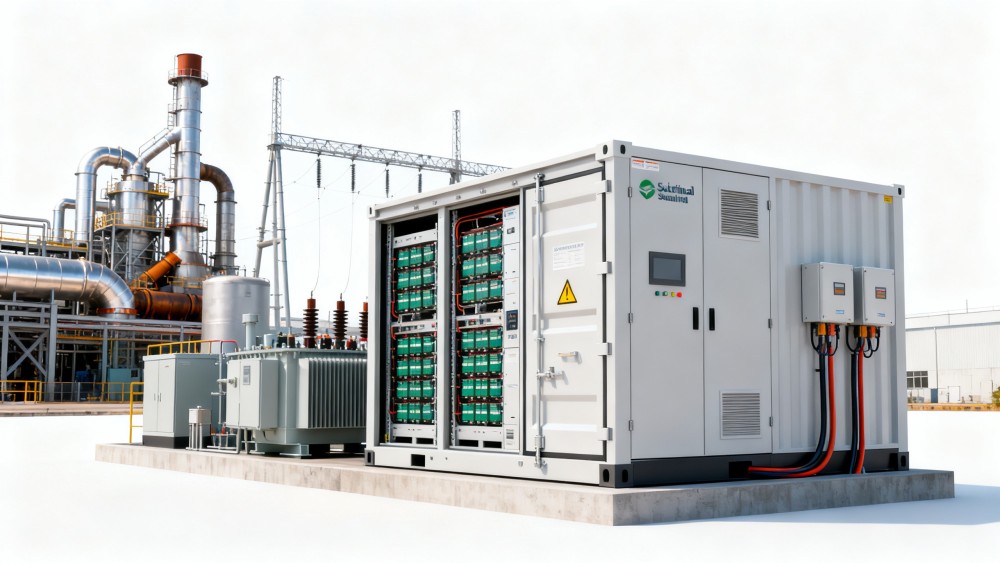
The core search intent behind this topic is practical: readers want to understand why energy transition strategies underperform and how energy storage affects technical feasibility, cost, reliability, and investment outcomes. For industrial users, this is not a theoretical issue. A plant cannot run blast furnaces, electrolysis lines, molding equipment, compressors, or chemical units on sustainability narratives. It runs on stable power, controllable loads, and predictable operating margins.
When storage is treated as an afterthought, several failure patterns appear quickly:
- Intermittent power is underestimated. Renewable generation profiles rarely align perfectly with industrial load curves.
- Project economics are distorted. Companies model low-cost clean energy supply without fully pricing curtailment, backup requirements, peak demand charges, or downtime risk.
- Grid dependence remains too high. Sites appear decarbonized on paper but still rely on unstable or carbon-intensive grid balancing.
- Operational flexibility is missing. Plants cannot shift loads, store excess energy, or respond to price spikes in gas or electricity markets.
- Carbon strategies become incomplete. Electrification, CCUS, green hydrogen, and low-carbon materials all need storage support somewhere in the chain.
In other words, storage is not a side component. It is the enabling layer between low-carbon generation and industrial reality.
What industrial buyers and evaluators actually need to know before approving a sustainable energy project
Different stakeholders approach this issue from different angles, but their concerns converge around one point: can the system deliver stable, compliant, and economically defensible performance?
Enterprise decision-makers want to know whether the energy plan improves resilience, lowers long-term exposure to commodity volatility, and supports carbon commitments without damaging output.
Financial approvers want clarity on total lifecycle cost, payback logic, capital intensity, hidden grid costs, and the downside risk of under-sizing storage.
Technical evaluators and project managers need to assess whether the storage design matches the real load profile, ramp rates, process criticality, and site operating conditions.
Procurement teams care about supplier reliability, technology maturity, maintenance requirements, performance guarantees, and trade compliance issues tied to batteries, chemicals, metals, and control systems.
Quality and safety managers need assurance that storage technologies meet fire protection, hazardous materials handling, thermal management, and operational safety standards.
That is why the most useful analysis does not stop at “renewables + storage” as a slogan. It must answer five business-critical questions:
- What exact instability or cost problem is storage solving?
- What duration, response speed, and cycle performance are required?
- How does storage affect uptime, product quality, and process continuity?
- What is the full commercial value beyond energy arbitrage?
- What risks arise if storage is omitted, delayed, or undersized?
Where storage creates the most value across heavy industry and materials sectors
Storage value depends heavily on process type. In GEMM-relevant industries, the case is strongest where operations are energy-intensive, continuity-sensitive, and exposed to power price volatility.
Ferrous and non-ferrous metallurgy: Metallurgical plants often operate under tight thermal and electrical constraints. Storage helps smooth power supply for electric arc furnaces, auxiliary systems, and high-load periods. It can reduce peak charges, improve response to grid interruptions, and support integration of renewable electricity into energy-intensive operations.
Chemical raw materials and fine chemicals: Continuous processing environments are highly sensitive to outages and unstable power quality. Storage can protect critical instrumentation, maintain process integrity, and reduce production losses tied to restarts, off-spec output, or thermal imbalance.
Rubber, plastics, and polymer processing: Injection molding and polymer conversion lines require stable power for heat control, cycle consistency, and quality assurance. Storage can help facilities manage peak loads, reduce energy procurement costs, and support cleaner electricity use without compromising throughput.
Recycled plastics and circular manufacturing: These operations may face variable feedstock economics and thinner operating margins. Storage can improve flexibility in power purchasing and make decentralized renewable systems more usable at plant level.
Oil, gas, and energy engineering: Storage supports remote operations, backup reliability, microgrids, and hybrid systems connected to drilling, compression, refining, or terminal infrastructure. It also plays a growing role in stabilizing electrified assets under decarbonization pressure.
CCUS and low-carbon industrial systems: Carbon capture, compression, and related auxiliary processes can create additional energy demand peaks. Storage helps balance these loads and can prevent decarbonization projects from unintentionally increasing cost volatility or grid stress.
Why many project business cases still underestimate storage
A common problem in sustainable energy planning is that developers model generation first and operational reality later. This leads to optimistic assumptions that work in presentations but fail in implementation.
Typical errors include:
- Using average energy demand instead of real-time load data. Industrial assets are affected by peaks, ramp events, and process-specific power quality needs.
- Ignoring curtailment loss. Excess renewable output has limited value if it cannot be stored or shifted.
- Valuing storage only through electricity price arbitrage. In industrial settings, the larger value may come from avoided downtime, improved quality stability, reduced contracted demand, and better carbon positioning.
- Separating carbon planning from energy planning. Decarbonization targets often assume a cleaner power mix without testing reliability under real operating schedules.
- Overlooking commodity and supply chain exposure. Storage technologies rely on metals, chemicals, polymers, electronics, and compliance-sensitive trade flows. Procurement strategy matters.
For industries exposed to volatile commodity prices, this last point is especially important. A storage strategy is not just a technical choice. It is also a raw materials and supply chain decision. Battery chemistry, thermal storage media, control components, and system integration costs all connect to broader market movements in lithium, nickel, cobalt, copper, aluminum, specialty chemicals, and engineered polymers. A serious business case should reflect these upstream dynamics.
How to evaluate storage correctly in a sustainable energy strategy
If the goal is to make a sound investment or technical recommendation, storage should be evaluated as a system function, not as a standalone device. A more reliable framework includes the following steps.
1. Map the real load profile.
Measure hourly and sub-hourly demand, critical loads, ramp behavior, power quality sensitivity, and outage cost. This is the baseline for sizing any storage solution.
2. Define the role of storage.
Is it for backup power, renewable smoothing, peak shaving, frequency support, thermal balancing, process continuity, or carbon optimization? One site may require several roles at once.
3. Match technology to application.
Not every use case requires the same storage type. Batteries, thermal storage, pumped systems, hydrogen-related storage, and hybrid solutions each have different strengths in response speed, duration, cost, footprint, and maintenance profile.
4. Model value beyond direct energy savings.
Include avoided downtime, lower scrap rates, deferred grid upgrades, demand charge reduction, resilience gains, compliance support, and strategic carbon benefits.
5. Stress-test the plan under volatility.
Simulate power price changes, renewable intermittency, commodity cost swings, maintenance events, and carbon policy shifts. A robust plan should still make sense under less favorable conditions.
6. Review compliance and safety constraints early.
Storage systems may involve fire safety requirements, hazardous materials controls, local permitting, transport compliance, and end-of-life obligations. These can materially affect feasibility and timing.
This approach helps readers move from “Should we add storage?” to the better question: “What storage function is essential to make this energy strategy bankable and operationally reliable?”
What happens when companies get storage right
When storage is integrated early, sustainable energy planning becomes more realistic and more valuable. Benefits typically include:
- Higher renewable utilization at site level
- Better production stability during grid or price volatility
- Improved economics from load shifting and demand management
- Stronger support for electrification and low-carbon process upgrades
- More credible carbon reduction reporting
- Lower risk in multi-year capital planning
Just as important, storage can improve decision quality. It forces organizations to connect engineering assumptions with procurement realities, financial models, safety requirements, and long-term commodity exposure. That makes the entire sustainability plan more disciplined.
Storage is not optional infrastructure; it is strategic industrial capacity
For heavy industry, the lesson is clear: sustainable energy plans fail when storage is overlooked because generation alone does not solve the operational, financial, and compliance demands of real industrial systems. Storage is the bridge between low-carbon ambition and dependable plant performance.
Companies evaluating energy transition investments should therefore treat storage as a first-order design variable from the beginning. The right question is not whether storage adds cost. It is whether excluding it creates larger hidden costs through instability, poor utilization, weak project economics, and reduced competitiveness.
In a market shaped by energy volatility, carbon pressure, and raw material uncertainty, the winners will be those that understand the full system. Sustainable energy is not only about cleaner supply. It is about controllable, resilient, and economically intelligent supply. And that is exactly where storage becomes decisive.
Related News
- Sustainable energy materials: what affects cost most?Apr 28, 2026Sustainable energy materials costs are shaped by refining equipment, chemical engineering standards, and low-carbon material utilization. Explore smarter energy transition pathways now.
- Sustainable Energy Plans Fail When Storage Is OverlookedApr 28, 2026Sustainable energy strategies in heavy industry fail without storage. Explore carbon neutrality, carbon capture, injection molding, ferrous metallurgy, non-ferrous metals, and recycled plastics.
- Sustainable energy claims that do not hold up on siteApr 28, 2026Sustainable energy claims in heavy industry often fail on site. Explore carbon capture, recycled plastics, injection molding and non-ferrous metals with practical checks for carbon neutrality.
- Sustainable energy projects face new land and grid constraintsApr 28, 2026Sustainable energy and energy transition projects face land and grid limits, reshaping carbon capture, heavy industry, recycled plastics, and industrial decarbonization strategies.
Related News
- 00
0000-00
Agrochemical regulations: common export compliance mistakes - 00
0000-00
Circular economy polymers: how to avoid quality issues - 00
0000-00
Circular economy polymers: virgin or recycled blends? - 00
0000-00
Bio-based materials still face a performance trust gap - 00
0000-00
Industrial decarbonization targets slip when baselines are weak
Weekly Insights
Stay ahead with our curated technology reports delivered every Monday.