




Which Polymer Materials Hold Up Better Under Heat?




In heavy industry, selecting polymer materials that can withstand heat is critical for performance, safety, and cost control. From injection molding and recycled plastics to broader energy transition and carbon neutrality goals, thermal resistance now shapes both technical evaluation and procurement decisions. This article explores which polymer materials hold up better under heat and why that matters across demanding industrial applications.
Which polymer materials perform better under heat in real industrial conditions?
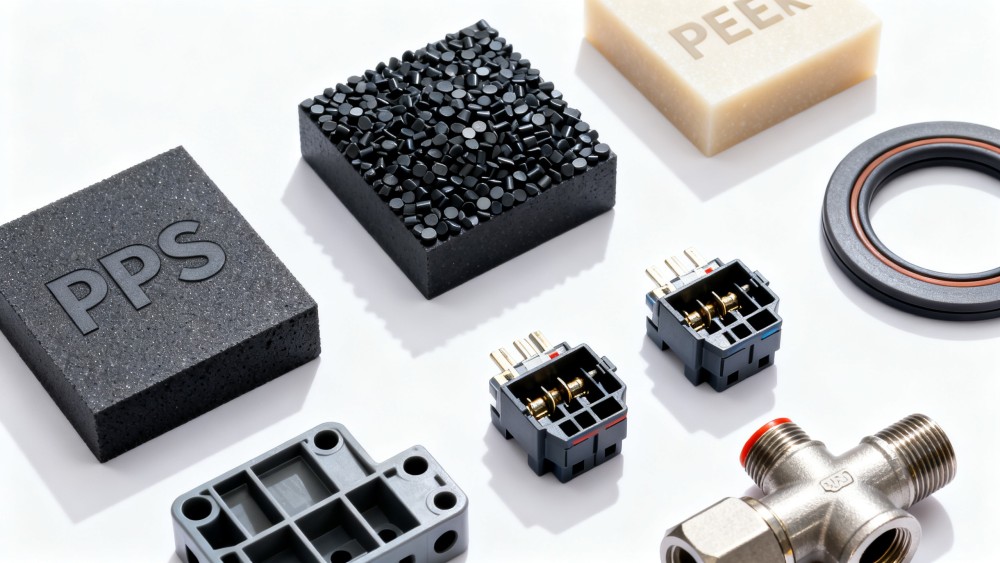
Heat resistance in polymers is not a single number. Technical teams usually assess at least 3 layers of performance: continuous service temperature, short-term peak temperature, and property retention after repeated thermal cycling. A polymer may survive a 220°C peak for a few minutes yet still fail in a 24/7 process line if creep, oxidation, or dimensional instability develops over 2–4 weeks of use.
For procurement managers and project owners, the key question is practical rather than theoretical: which polymer materials hold up better under heat without creating hidden replacement costs, shutdown risks, or compliance issues. In sectors linked to oil, metals, chemicals, and polymer processing, that decision often affects maintenance intervals, product quality, and the total cost of ownership across 12–36 months.
In broad terms, high-performance polymers such as PEEK, PPS, PI, PAI, and certain fluoropolymers generally outperform commodity plastics under elevated temperatures. Engineering plastics like PA, PBT, PET, PC, and PPO can also work well, but only within defined thermal windows and with careful attention to load, moisture, chemicals, and part geometry. The wrong grade selection can cause warpage, embrittlement, or seal failure long before the nominal heat limit is reached.
This is where material intelligence matters. GEMM tracks not only polymer science but also upstream raw material movements, compliance trends, and industrial use cases. That cross-sector view helps technical evaluators and commercial decision-makers compare polymer materials under heat with a more realistic lens: process temperature, supply risk, trade compliance, and substitution feasibility all need to be reviewed together.
A practical heat-resistance hierarchy
A useful starting point is to group polymer materials by typical thermal capability rather than by marketing labels. This makes early-stage screening faster for researchers, quality managers, distributors, and finance approvers who need a shared baseline before moving into detailed testing.
The table does not replace testing, but it gives a decision framework. When the operating window approaches 150°C or repeated peaks exceed that level, teams usually move from standard engineering plastics toward PPS, PEEK, fluoropolymers, or polyimide-based systems. The shift is driven less by melting point alone and more by long-term retention of strength, insulation, friction behavior, and dimensional control.
What should technical teams compare beyond the temperature number?
When companies ask which polymer materials hold up better under heat, the most common mistake is focusing on a single catalog figure. Heat deflection temperature, glass transition temperature, melting point, and continuous-use temperature each describe different aspects of performance. A resin that looks strong on one metric can still fail under load, steam, flame exposure, or aggressive chemicals at a lower real-world threshold.
For technical assessment, most industrial buyers should review at least 5 core indicators: continuous service range, dimensional stability, mechanical retention after aging, chemical resistance, and processability in molding or machining. If the part is safety-related, a 6th indicator is often mandatory: behavior after thermal cycling, especially where 500–1,000 repeated cycles may occur over maintenance intervals.
This is especially relevant in injection molding, sealing systems, cable insulation, pump components, and electrical assemblies. In these applications, the polymer material under heat may also be exposed to oil mist, metal fines, moisture, solvents, or pressure fluctuation. A technically acceptable material on paper may become commercially unacceptable if scrap rates rise by even 2%–5% during production.
GEMM’s polymer and trade intelligence approach is useful here because material selection is rarely isolated. Teams often need to balance thermal resistance with feedstock volatility, conversion efficiency, recycled content targets, and cross-border compliance review. That broader matrix reduces the risk of choosing a polymer that is technically excellent but commercially unstable.
Key thermal evaluation dimensions
- Continuous exposure profile: confirm whether the part runs 8 hours, 16 hours, or 24/7, and whether heat is stable or cyclical.
- Load and geometry effect: thin-wall components, threads, clips, and unsupported spans deform earlier than thick, reinforced shapes.
- Environment coupling: heat plus chemicals, UV, steam, or pressure usually lowers real service life compared with dry laboratory conditions.
- Manufacturing route: injection molded, extruded, compression molded, and machined parts can show different crystallinity and thermal stability.
- End-of-life and circularity constraints: recycled or bio-based options may support carbon goals, but their thermal window must be verified grade by grade.
How common materials compare in heat-sensitive procurement
For many cross-industry buyers, the following comparison supports faster shortlisting before lab validation. It combines thermal logic with cost and application fit, which is often what procurement committees need in the first 7–15 days of evaluation.
The comparison shows why no single polymer wins every project. PEEK may outperform many alternatives under heat, but if the application runs at moderate temperatures and faces tight budget controls, a reinforced PPS or high-temperature nylon may deliver a stronger value case. Good selection aligns performance with lifecycle economics, not just with the highest thermal class.
Which heat-resistant polymers fit different industrial scenarios?
Application context changes everything. A polymer material that performs well in dry electrical enclosures may fail in refining, chemical transfer, or metallurgy support systems where heat and chemicals interact. For project engineers and quality teams, scenario mapping is often the fastest route to a sound shortlist.
In oil, gas, and energy engineering, buyers often prioritize polymers that maintain dimensional stability, sealing behavior, and chemical resistance at elevated temperatures. In these environments, 3 operating realities are common: pressure variation, hydrocarbon contact, and long maintenance intervals. That is why PEEK, PPS, and fluoropolymer-based solutions are frequently evaluated before lower-cost resins.
In metallurgy and mineral processing, polymer components may serve as insulators, wear parts, liners, or handling accessories near hot surfaces rather than in direct melt contact. Here, thermal endurance must be balanced with abrasion resistance and replacement speed. For shutdown-sensitive facilities, a component lasting 6 months instead of 8 weeks can justify a higher unit price.
In chemical processing and fine chemicals, heat resistance must be read together with corrosion exposure. Some polymer materials hold up better under heat in air than in solvents or steam. Procurement teams should request compatibility data for the exact media range and not rely only on generic descriptions such as “chemical resistant” or “industrial grade.”
Scenario-based selection logic
- For electrical and connector systems in the 120°C–180°C range, reinforced engineering plastics or PPS often enter the first evaluation round.
- For seals, valve seats, and chemical-contact parts with repeated thermal cycling, fluoropolymers and PEEK are more commonly shortlisted.
- For high-load components near sustained heat above 180°C, teams usually examine high-performance polymers and check creep, friction, and machining tolerance together.
- For circular-economy projects, recycled polymer use should be limited to applications where heat exposure, tolerance stack-up, and service-life expectations remain well defined.
Where recycled and bio-based options can work
Not every sustainability target requires premium high-heat polymers. In some secondary housings, transport trays, covers, and non-critical molded parts, recycled plastics can remain viable if the thermal range stays moderate and quality control is strict. The key is to define 4 checkpoints: source consistency, thermal history, additive package, and lot-to-lot property variation.
That approach supports carbon and cost goals without creating false expectations. GEMM’s broader market lens is valuable because the best answer is sometimes a tiered material strategy: use high-performance polymers only where heat resistance is mission-critical, and use lower-impact alternatives where exposure is lower and replacement is manageable.
How should buyers evaluate cost, compliance, and substitution risk?
For procurement teams, the question is rarely just which polymer materials hold up better under heat. It is also whether the selected material can be sourced consistently, processed reliably, and approved internally without delay. In many organizations, technical selection, supplier qualification, and financial approval happen in 3 separate stages, often over 2–6 weeks.
A low unit price can become expensive if the polymer creates higher mold wear, slower cycle times, more scrap, or frequent field replacement. Financial approvers usually benefit from a lifecycle view that includes not only resin cost but also tooling impact, downtime exposure, quality claims, and inventory strategy. For high-heat parts, these indirect costs often outweigh the raw material delta.
Compliance also matters. Depending on the destination market and application, teams may need to review material declarations, restricted substance requirements, traceability, and sector-specific performance standards. Even where no single certification is mandatory, documentation discipline reduces approval friction for safety managers, distributors, and cross-border commercial teams.
Substitution risk is another major issue in volatile commodity markets. A polymer chosen during a favorable pricing window may later face feedstock pressure or longer lead times. GEMM’s value lies in connecting polymer selection with upstream energy, chemicals, and trade signals, helping companies avoid technically attractive materials that could become commercially unstable within one procurement cycle.
A practical procurement checklist for heat-resistant polymers
- Confirm the real operating window: normal temperature, peak temperature, dwell time, and thermal cycle frequency per shift or per week.
- Ask for grade-level data, not family-level claims, because fillers, reinforcements, and additives can change heat performance significantly.
- Review processing implications such as drying, molding temperature, tooling wear, and post-processing needs before final cost comparison.
- Check supply continuity across 2–3 sourcing windows, especially for imported, specialty, or regulation-sensitive materials.
- Use pilot validation where failure cost is high: sample testing, thermal aging, dimensional checks, and limited-run production trials.
Common decision errors that delay projects
One frequent error is over-specifying the polymer. Teams sometimes choose the highest thermal class material even when the part never sees more than moderate heat. This can lock the project into unnecessary cost and longer lead times. Another error is under-specifying secondary factors such as humidity, pressure, or flame exposure, which can shorten service life dramatically.
A third error is treating substitution as purely a resin swap. In reality, changing from PA to PPS or from PPS to PEEK may alter shrinkage behavior, tolerances, mold filling, and assembly force. The strongest projects build substitution plans around 4 linked reviews: design, process, supply chain, and compliance.
What are the most common questions about polymers under heat?
Teams searching for heat-resistant polymer materials usually face a mix of engineering and commercial questions. The answers below are intended to support technical screening, procurement planning, and executive discussion without oversimplifying the risks.
Is the highest-temperature polymer always the best choice?
No. The best choice depends on the full duty profile. If the actual service range is 110°C–140°C with limited chemical exposure, a well-selected engineering plastic may outperform a premium polymer on total value. The highest-temperature polymer is most justified when the application combines sustained heat, load, chemical contact, and high failure cost.
How should buyers compare short-term peak heat and continuous heat?
Treat them separately. A part may tolerate a short spike for seconds or minutes, but continuous exposure for hundreds of hours can produce creep, oxidation, color change, or loss of impact strength. A practical review should define 3 numbers: normal operating range, peak excursion range, and required service life before planned replacement.
Can recycled polymers be used in heat-resistant applications?
Sometimes, but only with controlled expectations. Recycled content can work in moderate-heat, non-critical parts if input consistency and thermal history are known. For high-heat or safety-relevant applications, validation should include accelerated aging, dimensional inspection, and batch consistency review over at least 2–3 lots.
What documents should procurement request before approval?
At minimum, ask for technical data by grade, processing guidance, applicable compliance declarations, and evidence of testing relevant to the use case. If the part is critical, request sample support and a validation plan covering heat exposure, dimensional stability, and chemical compatibility. This reduces approval delay for quality, safety, and finance stakeholders.
Why work with GEMM when evaluating heat-resistant polymer materials?
Evaluating which polymer materials hold up better under heat is no longer a narrow laboratory question. It affects sourcing strategy, compliance confidence, replacement intervals, and carbon-efficiency planning. GEMM supports this process through integrated intelligence across polymers, chemicals, energy, and industrial raw materials, helping teams make decisions that are technically grounded and commercially realistic.
For information researchers, GEMM helps clarify material pathways and substitution logic. For technical evaluators, we support structured comparison of performance windows, application scenarios, and risk points. For procurement and business teams, our value includes market visibility on feedstock fluctuations, trade compliance considerations, and supply-chain implications that influence final material selection.
If you are comparing PPS, PEEK, fluoropolymers, engineering plastics, recycled polymer options, or cross-category substitutes, we can help you organize the decision in a disciplined way. Typical consultation topics include 4-step screening, parameter confirmation, grade comparison, delivery-cycle discussion, sample planning, and documentation review for internal approval.
Contact GEMM to discuss your operating temperature range, media exposure, processing route, target service life, and budget boundary. We can support product selection, substitution assessment, compliance questions, sample coordination, and quotation communication so your team can move from thermal uncertainty to a more confident procurement decision.
Related News
- Bio-based materials still face a performance trust gapApr 28, 2026Bio-based materials still face a trust gap in injection molding and polymer materials. Learn what proves performance, supports industrial decarbonization, and advances carbon neutrality.
- Low-carbon material utilization: where savings are realApr 28, 2026Low-carbon material utilization reveals where real savings happen across the carbon neutral industry—from refining equipment and sustainable energy materials to injection molding innovations and circular economy polymers.
- Which Polymer Materials Hold Up Better Under Heat?Apr 28, 2026Discover which polymer materials perform best under heat in injection molding and heavy industry, with insights on recycled plastics, carbon neutrality, and smarter material selection.
- Polymer materials can pass tests and still fail in serviceApr 28, 2026Polymer materials in injection molding can pass tests yet fail in heavy industry. Learn how polymer technology, recycled plastics, and service-based validation reduce risk and support industrial decarbonization.
Related News
- 00
0000-00
Agrochemical regulations: common export compliance mistakes - 00
0000-00
Circular economy polymers: how to avoid quality issues - 00
0000-00
Circular economy polymers: virgin or recycled blends? - 00
0000-00
Bio-based materials still face a performance trust gap - 00
0000-00
Industrial decarbonization targets slip when baselines are weak
Weekly Insights
Stay ahead with our curated technology reports delivered every Monday.