




Low-carbon material utilization: where savings are real




Low-carbon material utilization is no longer a branding claim but a measurable driver of cost, compliance, and resilience across the global energy matrix. From refining equipment upgrades and sustainable energy materials to injection molding innovations and circular economy polymers, real savings emerge where technology, sourcing, and chemical engineering standards align with carbon neutral industry goals.
For researchers, operators, technical evaluators, procurement teams, project managers, distributors, and executives, the key question is no longer whether low-carbon materials matter. The practical question is where savings are real, how they are measured, and which material choices improve both operating margins and compliance readiness across oil, metals, chemicals, plastics, and energy infrastructure.
In heavy industry, carbon performance and economic performance increasingly move together. A lower-emission alloy, recycled polymer feedstock, higher-efficiency catalyst support, or optimized molding resin can reduce scrap rates, energy use, maintenance frequency, and exposure to trade restrictions. The strongest results appear when material selection is integrated with process engineering, supplier qualification, and lifecycle cost analysis rather than treated as a standalone sustainability initiative.
For organizations navigating commodity volatility, GEMM’s cross-sector perspective is especially relevant. Cost savings in low-carbon material utilization often come from the intersection of 4 factors: feedstock price stability, process compatibility, compliance traceability, and performance under industrial conditions. Understanding that intersection helps buyers avoid green premiums that never convert into operational value.
Where low-carbon material savings actually show up in industrial operations
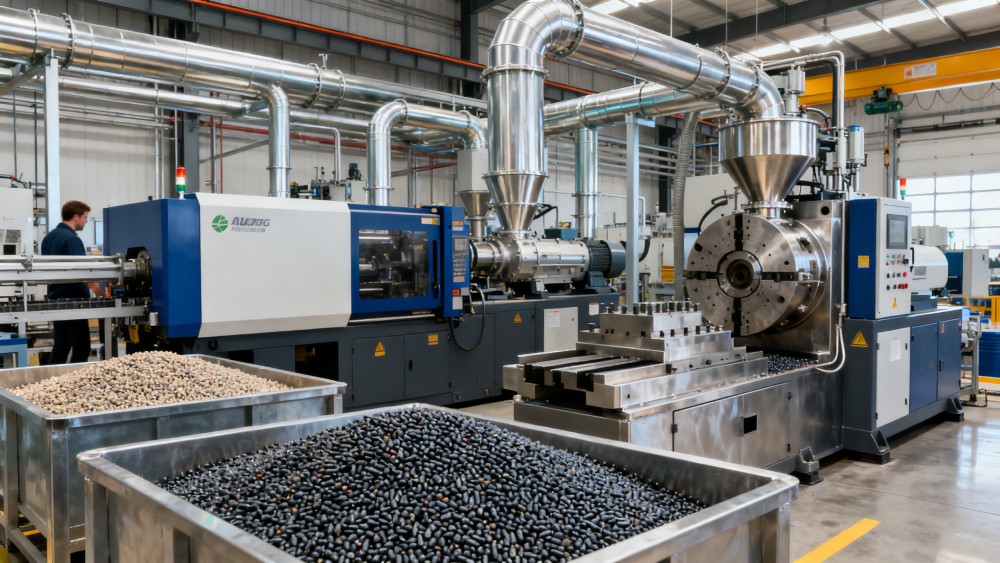
The most reliable savings from low-carbon material utilization appear in 5 operational zones: energy consumption, material yield, maintenance cycles, waste handling, and compliance management. In practice, a material with a 3% to 8% higher purchase price can still lower total cost when it cuts process temperature, extends service life by 12 to 24 months, or reduces off-spec output by 1% to 3%.
In refining and chemical engineering, material substitution often affects thermal efficiency and corrosion resistance. A better-matched lining, alloy, or catalyst support can reduce unplanned shutdowns, which are typically more expensive than the material premium itself. For continuous-process plants, even a 6-hour reduction in outage frequency over a quarter can create meaningful savings in throughput and labor scheduling.
In plastics and polymer conversion, low-carbon gains are frequently linked to processability rather than only recycled content. A resin that runs at 10°C to 20°C lower barrel temperature, or with a 5% shorter injection cycle, can lower power demand and improve machine utilization. For processors operating 2 or 3 shifts, this effect compounds quickly over a 30-day production window.
In metallurgy, the savings path is often indirect but substantial. Low-carbon alloys or recycled metallic inputs must be assessed not just by embodied emissions but by melting behavior, impurity control, and downstream finishing performance. If a lower-carbon input increases slag volume, rework, or tool wear, the sustainability claim may not translate into commercial value.
Typical cost levers by material and process type
The table below shows where procurement and technical teams most often find measurable savings. These are common industrial ranges rather than fixed guarantees, and results depend on process stability, equipment condition, and supplier consistency.
The main takeaway is simple: savings are real when the material change also improves process discipline. If a low-carbon option introduces variability beyond acceptable tolerances, its benefits can disappear in scrap, downtime, or quality claims. That is why technical validation and sourcing intelligence must be connected from the start.
How to evaluate low-carbon materials beyond purchase price
A low-carbon purchasing decision should be made with a total-cost framework, not with a single unit price comparison. Industrial buyers should examine at least 6 dimensions: embodied carbon visibility, process compatibility, conversion efficiency, mechanical or chemical performance, compliance traceability, and supply continuity. Missing any one of these areas can distort the business case.
For operators and technical evaluators, compatibility is usually the first gate. A new material that requires major changes to drying time, mold temperature, furnace profile, or corrosion control chemistry may generate hidden implementation cost. A reasonable screening process should identify whether the material can run within the existing process window, such as ±5°C temperature tolerance or within current line speed limits.
For procurement and commercial teams, supply reliability matters as much as emissions data. A supplier offering a lower-carbon feedstock but only 1 shipment channel, 1 regional warehouse, or highly variable lead times creates risk. In volatile commodity markets, an apparent carbon advantage can be neutralized by late delivery, substitution pressure, or inventory carrying costs over a 30 to 60 day cycle.
For quality and safety managers, documentation is critical. Material declarations, batch traceability, contamination thresholds, storage conditions, and processing guidance should be reviewed before any scale-up. This is especially important in chemicals, polymers, and alloys used in regulated or safety-sensitive environments.
A practical 4-step evaluation workflow
- Define the target: cost reduction, carbon reduction, compliance readiness, or process stability. Rank these goals from 1 to 4 before supplier contact.
- Run a technical screen: check temperature range, chemical resistance, mechanical properties, impurity tolerance, and equipment fit.
- Test on a controlled batch: use a pilot run, limited molding campaign, or one maintenance cycle to measure scrap, energy, and throughput.
- Review commercial risk: compare lead time, MOQ, payment terms, substitution risk, and documentation completeness.
This workflow helps prevent a common error: approving a low-carbon material because its emissions profile looks attractive on paper, while ignoring process cost and supply-chain friction. In most B2B settings, the most successful material transitions are phased over 2 to 3 stages, not switched at full scale on day one.
Decision criteria for cross-functional teams
The table below can be used as a working checklist during supplier review or internal approval. It is especially useful when engineering, sourcing, compliance, and operations do not prioritize the same metrics.
When teams use shared decision criteria, low-carbon material selection becomes a controlled business decision rather than a marketing-driven purchase. That structure is essential in sectors where oil, metal, and polymer inputs are exposed to price swings and regulatory pressure at the same time.
High-value application scenarios across oil, metals, chemicals, and polymers
Not every industrial segment captures low-carbon savings in the same way. In oil, gas, and energy engineering, the best opportunities often come from material durability and energy efficiency. In metals, the focus is more frequently on feedstock intensity and process yield. In polymers and circular materials, savings are strongly linked to repeatability, contamination control, and customer acceptance of recycled content.
Consider refinery maintenance. Replacing standard materials with longer-life low-carbon alternatives may not radically change the invoice value of one shutdown, but it can lengthen inspection intervals from 12 months to 18 months in suitable conditions. When combined with lower leak risk and better heat management, the savings often appear in total uptime rather than in direct material spend.
In metallurgical operations, recycled or lower-carbon inputs can work well when chemistry control is tight. The operational target is usually not the lowest carbon number alone, but stable composition, lower rejection rate, and reduced finishing losses. A plant that cuts rework from 4% to 2.5% may generate a better financial outcome than a plant that buys a lower-emission input but struggles with composition drift.
In polymer processing, circular economy materials become cost-effective when the compound has predictable melt behavior and the end-use tolerates the right balance of virgin and recycled content. For example, some non-cosmetic industrial parts can run effectively with blended content ratios, but only after verifying mechanical consistency and dimensional stability over multiple production lots.
Scenario-based selection priorities
- For energy and refining assets: prioritize corrosion resistance, thermal efficiency, maintenance interval, and shutdown risk reduction.
- For ferrous and non-ferrous metallurgy: prioritize impurity control, melt consistency, yield retention, and downstream machinability.
- For chemical raw materials: prioritize handling safety, process compatibility, storage stability, and compliance documentation.
- For plastics and rubber conversion: prioritize melt flow consistency, cycle time, contamination thresholds, and regrind performance.
These priorities matter because the “best” low-carbon material is always application-specific. A material that performs well in a pilot environment may fail in a high-throughput plant if moisture control, feed variability, or operator settings are not aligned. This is why implementation data over 2 to 6 weeks is often more valuable than brochure claims.
Common savings traps to avoid
Three mistakes appear repeatedly in industrial sourcing. First, teams focus only on the price delta per ton or per kilogram. Second, they overestimate compatibility with existing equipment. Third, they do not quantify the cost of variability. In real operations, even a 1.5% rise in scrap or a 10% longer setup time can eliminate the expected carbon-linked savings.
A disciplined transition plan should include baseline measurement, sample testing, operator feedback, and batch traceability. That approach gives project managers and decision-makers a practical basis for approving broader rollout across plants, product lines, or regional distribution channels.
Implementation, risk control, and procurement strategy
Once a low-carbon material looks technically viable, the next challenge is controlled implementation. The most effective projects usually follow 3 phases: screening, pilot validation, and scaled deployment. Each phase should have defined metrics such as scrap rate, energy use per batch, equipment downtime, and documentation completeness. Without these checkpoints, teams struggle to prove savings or identify failure points early.
Procurement strategy should also reflect commodity volatility. In sectors linked to oil, metals, and chemicals, the lowest-carbon option may not always be the lowest-risk option. Dual sourcing, indexed pricing, flexible MOQ terms, and regional backup inventory can protect the savings case when freight disruption or feedstock swings affect availability over a 4 to 8 week period.
For project leaders, risk control must extend beyond materials to documentation and training. Operators need clear parameter windows, maintenance teams need revised inspection points, and quality teams need acceptance criteria for incoming lots. A well-managed launch often includes 1 pre-trial review, 1 production trial, and 1 post-trial assessment before wider approval.
For distributors and channel partners, customer communication is equally important. Buyers want to know whether a low-carbon option changes storage requirements, shelf stability, process temperature, or warranty exposure. Transparent communication reduces hesitation and shortens the evaluation cycle.
Procurement and rollout checklist
The table below summarizes a practical decision path for industrial procurement teams comparing low-carbon material options in multi-stakeholder environments.
The broader lesson is that low-carbon material utilization delivers the best returns when it is managed as a supply-chain and engineering program, not just a sourcing substitution. Organizations that map cost, carbon, quality, and compliance together are better positioned to convert material transitions into durable commercial advantage.
Frequently asked questions from industrial buyers
How do we know if a low-carbon material is worth the premium?
Compare the premium against measurable gains in 3 areas: energy use, scrap reduction, and maintenance interval. If the material premium is 5% but reduces total operating cost by 6% to 10% over one production or maintenance cycle, it is usually commercially justified.
Which teams should be involved in approval?
At minimum, involve procurement, operations, technical evaluation, and quality or compliance. In higher-risk sectors such as chemicals, refining, or engineered polymers, project management and safety teams should also review handling, storage, and process window implications before rollout.
Are recycled or bio-based materials always lower cost?
No. Their financial value depends on supply stability, contamination control, and processing efficiency. Some options reduce cost quickly in 2 to 4 weeks of production, while others only make sense when carbon reporting, customer requirements, or long-term sourcing resilience are part of the business case.
What is the biggest mistake during implementation?
The biggest mistake is scaling too fast without a controlled pilot. Industrial teams should validate the material under real conditions, document parameter changes, and establish incoming quality criteria before expanding to multiple lines, plants, or regions.
Low-carbon material utilization creates real savings when material science, operating reality, and supply intelligence move in the same direction. The strongest outcomes come from disciplined evaluation, application-specific selection, and phased implementation across heavy industry value chains.
For companies working across energy, metals, chemicals, and polymers, GEMM helps connect commodity insight with technical trend analysis and trade compliance understanding. If you are assessing lower-carbon inputs, comparing sourcing risks, or planning an industrial material transition, contact us to get a tailored evaluation framework, discuss product and process details, or explore more practical low-carbon solutions.
- global energy matrix
- ferrous metallurgy
- chemical raw materials
- sustainable energy
- refining equipment
- injection molding
- bio-based materials
- heavy industry
- injection molding innovations
- chemical engineering standards
- sustainable energy materials
- carbon neutral industry
- circular economy polymers
- low-carbon material utilization
Related News
- Bio-based materials still face a performance trust gapApr 28, 2026Bio-based materials still face a trust gap in injection molding and polymer materials. Learn what proves performance, supports industrial decarbonization, and advances carbon neutrality.
- Low-carbon material utilization: where savings are realApr 28, 2026Low-carbon material utilization reveals where real savings happen across the carbon neutral industry—from refining equipment and sustainable energy materials to injection molding innovations and circular economy polymers.
- Which Polymer Materials Hold Up Better Under Heat?Apr 28, 2026Discover which polymer materials perform best under heat in injection molding and heavy industry, with insights on recycled plastics, carbon neutrality, and smarter material selection.
- Polymer materials can pass tests and still fail in serviceApr 28, 2026Polymer materials in injection molding can pass tests yet fail in heavy industry. Learn how polymer technology, recycled plastics, and service-based validation reduce risk and support industrial decarbonization.
Related News
- 00
0000-00
Agrochemical regulations: common export compliance mistakes - 00
0000-00
Circular economy polymers: how to avoid quality issues - 00
0000-00
Circular economy polymers: virgin or recycled blends? - 00
0000-00
Bio-based materials still face a performance trust gap - 00
0000-00
Industrial decarbonization targets slip when baselines are weak
Related tags
- global energy matrix
- ferrous metallurgy
- chemical raw materials
- sustainable energy
- refining equipment
- injection molding
- bio-based materials
- heavy industry
- injection molding innovations
- chemical engineering standards
- sustainable energy materials
- carbon neutral industry
- circular economy polymers
- low-carbon material utilization
Weekly Insights
Stay ahead with our curated technology reports delivered every Monday.