




Refining equipment upgrades: repair or replace?




As refining equipment ages, the choice to repair or replace now affects far more than maintenance budgets. In today’s global energy matrix, operators and decision-makers must weigh energy transition pathways, chemical engineering standards, and low-carbon material utilization against reliability, compliance, and long-term returns. This article explores how refining equipment upgrades align with carbon neutral industry goals and sustainable energy materials trends.
How should industrial teams frame the repair-or-replace decision?
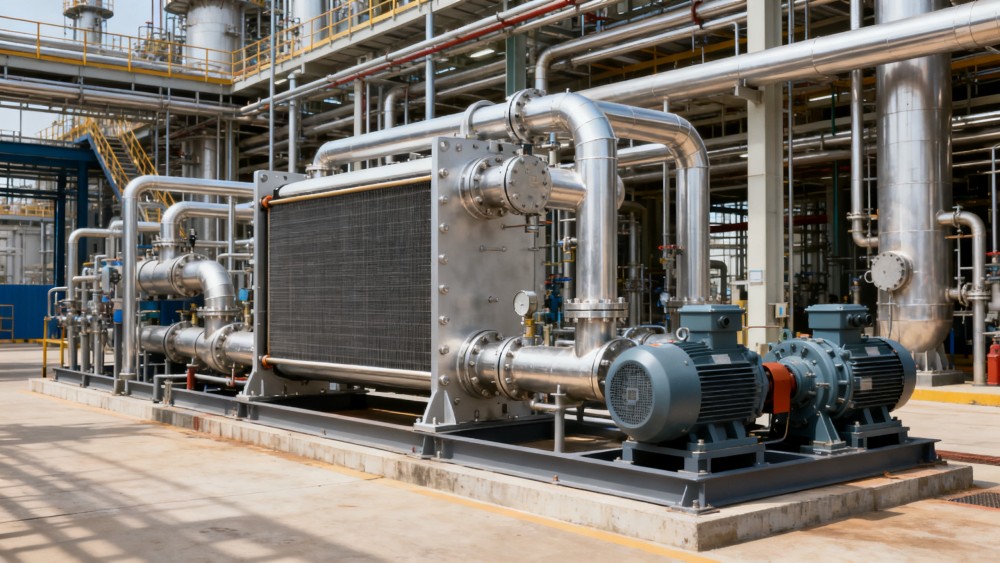
In refining operations, the repair or replace question is rarely a simple maintenance choice. It affects throughput stability, shutdown planning, process safety, emissions control, spare parts strategy, and capital allocation. For operators, the issue starts with equipment condition. For procurement teams, it extends to lead time, supplier risk, and lifecycle cost. For executives, it connects directly to energy transition targets and asset competitiveness over the next 3–10 years.
This decision becomes more complex when refineries operate across mixed feedstocks, tighter sulfur specifications, or retrofits linked to biofuels and cleaner energy pathways. A pump, heat exchanger, reactor internals set, compressor, or control system may still run today, yet no longer match current process intensity, corrosion exposure, or compliance requirements. In such cases, repairing a unit can restore function without restoring strategic fitness.
A practical way to evaluate refining equipment upgrades is to separate the problem into 3 layers: current reliability, future operating fit, and supply-chain economics. If one layer fails, a repair may still be justified. If two or more layers show structural weakness, replacement often becomes the lower-risk path even when initial cost is higher. This is especially true for equipment supporting continuous runs of 6–24 months between major turnarounds.
GEMM’s value in this process lies in linking equipment decisions with commodity volatility, alloy trends, polymer material performance, and trade compliance insights. That broader perspective matters because replacement economics are no longer determined only by purchase price. They are shaped by steel and nickel exposure, import restrictions, inspection standards, and the low-carbon direction of downstream industrial assets.
Three questions that should be answered before any budget is approved
Before approving either repair or replacement, project leaders should define whether the asset is mission-critical, whether failure is gradual or sudden, and whether the equipment will remain process-relevant after the next upgrade cycle. A unit with frequent seal leaks may be repairable. A vessel or exchanger with repeated metallurgy-related degradation under changing feedstock conditions may require replacement to avoid repeating the same failure mode.
- Is the equipment tied to production bottlenecks, safety interlocks, or environmental permit performance?
- Can the current unit remain reliable for the next 12–36 months without repeated unplanned shutdowns?
- Will upcoming process changes such as higher temperature duty, hydrogen service, or lower-emission operation make the existing design obsolete?
If the answer to the third question is yes, many companies benefit from evaluating replacement earlier rather than treating repair as a default option. That shift often reduces rework, duplicate inspection costs, and emergency sourcing pressure.
Which technical and commercial signals point toward repair, and which point toward replacement?
The strongest decisions come from combining condition data with business context. Technical teams often focus on wall loss, vibration, heat transfer decline, fouling frequency, or control instability. Commercial teams focus on outage cost, replacement lead time, and exposure to raw material fluctuations. Both views are valid, but they should be reviewed together in one decision matrix rather than in separate departments.
In many refineries, a workable threshold approach includes 5 key checks: repair frequency over the last 12 months, critical spares availability, compliance gap risk, energy performance deviation, and remaining useful life. No single metric should decide the outcome alone. For example, a unit may still have remaining life, but if spare parts now require 16–24 weeks and repeated repairs trigger monthly process disturbances, replacement can be commercially safer.
The following table helps teams compare common triggers. It is not a universal formula, but it gives procurement, maintenance, and technical evaluation teams a shared language for refining equipment upgrades.
The table shows why the lowest immediate cost is not always the lowest total cost. If replacement solves multiple structural problems at once, it may improve turnaround planning, utilities consumption, and inspection intervals. That can outweigh a higher capital outlay, especially in units where even a short outage creates significant margin loss.
What technical data should be collected first?
At minimum, teams should gather 6 categories of evidence before deciding: operating hours, maintenance history, failure mode records, thickness or integrity inspection results, utility consumption trend, and any compliance observations tied to safety or emissions. For rotating equipment, add vibration and bearing condition data. For static equipment, add corrosion mapping, fouling patterns, and weld repair history.
This disciplined data collection prevents a common error: replacing equipment because it is old, rather than because it is no longer fit for service. Age matters, but service severity, feed variability, and material compatibility often matter more.
How do lifecycle cost, outage risk, and compliance change the economics?
For procurement and business assessment teams, refining equipment upgrades should be evaluated through total lifecycle cost rather than invoice price alone. That means combining repair cost, downtime exposure, installation scope, inspection burden, spare parts inventory, and operating efficiency. In volatile commodity environments, even a modest improvement in uptime or energy intensity can materially change the business case over 24–60 months.
Compliance also has a growing economic role. Older equipment may still function, yet create issues with pressure boundary integrity, fugitive emissions, hazardous area instrumentation, or documentation traceability. When a site is aligning with stricter process safety management or lower-carbon operating goals, replacement may reduce not only maintenance cost but also audit exposure and permit-related risk.
The following table is useful for project managers comparing cost categories. It reflects common industrial decision points rather than fixed market prices, since actual cost depends on metallurgy, scope, supplier region, and turnaround timing.
A cost table like this helps finance and engineering teams avoid false savings. If a repaired asset causes 2–3 extra shutdown events in one year, the indirect cost can exceed the price gap between repair and replacement. This is where GEMM’s market intelligence becomes useful: material price movements, fabrication bottlenecks, and trade compliance changes can materially shift the timing of the optimal decision.
Why commodity and material intelligence matter in replacement planning
Replacement timing is increasingly affected by raw material exposure. Stainless grades, nickel-bearing alloys, specialty polymers, seals, and instrumentation inputs can all move with global energy and trade conditions. A delayed procurement window may increase replacement cost or stretch delivery beyond the next outage slot. Conversely, early planning can lock in specifications and reduce commercial uncertainty.
For that reason, advanced buyers no longer ask only, “What does the equipment cost today?” They also ask, “What will the supply chain look like over the next quarter, and does our material selection still make sense under future operating and compliance requirements?”
What should procurement, technical, and safety teams check before selecting an upgrade path?
A robust refining equipment upgrade process works best when maintenance, operations, procurement, HSE, and project management review the same checklist. This prevents fragmented decisions, such as approving a low-cost repair that later fails safety review or selecting a replacement that cannot be installed within the outage window. In most industrial settings, a 4-step cross-functional review is enough to improve decision quality significantly.
A practical 4-step evaluation flow
- Define duty and failure criticality: identify whether the equipment is tied to safety, throughput, emissions, or product quality.
- Verify technical fitness: review inspection history, process conditions, metallurgy, sealing systems, and instrumentation compatibility.
- Model commercial impact: compare repair cost, replacement lead time, downtime exposure, and spare parts strategy over at least 12–36 months.
- Confirm implementation constraints: check turnaround window, contractor access, documentation, and any permit-to-work or compliance implications.
For safety and quality teams, 5 checks often deserve special attention: pressure containment integrity, hazardous fluid compatibility, emissions-control performance, traceable material documentation, and inspection accessibility after the work is complete. These points become especially important in high-temperature services, corrosive process streams, and units with aging piping interfaces.
Common selection mistakes to avoid
One common mistake is comparing repair versus replacement without including outage cost. Another is evaluating a component in isolation, even when upstream process changes have already altered its duty. A third is reusing old material specifications despite evidence of recurring corrosion, fouling, embrittlement, or elastomer degradation. These errors are costly because they create a cycle of repeated fixes rather than a stable upgrade path.
- Do not treat historical design conditions as current conditions without verification from operations data.
- Do not assume the fastest repair is the best option if it shifts risk into the next quarter.
- Do not overlook documentation and traceability, especially where imported materials or substituted parts are involved.
When the process includes new fuels, hydrogen blending, tighter sulfur handling, or circular feedstocks, those checks become even more important. Material compatibility and compliance should be reviewed before purchase, not after installation.
How do decarbonization, new materials, and digital intelligence reshape future upgrade decisions?
Refining equipment upgrades are increasingly influenced by decarbonization strategy. A repair that extends life by 12 months may be sensible if a larger process redesign is already scheduled. But if the site intends to improve energy efficiency, reduce fugitive emissions, co-process bio-based feedstocks, or integrate CCUS-related systems within the next 2–5 years, replacement may better support that transition. The right answer depends on how the asset fits the roadmap, not only on its present condition.
New materials also change the equation. Improved alloys, engineered polymers, better sealing systems, and smarter instrumentation can address chronic failure modes that older repair programs only manage temporarily. In high-cycle thermal duty or corrosive chemical service, upgrading materials can reduce intervention frequency and improve reliability under more demanding operating windows.
Digital intelligence adds another layer. Instead of making decisions solely during failure events, companies can combine inspection trends, maintenance records, commodity signals, and compliance developments to decide earlier. That is where GEMM provides strategic support: connecting refining technology decisions with raw material market direction, global heavy industry supply chains, and trade compliance insight across oil, metals, chemicals, and polymers.
Why this matters to different stakeholders
Operators want fewer unexpected disruptions. Technical evaluators need evidence-based equipment selection. Procurement teams need predictable lead times and transparent specifications. Decision-makers need capital discipline with future readiness. Distributors and project partners need clearer requirements to quote accurately. A structured repair-or-replace framework serves all of them because it reduces ambiguity at the front end.
In practical terms, the best decisions are usually made 1 shutdown cycle earlier than the industry average. That gives teams time to compare options, verify material fit, assess standards exposure, and align budget with implementation reality instead of buying under emergency pressure.
Why choose GEMM for refining equipment upgrade decisions?
GEMM helps heavy industry teams move beyond isolated equipment judgment. Our strength is not limited to a single product line or one maintenance viewpoint. We connect refining equipment upgrades with global energy engineering trends, metallurgy evaluation, polymer performance in harsh industrial conditions, and trade compliance insight. That combination is useful when the real question is not simply whether to repair or replace, but how to make the choice with stronger commercial and technical visibility.
If your team is comparing options for rotating equipment, exchangers, reactors, piping systems, seals, control components, or material substitutions, we can help structure the evaluation. Typical consultation topics include 3 categories: parameter confirmation, upgrade path comparison, and supply-chain risk review. This supports information researchers, operators, technical assessors, buyers, project managers, safety personnel, and business decision-makers working under tight turnaround schedules.
You can contact GEMM to discuss equipment selection logic, likely procurement windows, material suitability under specific process conditions, compliance-sensitive sourcing, and replacement timing under volatile commodity markets. If you are preparing a shutdown plan or screening a capital project, we can also help frame the decision criteria so your internal teams compare repair and replacement on the same technical and economic basis.
A useful starting point is to share your operating duty, failure history over the last 12–24 months, current material specification, target delivery window, and any certification or documentation requirements. With that baseline, the discussion becomes more actionable: whether you need a short-term repair strategy, a replacement roadmap, a custom material review, or a broader market and compliance assessment tied to long-term asset performance.
Related News
- How to choose refining equipment for lower energy useApr 28, 2026Refining equipment selection for carbon neutral industry: learn how to cut energy use, meet chemical engineering standards, and support sustainable energy materials and low-carbon material utilization.
- Refining equipment upgrades: repair or replace?Apr 28, 2026Refining equipment upgrades: repair or replace? Explore refining equipment strategies for a carbon neutral industry, balancing sustainable energy materials, compliance, risk, and lifecycle value.
Related News
- 00
0000-00
Agrochemical regulations: common export compliance mistakes - 00
0000-00
Circular economy polymers: how to avoid quality issues - 00
0000-00
Circular economy polymers: virgin or recycled blends? - 00
0000-00
Bio-based materials still face a performance trust gap - 00
0000-00
Industrial decarbonization targets slip when baselines are weak
Weekly Insights
Stay ahead with our curated technology reports delivered every Monday.