




What Is Changing in Ferrous Metallurgy This Year?




Ferrous metallurgy is changing faster this year than many buyers, engineers, and industrial planners expected. The biggest shift is not just in steelmaking technology itself, but in how ferrous production is now being judged through four filters at once: cost volatility, energy efficiency, carbon compliance, and supply chain resilience. For companies that source, process, trade, or approve investments in ferrous materials, the practical question is no longer “What new technology exists?” but “Which changes will affect margins, specifications, project risk, and long-term competitiveness?”
This year’s most important developments include the acceleration of low-carbon steel pathways, tighter raw material quality requirements, greater integration with scrap and recycled material systems, stronger policy pressure around emissions reporting, and growing interaction with adjacent sectors such as non-ferrous materials, energy engineering, carbon capture, and advanced polymers. For decision-makers, understanding these shifts is essential for procurement strategy, technical evaluation, compliance planning, and capital allocation.
What matters most in ferrous metallurgy this year?
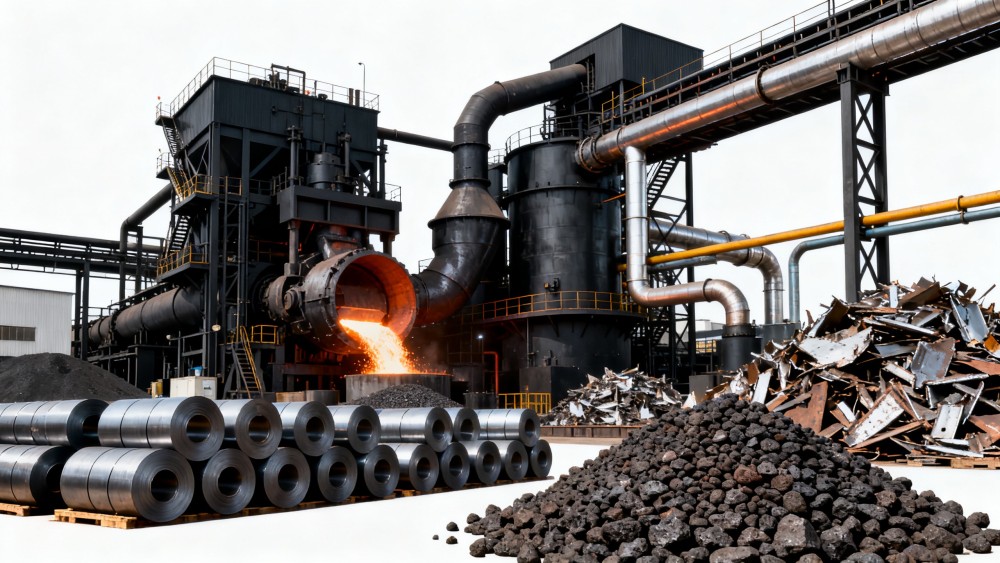
The most meaningful changes in ferrous metallurgy this year can be grouped into five high-impact themes:
- Decarbonization is moving from strategy to procurement reality. More steel and iron projects are being evaluated based on actual carbon intensity, not only output and cost.
- Energy prices remain a metallurgical variable, not just an operating expense. Power, gas, coking coal, and hydrogen pathway economics are directly shaping process choices.
- Raw material quality is under greater scrutiny. Iron ore grade, impurity control, scrap cleanliness, and alloy consistency matter more as plants try to improve efficiency and lower emissions.
- Compliance and traceability expectations are rising. Producers, importers, and distributors increasingly need auditable emissions data, origin transparency, and process documentation.
- Technology choices are becoming cross-sector. Carbon capture, automation, digital process control, refractory improvements, and even materials substitution trends from polymers and lightweight design are influencing ferrous demand and production logic.
In short, ferrous metallurgy this year is not being reshaped by one breakthrough. It is being restructured by the combination of environmental regulation, operating economics, and downstream market pressure.
Why are low-carbon steelmaking pathways becoming a real commercial issue?
For years, low-carbon steelmaking was discussed mainly as a long-term transition topic. This year, it is becoming a practical business issue because customers, investors, regulators, and procurement teams are all asking more detailed questions about emissions intensity.
The biggest change is the growing contrast between traditional blast furnace-basic oxygen furnace routes and lower-emission alternatives such as electric arc furnace production, direct reduced iron integration, hydrogen-ready process concepts, and carbon capture retrofits. Not every region can adopt the same pathway, but nearly every producer is now under pressure to define one.
For enterprise decision-makers, the key point is that low-carbon metallurgy should not be judged as a branding exercise. It affects:
- Access to export markets with tightening carbon-related trade measures
- Customer qualification in automotive, construction, machinery, and energy supply chains
- Future financing conditions and capital approval logic
- Long-term plant modernization priorities
- Exposure to future carbon pricing or reporting obligations
This means buyers and technical evaluators should increasingly ask suppliers not only about grade and price, but also about route type, energy source mix, scrap ratio, and emissions documentation.
How are raw material inputs changing ferrous production decisions?
Raw materials are once again at the center of ferrous metallurgy strategy. This year, the issue is not simply availability, but suitability for cleaner, more efficient, and more stable production.
Higher-grade iron ore is gaining strategic importance because it can improve furnace productivity and reduce energy consumption and emissions per ton. At the same time, penalties linked to impurities are becoming more significant where mills are trying to optimize slag chemistry, reduce rework, and meet tighter quality demands.
Scrap is also becoming more important, but it brings new challenges. Increased scrap use supports circularity and can lower emissions, especially in electric arc furnace routes. However, scrap variability creates risks in contamination, residual element control, and final property consistency. That matters for quality control managers, purchasing teams, and project engineers who need reliable performance in end-use applications.
Another notable trend is the growing interaction between ferrous and non-ferrous supply considerations. Alloying elements, specialty steels, and performance-driven grades rely on broader mineral and metals ecosystems. If non-ferrous markets tighten or become more volatile, ferrous metallurgy cost structures and material substitution decisions can change quickly.
What are procurement and commercial teams watching most closely?
For procurement managers, traders, distributors, and business evaluators, this year’s changes in ferrous metallurgy create a more complex sourcing environment. The market is no longer driven only by benchmark steel prices or ore fluctuations. Commercial teams now need to compare suppliers using a wider set of criteria.
The most important procurement questions include:
- Can the supplier maintain quality consistency under changing feedstock conditions?
- How exposed is the supplier to power, coal, gas, or carbon cost shocks?
- Is there credible emissions and origin documentation for customer or regulatory review?
- Does the supplier have flexibility across blast furnace, EAF, DRI, or blended routes?
- Will future compliance changes affect landed cost or delivery continuity?
This shift favors companies that build procurement models around total risk, not just unit price. A lower quoted price can become expensive if it carries hidden exposure to trade restrictions, carbon border measures, inconsistent chemistry, or unstable energy inputs.
For finance approvers and senior executives, the implication is clear: sourcing decisions in ferrous metallurgy increasingly require cross-functional review involving technical, compliance, and commercial teams together.
How is energy transition affecting ferrous metallurgy operations?
Energy transition is no longer external to metallurgy. It is directly influencing furnace economics, process engineering, and investment timing. This year, ferrous producers are under pressure to reduce dependence on highly volatile or carbon-intensive energy inputs while maintaining throughput and product quality.
Several energy-related changes are especially relevant:
- Electric arc furnace competitiveness is improving in regions with relatively stable power supply and cleaner grids.
- Natural gas and hydrogen discussions are increasingly shaping direct reduction planning.
- Waste heat recovery, electrification, and process optimization are receiving more attention because they offer near-term efficiency gains.
- Carbon capture is moving from a theoretical option to a strategic consideration in some integrated steelmaking assets.
For project owners and engineering managers, the practical lesson is to separate near-term feasible improvements from long-horizon transition bets. Not every facility can shift quickly to green hydrogen or large-scale CCUS. But many plants can still reduce fuel intensity, improve process control, and strengthen emissions reporting this year.
Are downstream industries changing what ferrous metallurgy must deliver?
Yes. Demand from downstream sectors is reshaping both product mix and process priorities. Customers are asking for materials that are not only strong and cost-effective, but also lighter, cleaner, more traceable, and better aligned with sustainability goals.
This affects ferrous metallurgy in several ways:
- Automotive and mobility: stronger pressure for advanced high-strength steels, lightweight competition, and carbon footprint disclosure
- Construction and infrastructure: more interest in lifecycle emissions, durability, and local compliance standards
- Energy engineering: tighter material performance requirements for pipelines, wind components, thermal systems, and industrial equipment
- Manufacturing: broader comparison between steel, aluminum, engineered polymers, and composite solutions depending on cost and function
Cross-sector technologies matter here. For example, advances in polymer science, recycled plastics, and injection molding do not replace ferrous materials across the board, but they can reduce steel demand in selected components or shift application design priorities. That means ferrous producers and traders need to monitor substitution risk as part of market intelligence.
What should technical evaluators and quality teams verify this year?
For technical teams, this year’s changing ferrous landscape creates a need for deeper verification rather than broader assumptions. It is no longer enough to confirm nominal grade and standard certification. More attention should be paid to how process changes may affect actual material behavior.
Priority checks include:
- Chemical composition stability under higher scrap usage
- Residual element risks in recycled feedstock
- Mechanical property consistency across batches
- Surface quality, cleanliness, and defect rates
- Traceability of feedstock origin and processing route
- Alignment between decarbonization claims and technical reality
Safety and compliance teams should also evaluate whether changing furnace routes, raw material substitutions, or emissions control retrofits introduce new operational risks. Process modernization can create efficiency gains, but only if implementation quality is strong.
How should companies decide where the real opportunity is?
The best opportunities in ferrous metallurgy this year are not identical for every company. Producers, buyers, distributors, and industrial end users will each see different priorities. Still, a useful decision framework includes four questions:
- Does this change lower total production or sourcing risk?
- Does it improve compliance readiness for future trade and carbon rules?
- Does it strengthen quality consistency or application performance?
- Does it offer realistic payback under current energy and raw material conditions?
If a proposed technology, supplier shift, or capital project cannot answer those questions clearly, it may be more promotional than practical. In contrast, the most valuable moves this year tend to be those that improve efficiency, documentation, flexibility, and resilience at the same time.
Conclusion: ferrous metallurgy is becoming more strategic, data-driven, and compliance-linked
What is changing in ferrous metallurgy this year is not just the technical route of making iron and steel. The bigger transformation is that ferrous materials are now being evaluated through a wider industrial lens that includes carbon intensity, energy exposure, raw material quality, compliance traceability, and downstream substitution pressure.
For information researchers, technical assessors, procurement teams, project leaders, and corporate decision-makers, the right response is to move beyond surface-level market watching. Focus on process route credibility, feedstock quality, emissions transparency, and total commercial risk. Companies that understand these signals early will be better positioned to control cost, protect quality, and compete in a ferrous market that is becoming more selective and more interconnected with the broader energy and materials economy.
Related News
- What Is Changing in Ferrous Metallurgy This Year?Apr 28, 2026Ferrous metallurgy is changing fast with carbon neutrality, carbon capture, and energy transition pressures. See how heavy industry, non-ferrous metals, recycled plastics, polymer materials, and injection molding trends are reshaping demand.
- Ferrous Metallurgy Upgrades That Cut Energy Waste FirstApr 28, 2026Ferrous metallurgy upgrades that cut energy waste first: learn how heavy industry can advance carbon neutrality, carbon capture, sustainable energy, and the energy transition while linking non-ferrous metals, polymer materials, injection molding, and recycled plastics.
- Where ferrous metallurgy still loses efficiency in 2026Apr 28, 2026Ferrous metallurgy in 2026 still loses efficiency through energy transition delays, carbon capture gaps, unstable metal physical properties, and raw material volatility. See where heavy industry can cut cost, improve compliance, and accelerate industrial decarbonization.
- Ferrous metallurgy bottlenecks are shifting from furnace to feedApr 28, 2026Ferrous metallurgy is shifting upstream: learn how feed quality, carbon neutrality, carbon capture, non-ferrous metals and industrial decarbonization reshape heavy industry strategy.
Related News
- 00
0000-00
Agrochemical regulations: common export compliance mistakes - 00
0000-00
Circular economy polymers: how to avoid quality issues - 00
0000-00
Circular economy polymers: virgin or recycled blends? - 00
0000-00
Bio-based materials still face a performance trust gap - 00
0000-00
Industrial decarbonization targets slip when baselines are weak
Weekly Insights
Stay ahead with our curated technology reports delivered every Monday.