




Ferrous Metallurgy Upgrades That Cut Energy Waste First




In ferrous metallurgy, the fastest energy savings often come from targeted upgrades that reduce waste before major capital overhauls begin. For heavy industry leaders navigating energy transition and carbon neutrality goals, this article highlights where process heat, equipment design, and operational control deliver practical gains—while also connecting wider trends in non-ferrous metals, sustainable energy, carbon capture, polymer materials, injection molding, and recycled plastics.
Where ferrous metallurgy loses energy first—and why early upgrades matter
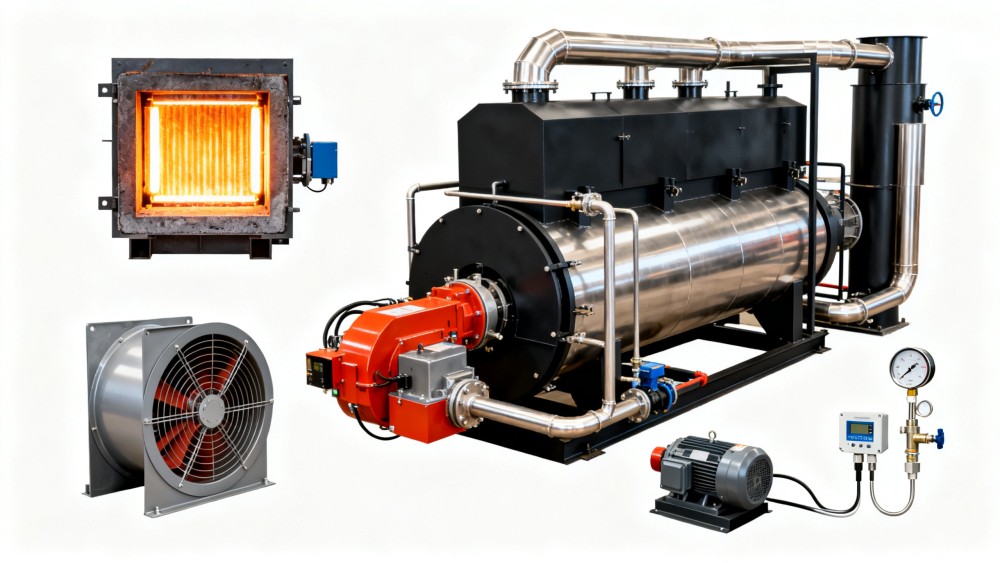
In steelmaking, ironmaking, reheating, rolling, and downstream heat treatment, energy waste rarely comes from one dramatic failure. It usually accumulates through 4 common loss points: hot gas leaving at avoidable temperature, poor combustion balance, degraded refractory or insulation, and unstable operating control. For information researchers and technical evaluators, this matters because the first 3–12 months of improvement planning often determine whether a plant pursues quick retrofits or delays action until a large capital cycle.
For procurement teams and financial approvers, early ferrous metallurgy upgrades are attractive because many do not require full furnace replacement. Typical first-step measures include burner tuning, waste heat recovery optimization, variable frequency drives for fans and pumps, tighter oxygen control, and better temperature monitoring. These interventions are often easier to phase into scheduled shutdown windows of 7–15 days, reducing production disruption while improving energy efficiency and operational visibility.
Project managers and safety leaders should also view early upgrades as risk control, not only cost reduction. Unstable heat profiles can increase refractory stress, create inconsistent product quality, and push emissions control systems beyond stable ranges. In ferrous metallurgy, a small deviation in draft pressure, excess air, or heat loss can cascade into higher fuel use, slower throughput, and more frequent unplanned maintenance. That is why practical energy-saving upgrades should be ranked by controllability, downtime requirement, and measurable process impact.
GEMM supports this decision process by combining raw material intelligence, process technology trend analysis, and trade compliance insight across heavy industry. That cross-sector view matters because ferrous energy efficiency no longer sits in isolation. It now intersects with natural gas and power price volatility, carbon asset strategy, alloy supply shifts, refractory and polymer-based sealing materials, and even circular economy thinking around plant consumables and waste streams.
The 5 upgrade zones most often reviewed first
- Combustion systems, including burners, air-fuel ratio control, oxygen enrichment boundaries, and flue gas monitoring, where operating drift can quietly raise fuel consumption over each production cycle.
- Heat recovery paths such as recuperators, regenerators, waste heat boilers, and hot charging interfaces, which often define whether high-temperature exhaust is reused or simply rejected.
- Thermal containment systems, especially refractory lining, ladle covers, furnace doors, insulation joints, and seals, where losses grow gradually and are often underestimated during budgeting.
- Motor-driven utilities, including ID fans, blowers, cooling water pumps, and compressed air systems, where variable load operation can justify VFD or control logic upgrades.
- Instrumentation and automation layers, because inaccurate temperature, pressure, flow, or gas composition data can distort every downstream energy decision.
Which upgrades usually deliver faster payback in heavy industry operations?
Not every energy-saving project in ferrous metallurgy should be treated equally. Some upgrades are capital-heavy and tied to long shutdowns of 4–8 weeks, while others fit short maintenance intervals and support staged implementation. For business evaluators and distributors, the key is to separate “foundational efficiency work” from “major process redesign.” The first category often gives the clearest short-cycle business case because it reduces waste before larger investments are approved.
As a rule, the fastest-moving projects are those that improve measurement, control stability, and thermal retention. They are also easier to validate because baseline and post-upgrade conditions can be compared using fuel use per ton, exhaust temperature trends, furnace pressure stability, and rolling schedule performance. In many plants, reviewing 3 core indicators over 8–12 weeks already reveals where avoidable losses are concentrated.
The table below helps procurement and engineering teams prioritize early ferrous metallurgy upgrades based on downtime intensity, implementation complexity, and typical decision logic rather than exaggerated claims. It is designed for practical screening across blast furnace support systems, direct reduced iron plants, reheating furnaces, rolling mills, and heat treatment lines.
A useful reading of this table is that quick payback often begins with control and containment rather than with the largest hardware package. For many sites, the best sequence is not “buy the biggest new system first,” but “stabilize measurement, stop thermal leakage, then recover residual heat.” This is especially true when fuel price exposure, raw material margin pressure, and carbon reporting obligations all compete for the same budget cycle.
How cross-industry trends influence the upgrade shortlist
Ferrous metallurgy teams increasingly make upgrade decisions in a broader industrial context. Natural gas volatility changes furnace economics. Power pricing influences fan, pump, and oxygen plant optimization. Non-ferrous metallurgy competes for alloy inputs and refractory materials. Polymer science affects seals, gaskets, cable protection, and insulation components used around high-temperature systems. Even recycled plastics and injection molding innovation matter indirectly when plants review packaging, maintenance consumables, and circular procurement targets.
For carbon strategy teams, early energy efficiency upgrades also prepare the ground for later CCUS or broader decarbonization programs. A poorly controlled process is a weak candidate for carbon capture integration because unstable exhaust flow, variable gas composition, and inconsistent heat profiles increase complexity. In practice, many heavy industry roadmaps follow 3 stages: reduce waste first, electrify or fuel-switch where feasible second, and assess carbon capture integration third.
This is where GEMM’s value becomes operational rather than theoretical. By mapping commodity fluctuations, technology pathways, and compliance factors across energy, metals, chemicals, and polymers, GEMM helps decision-makers judge whether a retrofit is merely efficient on paper or truly resilient under changing supply chains, trade constraints, and carbon policy conditions.
What should buyers and technical evaluators compare before approving an upgrade?
Procurement in ferrous metallurgy often fails when teams compare only equipment price. A technically sound upgrade can still underperform if spare parts lead time is long, if controls cannot integrate with existing PLC or DCS architecture, or if maintenance teams cannot validate performance after commissioning. For project owners, the stronger approach is to use a 5-dimension screening model: process fit, utility impact, shutdown demand, compliance relevance, and data transparency.
Technical evaluators should request clear operating envelopes. For example, if a burner package claims better control, under what fuel range, airflow stability, and temperature setpoint band was that achieved? If a heat recovery unit is proposed, what exhaust temperature interval makes the design viable? In industrial practice, decision quality improves when suppliers define usable windows such as 250°C–450°C exhaust or continuous duty expectations like 16–24 hours per day, rather than relying on generic performance language.
The table below provides a practical procurement matrix for comparing ferrous metallurgy energy upgrades. It is useful for sourcing teams, finance reviewers, and distributors who need structured questions before RFQ release, technical clarification, or vendor shortlisting.
The main takeaway is that a lower initial quote is not always lower total cost. When a project needs longer shutdown, additional automation hardware, or imported wear parts with 6–10 week lead times, the apparent savings can reverse quickly. Buyers who use a structured matrix are more likely to identify whether an upgrade supports stable production, not just an attractive proposal sheet.
A practical 4-step review flow before purchase
- Baseline the current line using fuel, power, temperature, and downtime records for at least 4–8 weeks to identify the dominant loss pattern.
- Screen 2–3 upgrade paths by shutdown feasibility, process interaction, and measurable KPI definition rather than by vendor narrative alone.
- Review integration, safety, and spare parts plans with engineering, EHS, and maintenance teams before commercial negotiation begins.
- Approve the project with a verification plan that specifies acceptance checkpoints such as commissioning stability, operator training completion, and post-start energy review after 30–90 days.
Why commodity intelligence should be part of technical selection
Heavy industry upgrades are exposed to more than engineering variables. Alloy content, refractory inputs, gas pricing, power contracts, and import restrictions can alter project timing and cost. A burner, fan, insulation package, or gas analyzer that looks optimal in one quarter may become difficult to source in the next. GEMM’s cross-market monitoring helps teams decide when to lock specifications, when to seek alternate materials, and when to split procurement into phased packages.
This is particularly relevant for distributors and regional agents. They need not only a product list, but also a commodity-aware explanation of why one upgrade route may be more stable under changing trade conditions. The strongest sales and sourcing decisions are based on technical fit plus supply chain resilience, not on isolated component performance.
How to implement upgrades without harming quality, safety, or compliance
Energy-saving work in ferrous metallurgy must protect product consistency. Reheating temperature uniformity, reduction atmosphere control, rolling pace, and downstream mechanical properties all depend on process stability. If an upgrade changes heat transfer behavior but operators are not retrained, the plant may save fuel while generating scale, uneven microstructure, or quality deviations. That is why quality teams should be involved from the first technical review, not only during acceptance.
Safety and compliance teams should also ask whether the new operating mode affects combustion risk, gas handling, ventilation, maintenance access, or emissions performance. Common reference points may include plant-specific procedures, general industrial safety requirements, combustion system safeguards, and environmental reporting obligations. While every jurisdiction differs, most facilities benefit from a 6-item pre-start checklist covering sensors, interlocks, alarm logic, access isolation, training records, and emergency response alignment.
Implementation works best when it is staged. In many cases, plants divide the effort into 3 phases: diagnosis and design, shutdown execution, and post-start stabilization. This approach helps project managers control scope creep and allows finance teams to connect spending to defined milestones instead of open-ended engineering activity. It also creates a better audit trail for later carbon accounting and operational benchmarking.
Common mistakes that reduce the value of an energy upgrade
- Treating thermal losses as a maintenance issue only, without checking whether control logic, burner balance, or scheduling practices are creating the same losses repeatedly.
- Approving a retrofit without defining the post-commissioning KPIs, which makes it difficult to verify whether reduced fuel use comes from the equipment or from changed production volume.
- Ignoring interaction between ferrous metallurgy and adjacent sectors, such as polymer-based sealing materials, chemical treatment compatibility, or energy supply changes that affect operating assumptions.
- Underestimating spare parts and training needs, especially for plants running 24/7 where even small calibration delays can erode performance within one quarter.
FAQ for researchers, buyers, and plant managers
Which ferrous metallurgy upgrade should be reviewed first?
Start with the area where energy waste is visible and measurable: combustion drift, heat leakage, unstable exhaust conditions, or oversized utility operation. If baseline data is weak, begin with instrumentation and monitoring because poor data makes all later investment decisions less reliable. A 4–8 week data review is often enough to prioritize the first intervention.
Are waste heat recovery projects always the best option?
No. Waste heat recovery is valuable when exhaust temperature, cleanliness, and operating continuity support useful reuse. If the process is highly variable, thermal containment and control optimization may create a better first return. In practical terms, recover heat after preventing avoidable loss upstream.
What should procurement teams verify besides the equipment specification?
Check integration scope, spare parts availability, calibration needs, operator training, shutdown duration, and safety documentation. For many plants, the difference between a smooth project and a costly one is found in these support items rather than in the core hardware alone.
How does this connect to carbon neutrality planning?
Early energy efficiency upgrades lower fuel demand and stabilize process conditions. That creates a stronger base for fuel switching, electrification review, industrial energy storage planning, or later CCUS assessment. Plants that skip this step often carry inefficiency into more expensive decarbonization projects.
Why work with GEMM when planning energy-saving upgrades across metals, energy, and materials?
Energy-saving decisions in ferrous metallurgy are no longer just plant engineering decisions. They are tied to raw material volatility, fuel sourcing, compliance exposure, alloy trends, and cross-industry technology shifts. GEMM helps stakeholders connect these moving parts through integrated intelligence spanning oil and gas, ferrous and non-ferrous metallurgy, chemicals, polymers, sustainable energy, and carbon assets.
For technical evaluators, GEMM can support parameter confirmation, technology pathway comparison, and risk framing around operating conditions. For procurement and commercial teams, it can clarify sourcing alternatives, delivery-cycle implications, and trade compliance considerations. For executives and finance reviewers, it can help prioritize which upgrades are operationally urgent, commercially sensible, and strategically aligned with low-carbon goals over the next 12–36 months.
If you are reviewing ferrous metallurgy upgrades that cut energy waste first, the most useful next step is a focused discussion around your actual line conditions. That may include furnace type, fuel mix, maintenance window, desired production stability, emissions constraints, and available budget. It may also include adjacent material questions such as refractory options, alloy exposure, polymer component durability, or whether future CCUS integration is being considered.
Contact GEMM to discuss 6 practical topics: current process parameters, upgrade selection logic, expected shutdown window, supply chain and delivery-cycle risks, compliance or documentation requirements, and quotation or customized research scope. This gives your team a clearer path from early investigation to technically grounded, commercially realistic action—without losing sight of the wider commodity matrix shaping heavy industry performance.
Related News
- What Is Changing in Ferrous Metallurgy This Year?Apr 28, 2026Ferrous metallurgy is changing fast with carbon neutrality, carbon capture, and energy transition pressures. See how heavy industry, non-ferrous metals, recycled plastics, polymer materials, and injection molding trends are reshaping demand.
- Ferrous Metallurgy Upgrades That Cut Energy Waste FirstApr 28, 2026Ferrous metallurgy upgrades that cut energy waste first: learn how heavy industry can advance carbon neutrality, carbon capture, sustainable energy, and the energy transition while linking non-ferrous metals, polymer materials, injection molding, and recycled plastics.
- Where ferrous metallurgy still loses efficiency in 2026Apr 28, 2026Ferrous metallurgy in 2026 still loses efficiency through energy transition delays, carbon capture gaps, unstable metal physical properties, and raw material volatility. See where heavy industry can cut cost, improve compliance, and accelerate industrial decarbonization.
- Ferrous metallurgy bottlenecks are shifting from furnace to feedApr 28, 2026Ferrous metallurgy is shifting upstream: learn how feed quality, carbon neutrality, carbon capture, non-ferrous metals and industrial decarbonization reshape heavy industry strategy.
Related News
- 00
0000-00
Agrochemical regulations: common export compliance mistakes - 00
0000-00
Circular economy polymers: how to avoid quality issues - 00
0000-00
Circular economy polymers: virgin or recycled blends? - 00
0000-00
Bio-based materials still face a performance trust gap - 00
0000-00
Industrial decarbonization targets slip when baselines are weak
Weekly Insights
Stay ahead with our curated technology reports delivered every Monday.