




Heavy Industry Still Faces a Hidden Power Cost Problem




Heavy industry still pays a hidden price for volatility across energy transition, ferrous metallurgy, non-ferrous metals, and polymer materials. From injection molding and recycled plastics to carbon capture, carbon neutrality, and sustainable energy, cost exposure often sits beyond the factory floor. This article explores where those unseen power-related costs emerge, why they matter to technical, procurement, and executive teams, and how better market intelligence can support smarter industrial decisions.
Where the hidden power cost problem really starts
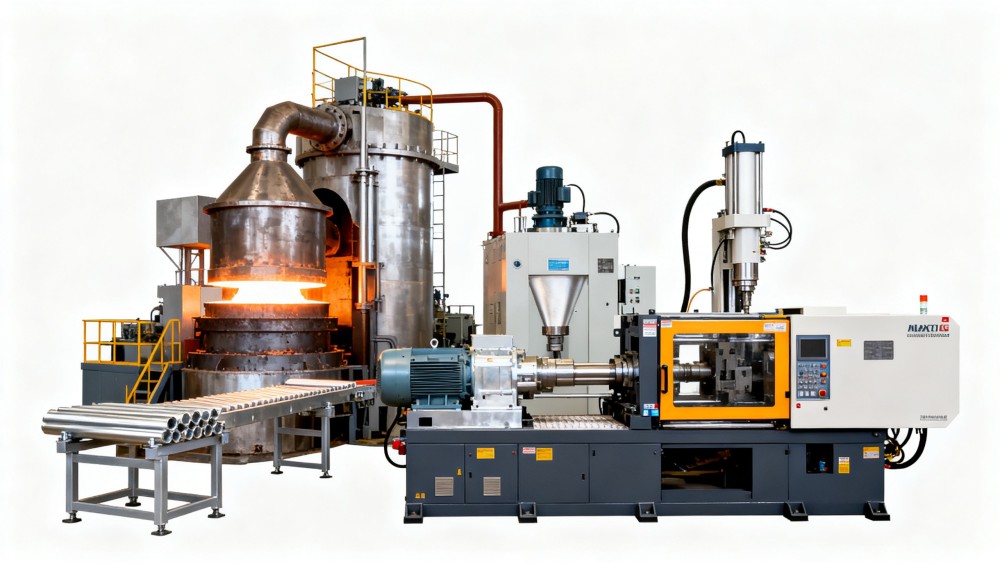
For many industrial buyers, power cost is still treated as a utility line item. In practice, the real burden is broader. It includes feedstock-linked electricity pricing, fuel substitution risk, peak-load penalties, process downtime, thermal inefficiency, and compliance-driven operating changes. In sectors such as steel, aluminum, refining, petrochemicals, and plastics conversion, these costs can surface over 3 stages: sourcing, production, and market delivery.
This is why the hidden power cost problem affects more than plant engineers. Procurement teams face unstable quotations, finance teams struggle with budgeting cycles of 30–90 days, and project managers must protect delivery schedules when utilities, raw materials, and logistics move at different speeds. What looks like a simple energy bill often reflects a wider commodity fluctuation problem.
In heavy industry, power is rarely independent from raw material economics. Oil and gas price shifts affect refining margins and chemical intermediates. Ferrous and non-ferrous metallurgy responds to ore quality, smelting intensity, and trade constraints. Polymer processing depends on resin pricing, machine energy draw, and recycled material consistency. A plant may optimize one cost center while losing margin in another.
GEMM addresses this issue by connecting energy, materials, and compliance intelligence into one decision framework. Instead of viewing electricity, fuels, metals, and polymers as isolated categories, decision-makers can evaluate how upstream fluctuations translate into downstream operating exposure, contract risk, and capital allocation pressure.
The hidden costs that are often missed in evaluation meetings
- Load variability costs, especially when furnaces, compressors, molding lines, or separation units operate under unstable throughput during weekly or monthly demand shifts.
- Material quality costs, where low-grade ore, inconsistent scrap, or recycled polymer contamination increases specific energy consumption per ton or per batch.
- Compliance adjustment costs, including emission controls, reporting changes, storage protocols, and trade documentation that indirectly raise utility and operating expense.
- Procurement timing costs, when teams buy energy-intensive materials at the wrong point in the cycle and absorb avoidable volatility over 2–4 quarters.
Why different heavy industry sectors experience power exposure differently
The hidden power cost problem is not uniform. A refinery, a steel plant, an alloy processor, and an injection molding facility all consume energy, but their exposure profiles differ. Understanding those differences is essential for technical assessment, supplier comparison, and budget approval. It also prevents teams from copying cost-control methods from one sector into another where they do not fit.
In oil, gas, and energy engineering, power cost is tied to process heat, pumping intensity, separation efficiency, and feedstock spread. In metallurgy, it is linked to furnace design, ore concentration, alloy route, and scrap ratio. In polymers, the relationship often depends on melt behavior, cycle time, regrind content, and cooling demand. In carbon management projects, energy use can determine whether a low-carbon initiative is commercially workable.
For business evaluators and distributors, this sector-specific view matters because the same price movement can affect margin in opposite ways. A rise in electricity or gas may compress one producer’s economics while strengthening the competitiveness of another using different feedstock, recycling rates, or process configuration.
The comparison below helps stakeholders map where hidden power cost tends to accumulate and what should be checked during supplier review, technical diligence, or sourcing negotiations.
The core lesson is simple: heavy industry power exposure should be measured by process path, not by utility invoice alone. That is especially important when evaluating sustainable energy projects, recycled plastics sourcing, rare earth materials, or carbon capture deployment where energy economics can change the viability of the full business case.
A practical way to classify exposure
High exposure operations
These are processes where small changes in feedstock quality or operating temperature quickly affect unit power cost. Common examples include smelting, cracking, high-temperature refining, and precision polymer processing with narrow cycle windows.
Moderate exposure operations
These operations can partially absorb volatility through scheduling, blending, or supplier substitution over 7–30 days. Examples include compounding, midstream handling, and some fabrication steps with flexible throughput.
Indirect exposure operations
These operations may not be energy-intensive themselves, but they inherit cost pressure through upstream pricing, trade restrictions, transport surcharges, and carbon-related contract clauses. Many procurement and distribution teams fall into this category.
How procurement, finance, and engineering should evaluate hidden energy costs
A useful procurement decision is rarely based on unit price alone. Industrial buyers need a structured review model that connects operating energy, commodity exposure, and compliance implications. A strong evaluation should cover at least 5 dimensions: process intensity, raw material sensitivity, contract flexibility, delivery risk, and regulatory burden.
Technical evaluators should start with process conditions. Ask whether the supplier’s route depends on stable ore grade, high-purity inputs, fixed furnace windows, specific pressure levels, or narrow melt viscosity ranges. If yes, the supplier may be more vulnerable to power and feedstock fluctuation than the quote suggests.
Finance approvers should then check cost transfer mechanisms. Can the supplier adjust pricing monthly, quarterly, or only at annual renewal? Are surcharges linked to energy, freight, emissions, or exchange rate changes? A contract that looks cheaper today may become less predictable within 60–120 days.
Project owners and safety managers should examine operational resilience. Hidden power cost is often amplified by shutdowns, utility interruptions, off-spec batches, and maintenance deferrals. These events create secondary losses in labor, quality, and lead time that do not appear in the first quotation round.
Procurement checklist for heavy industry power exposure
- Confirm the supplier’s main production route and whether it is electricity-heavy, gas-heavy, steam-heavy, or dependent on co-generated energy.
- Review the last 2–4 pricing cycles and identify which share of cost changes came from feedstock, utilities, transport, or compliance adjustments.
- Check whether product quality consistency declines when recycled content, lower-grade inputs, or substitute fuels are introduced.
- Ask for realistic lead-time ranges such as 2–6 weeks rather than one fixed promise, especially for alloy, chemical, and resin supply during volatile periods.
- Verify trade compliance and destination-specific documentation when sourcing across regions with carbon, safety, or hazardous material rules.
For buyers who compare multiple routes, the table below provides a practical selection framework. It is designed for technical teams, sourcing managers, and executive reviewers who need a disciplined way to compare apparent price against hidden power-related cost.
This approach helps turn cost control into a cross-functional process rather than a last-minute negotiation. It also aligns better with how heavy industry actually operates, where process engineering, commodity timing, and compliance management are tightly connected.
What companies often get wrong about carbon neutrality, recycled materials, and alternative energy
One common mistake is assuming that any low-carbon or circular-economy option will automatically reduce total cost. In reality, carbon neutrality targets, recycled plastics integration, bio-based inputs, industrial energy storage, and CCUS deployment can shift cost from one part of the system to another. A lower-emission route may still raise hidden power consumption, process complexity, or quality control effort.
Another mistake is focusing only on nameplate technology. For example, injection molding buyers may compare machine efficiency but overlook resin drying demand, cooling conditions, and scrap recovery stability. Metallurgy teams may compare alloy pricing but ignore refining steps, preheating requirements, or impurity removal that change the full energy burden.
A third mistake is treating compliance as a separate department issue. In chemicals, metals, and carbon-related projects, standards, declarations, and cross-border controls can influence equipment choice, storage design, and shipment mode. These changes may add cost over 1–3 contract cycles even when base material pricing appears stable.
This is where market intelligence becomes commercially useful. GEMM tracks the interaction of technological iteration, raw material movement, and trade compliance across oil, metal, chemical, and polymer sectors. That allows industrial teams to judge whether an alternative route is truly lower risk or simply moving cost to a less visible stage.
Common misconceptions to avoid
“Lower feedstock price means lower total production cost”
Not always. Lower-cost feedstock may require more treatment, longer cycle times, or tighter quality screening. The net result can be higher power use per finished unit.
“Recycled material is always the cheaper option”
It depends on sorting quality, contamination level, color requirements, mechanical property targets, and process conditions. In some applications, recycled content improves economics; in others, it increases reject risk and power draw.
“Carbon projects create value on reputation alone”
Industrial buyers need measurable operational logic. Without a credible view of capture load, storage pathway, transport interface, or energy source, carbon projects may face approval delays from finance and operations teams.
FAQ: how to make better heavy industry decisions under volatile power and commodity conditions
The questions below reflect what information researchers, procurement teams, engineers, and business decision-makers often ask when evaluating hidden power cost across commodity-linked sectors. They also help extend search coverage around supplier selection, cost control, energy transition, and industrial compliance.
How should buyers compare suppliers when energy prices are unstable?
Compare more than quoted price. Review process route, energy dependency, adjustment clauses, lead-time range, and quality stability. A good starting point is a 5-point review: utility exposure, feedstock sensitivity, compliance burden, operating resilience, and pricing revision frequency. This works better than treating all suppliers as if they face the same cost base.
Which scenarios are most vulnerable to hidden power cost?
High-temperature metallurgy, refining, fine chemical batch control, injection molding with tight cycle requirements, and recycled material processing are common examples. These operations are especially sensitive when throughput changes weekly, when feedstock quality is inconsistent, or when power interruptions create off-spec inventory.
What should finance teams ask before approving a heavy industry sourcing plan?
They should ask how often prices can be revised, what portion of the quote is energy-sensitive, whether compliance costs can be passed through, and what lead-time variability is realistic. A 90-day budget view is often more useful than a single spot-price comparison.
How can project managers reduce risk during implementation?
Use a phased review across 3 steps: pre-source intelligence, technical validation, and contract risk control. During each step, verify utility assumptions, material quality thresholds, and delivery contingencies. This is particularly important for CCUS, sustainable energy integration, and specialized alloy or polymer projects.
When is external market intelligence worth using?
It becomes valuable when sourcing spans multiple regions, when commodity cycles are moving quickly, or when technical substitution is under review. If teams must compare oil-linked, metal-linked, and polymer-linked cost drivers at the same time, external intelligence can shorten evaluation time and reduce avoidable pricing mistakes.
Why work with GEMM when hidden power cost is distorting industrial decisions
GEMM is built for the part of heavy industry where pricing, technology, and compliance intersect. Instead of offering generic market commentary, GEMM focuses on the underlying drivers of oil, gas, metals, chemicals, polymers, sustainable energy, and carbon assets. This makes it useful for companies that need clearer judgment before they commit budget, capacity, or procurement contracts.
Our value is especially relevant when your team needs to answer practical questions within tight decision windows of 7–15 days or 2–4 weeks. For example: Which raw material route is more exposed to utility volatility? How should recycled plastics or alternative inputs be assessed against quality and energy burden? Which compliance checks could affect import timing or project economics?
GEMM’s expert system brings together petroleum strategists, metallurgy specialists, and polymer science experts to interpret commodity fluctuation in operational terms. That helps information researchers, technical evaluators, procurement managers, distributors, and executive teams move from fragmented data toward coordinated industrial decisions.
If you are reviewing supplier options, planning a new project, evaluating energy transition pathways, or trying to understand hidden power cost behind material pricing, you can consult GEMM for focused support in the areas that matter most to execution.
What you can contact us about
- Parameter confirmation for energy-intensive materials, process routes, and technology options across metals, chemicals, and polymers.
- Supplier and product selection support, including route comparison, hidden cost screening, and substitution assessment.
- Lead-time and delivery cycle evaluation for volatile sourcing conditions, especially when multiple regions or compliance regimes are involved.
- Customized intelligence on trade compliance, carbon-related commercial implications, and technology trend analysis for industrial planning.
- Quotation communication support tied to real market movement rather than static assumptions, helping procurement and finance teams align faster.
For heavy industry, the hidden power cost problem is rarely solved by watching electricity prices alone. It is solved by understanding the source, the matrix, and the industrial consequences in between. That is the decision space where GEMM is designed to help.
Related News
- Industrial decarbonization targets slip when baselines are weakApr 28, 2026Industrial decarbonization slips when baselines are weak. Learn how carbon capture, injection molding, non-ferrous metals, recycled plastics, and the energy transition shape smarter low-carbon decisions.
- Which energy transition pathways fit heavy industry best?Apr 28, 2026Energy transition pathways for carbon neutral industry: compare refining equipment, sustainable energy materials, and low-carbon material utilization to cut risk, meet standards, and boost competitiveness.
- Global energy matrix shifts: what buyers should watchApr 28, 2026Global energy matrix shifts decoded: track carbon neutral industry trends, refining equipment risks, sustainable energy materials, and energy transition pathways buyers must act on now.
- Carbon Neutrality Claims Are Getting Harder to ProveApr 28, 2026Carbon neutrality in heavy industry is harder to prove. Explore injection molding, non-ferrous metals, carbon capture, recycled plastics, and the energy transition.
Related News
- 00
0000-00
Agrochemical regulations: common export compliance mistakes - 00
0000-00
Circular economy polymers: how to avoid quality issues - 00
0000-00
Circular economy polymers: virgin or recycled blends? - 00
0000-00
Bio-based materials still face a performance trust gap - 00
0000-00
Industrial decarbonization targets slip when baselines are weak
Weekly Insights
Stay ahead with our curated technology reports delivered every Monday.