




Energy Transition Timelines Keep Slipping in Heavy Industry




Energy transition timelines in heavy industry keep slipping as carbon neutrality goals collide with cost, technology, and supply chain realities. From carbon capture and sustainable energy projects to ferrous metallurgy, non-ferrous metals, injection molding, polymer materials, and recycled plastics, decision-makers need clearer signals on what is delaying progress and where investment, compliance, and operational priorities are shifting next.
Why are heavy industry energy transition timelines slipping now?
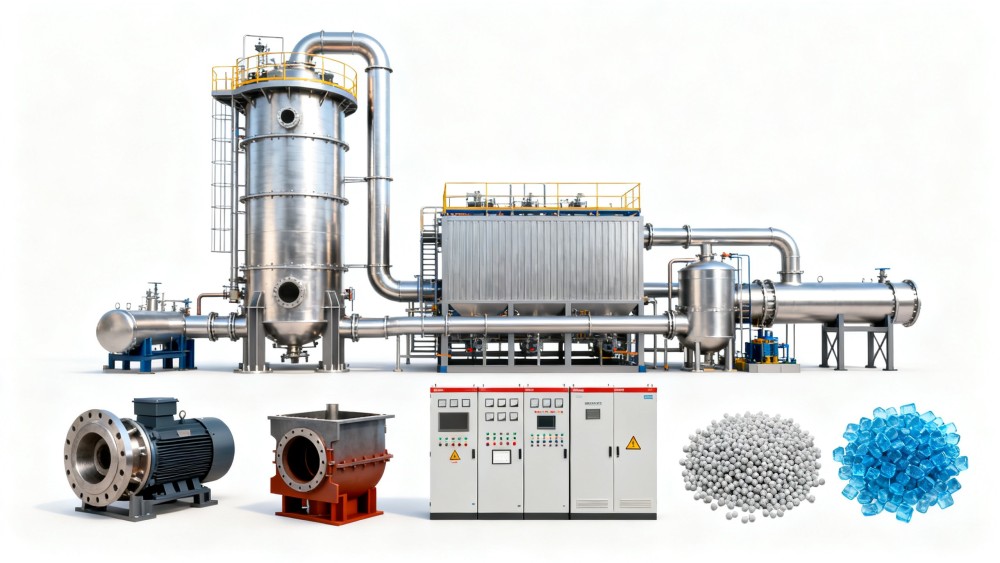
Across heavy industry, the delay is no longer a single technology problem. It is a layered execution problem involving raw material price volatility, uncertain policy sequencing, engineering bottlenecks, and slower-than-expected returns on decarbonization capital. In sectors such as refining, steelmaking, non-ferrous metallurgy, chemicals, and plastics processing, management teams are moving from headline commitments to staged investment gates, often extending project windows from 12–24 months to 24–48 months.
For information researchers and business evaluators, this means public announcements alone are not enough. A plant may have a transition target, yet still lack secured feedstock, power access, technology integration capacity, or compliance clarity. Procurement teams see this directly when equipment specifications change twice within one quarter, or when supplier qualification requirements expand from 3 core checks to 6 or more technical and regulatory checkpoints.
Project managers and finance approvers face a different pressure. Transition projects compete with maintenance, debottlenecking, safety upgrades, and working capital needs. If carbon reduction payback stretches beyond a typical internal review cycle of 3–5 years, boards may defer full-scale deployment and approve only pilot lines, partial retrofits, or modular installations. This is especially common in CCUS, industrial electrification, and low-carbon heat substitution projects.
GEMM tracks these delays through the underlying commodity and compliance matrix rather than through slogans. When oil, gas, metals, polymers, and chemical inputs move in different directions at the same time, transition timing slips because engineering decisions depend on the physical market, not only on strategy decks. That is why a realistic heavy industry energy transition analysis must connect technology readiness, trade compliance, and raw material availability in one operating view.
The 5 delay drivers that show up most often
- Capital discipline: projects are screened more tightly when interest costs, energy prices, or export demand remain volatile for 2–3 consecutive quarters.
- Technology integration risk: plants often know the target technology, but not the full interface impact on utilities, maintenance cycles, and production continuity.
- Feedstock and infrastructure gaps: hydrogen, bio-based inputs, captured CO2 handling, and renewable power contracts may not be available at industrial scale in the required time window.
- Compliance uncertainty: environmental permits, carbon accounting boundaries, customs documentation, and product-level declarations can slow approvals by several weeks or several months.
- Supply chain mismatch: lead times for specialized equipment, alloys, control systems, or sealing materials often exceed original project assumptions.
The key takeaway is simple: heavy industry energy transition delays are usually cumulative. One unresolved issue may be manageable. Three unresolved issues across cost, compliance, and engineering usually move the project timeline significantly to the right.
Which sectors are under the most pressure, and what is actually changing?
Not every heavy industry segment slips for the same reason. Oil and gas engineering faces the challenge of balancing hydrocarbon reliability with energy transition investment. Ferrous metallurgy is pressured by furnace pathway choices, scrap availability, power intensity, and ore quality. Non-ferrous metals depend heavily on electricity cost, processing chemistry, and trade-sensitive mineral flows. Chemicals and polymers are dealing with feedstock switching, circularity claims, and product compliance documentation at the same time.
For procurement professionals, sector-specific delay patterns matter because they change what should be sourced first. In steel and metallurgy, utility systems, refractory performance, and alloy consistency may determine transition speed more than the flagship decarbonization equipment itself. In polymers and injection molding, the practical issue may be recycled resin consistency, odor control, melt flow stability, or customer acceptance during 3–6 month qualification cycles.
Quality, safety, and compliance teams also see sector differences clearly. A chemical site cannot treat a feedstock substitution the same way a plastics processor handles a blend ratio adjustment. One may require hazard review, storage reassessment, and process safety documentation. The other may require mechanical performance testing, contamination thresholds, and traceability updates for downstream buyers. Transition timing slips when these checks are underestimated during planning.
The table below helps compare where delays usually emerge first and which teams need to intervene early. This is useful for technical evaluators, distributors, and project owners who need a faster screening framework before committing to a technology path.
This comparison shows why a single energy transition timeline is misleading. A recycled plastics qualification program can move within one or two quarters, while a metallurgy decarbonization route may require several capital review stages over multiple years. GEMM’s cross-sector coverage is valuable here because investment pacing in one material chain often affects another through energy cost, logistics capacity, and compliance burden.
What decision-makers should watch by sector
For metals and mining-linked industries
Track ore quality, concentrate availability, electricity contracts, and trade quota changes together. If one of these variables shifts materially, a low-carbon project may still proceed technically but lose commercial timing.
For chemicals and polymers
Watch feedstock traceability, safety review cycle length, and customer qualification requirements. In many cases, commercial acceptance, not process feasibility, becomes the real schedule limiter.
How should procurement and project teams evaluate delayed transition projects?
When energy transition timelines slip, procurement should not simply wait for a revised date. The better approach is to reclassify the project by decision maturity. Some projects are technically validated but commercially delayed. Others are commercially attractive but not yet integration-ready. This distinction affects supplier engagement, contract structure, stock planning, and budget release timing.
A practical evaluation model usually includes 4 layers: technical readiness, infrastructure dependency, compliance burden, and price exposure. If a project scores weakly in two or more layers, teams should avoid treating it as a standard equipment buy. Instead, they should use milestone-based sourcing, phased specification lock, and dual-path supplier screening. This reduces the risk of stranded inventory or change-order disputes.
Technical evaluators and project owners also need a tighter document list. For heavy industry transition projects, the most common delay comes from missing interface information rather than missing marketing claims. Utility load profiles, operating temperature ranges, corrosion environment, media purity, maintenance shutdown windows, and commissioning sequence should all be confirmed before the commercial stage moves too far ahead of engineering.
The following table can be used as a procurement and selection checklist for delayed energy transition projects in oil, metals, chemicals, and polymers. It supports internal alignment among sourcing, engineering, quality, finance, and compliance teams.
This checklist is especially useful when projects move from concept to pilot, or from pilot to partial-scale rollout. It helps separate a temporary timeline slip from a deeper viability issue. For distributors and agents, it also clarifies when a project is ready for quotation, when it needs technical clarification, and when it should remain in intelligence monitoring mode.
A 4-step review process before approving spend
- Confirm the transition pathway and plant boundary. Define whether the project targets fuel switching, process efficiency, carbon capture, recycled input use, or product-level carbon reduction.
- Verify operating constraints. Check temperature, pressure, media compatibility, downtime windows, and utility availability during both installation and stable operation.
- Stress-test the commercial case. Model at least 3 scenarios around commodity prices, power cost, and delivery timing to avoid overcommitting to one market assumption.
- Align compliance and customer requirements. This includes export rules, environmental filings, test records, and downstream qualification expectations.
In practice, this 4-step method shortens internal debate because it turns an abstract transition conversation into a documented approval framework. That is where GEMM’s technology trend analysis and trade compliance insight become operationally useful rather than merely informative.
What cost, compliance, and technology trade-offs are most often underestimated?
Many heavy industry transition plans underestimate secondary costs. The visible equipment line is only part of the total commitment. Hidden cost layers may include utility reinforcement, process control redesign, training, qualification scrap, emissions monitoring, waste handling changes, and external verification support. In projects with multiple interfaces, these secondary items can affect the schedule as much as the headline technology.
Compliance trade-offs are also larger than many teams expect. A lower-carbon input does not automatically mean a simpler compliance path. Bio-based chemicals, recycled polymers, imported metal units, or captured carbon streams may require different documentation chains, product declarations, transport handling rules, or customer communication standards. If those requirements are addressed only after purchasing, delays become expensive and visible.
Technology trade-offs vary by sector. In CCUS, the issue may be capture efficiency versus energy penalty and transport logistics. In metallurgy, it may be decarbonization route versus power intensity and raw material quality. In injection molding and recycled plastics, it may be sustainability claims versus cycle stability, mechanical consistency, and end-user acceptance. Each trade-off needs quantified tolerance bands, not just strategic intent.
Below is a decision-oriented comparison of where cost and compliance pressure most often alters project timing. It is designed for finance teams, sourcing leads, technical reviewers, and plant managers who need to prioritize action without oversimplifying the transition challenge.
The lesson is not to avoid transition projects. It is to sequence them correctly. Projects with high infrastructure dependency and high compliance burden need earlier intelligence work. Projects with manageable technical change but higher testing needs may move faster if sourcing and QA align from the beginning.
Common mistakes that extend timelines
- Assuming commodity price stability during project execution instead of using review bands or adjustment mechanisms.
- Treating pilot success as proof of full-scale plant readiness without checking utility and maintenance constraints.
- Launching supplier RFQs before defining the compliance document package and technical boundary conditions.
- Underestimating downstream customer qualification time for new materials, recycled content, or lower-carbon variants.
These are exactly the types of blind spots that a commodity and raw materials intelligence platform should surface early. Heavy industry does not transition on aspiration alone; it transitions through disciplined sequencing.
How can teams respond more effectively in the next 12–36 months?
The next phase of heavy industry energy transition will likely be more selective, more data-driven, and more portfolio-based. Instead of one large transformation promise, companies are prioritizing clusters of achievable moves: efficiency projects with 6–24 month payback windows, modular carbon management pilots, material substitutions with limited process disruption, and traceability upgrades that support trade compliance and customer reporting.
For enterprise decision-makers, the most effective response is to build a transition screen that integrates commodity intelligence, technical feasibility, and compliance mapping. GEMM is positioned for this need because its coverage spans oil, metals, chemicals, polymers, sustainable energy, and carbon assets in one matrix. That allows teams to judge whether a delay is structural, cyclical, or specific to one supply chain node.
For purchasing, engineering, and project execution teams, the operating priority is to reduce avoidable rework. That means clearer parameter confirmation, earlier supplier dialogue, and staged approvals tied to factual milestones. A practical planning cycle may include monthly market monitoring, quarterly technology review, and milestone-based compliance checks at concept, pilot, and scale-up phases.
Distributors, agents, and channel partners also benefit from this framework. When they understand whether a customer is in intelligence gathering, technical evaluation, or procurement locking stage, they can offer better support and shorten the path to qualified business. In delayed markets, relevance matters more than aggressive timing.
FAQ for heavy industry buyers and evaluators
How should we judge whether a transition project is delayed or fundamentally weak?
Look at 3 indicators together: unchanged technical target, unresolved infrastructure dependency, and unstable commercial assumptions. If the technology target remains valid but supporting power, feedstock, or transport conditions are missing, the project is delayed rather than invalid. If all 3 indicators are uncertain for more than 2 review cycles, the business case may need redesign rather than rescheduling.
What should procurement ask before requesting quotations?
Confirm at least 5 items: operating window, media compatibility, utility demand, document package, and target implementation phase. Without these basics, quotations often become non-comparable, and later clarification can add 2–8 weeks to the process.
Are recycled plastics and low-carbon materials easier to adopt than CCUS or metallurgy upgrades?
They are often faster to test, but not always easier to scale commercially. Recycled plastics may move through lab and line trials in weeks, yet customer acceptance, traceability, and performance consistency can still slow rollout. CCUS and metallurgy projects usually face larger capex and infrastructure barriers, so their delays tend to be longer and more capital-sensitive.
How often should teams update energy transition assumptions?
A monthly market check and quarterly strategic review is a practical baseline. If the project depends heavily on power price, feedstock availability, or export exposure, a shorter review rhythm may be appropriate during active procurement or board approval periods.
Why work with us on transition intelligence and decision support?
GEMM helps heavy industry teams move beyond generic decarbonization narratives. We connect technological trend analysis with trade compliance insight across oil, gas, metallurgy, chemicals, polymers, sustainable energy, and carbon assets. That matters when your decision depends not only on equipment selection, but also on feedstock origin, material properties, customs exposure, permit logic, and downstream qualification timing.
You can consult us for practical issues that affect real project timing: parameter confirmation for transition routes, raw material and technology screening, supply chain and delivery cycle assessment, compliance document mapping, recycled or low-carbon material evaluation, and quotation-stage intelligence support. If your team is comparing 2–3 pathways, preparing a budget review, or trying to reduce uncertainty before procurement, GEMM can help structure the decision with sharper market and technical context.
For companies navigating slipping energy transition timelines in heavy industry, the right next step is not always a larger promise. Often, it is a clearer question. Contact GEMM to discuss project stage assessment, technology route comparison, delivery timing, certification and documentation concerns, sample evaluation logic, or custom intelligence support for your sector. Mastering the source is how better transition decisions are made.
Related News
- Industrial decarbonization targets slip when baselines are weakApr 28, 2026Industrial decarbonization slips when baselines are weak. Learn how carbon capture, injection molding, non-ferrous metals, recycled plastics, and the energy transition shape smarter low-carbon decisions.
- Which energy transition pathways fit heavy industry best?Apr 28, 2026Energy transition pathways for carbon neutral industry: compare refining equipment, sustainable energy materials, and low-carbon material utilization to cut risk, meet standards, and boost competitiveness.
- Global energy matrix shifts: what buyers should watchApr 28, 2026Global energy matrix shifts decoded: track carbon neutral industry trends, refining equipment risks, sustainable energy materials, and energy transition pathways buyers must act on now.
- Carbon Neutrality Claims Are Getting Harder to ProveApr 28, 2026Carbon neutrality in heavy industry is harder to prove. Explore injection molding, non-ferrous metals, carbon capture, recycled plastics, and the energy transition.
Related News
- 00
0000-00
Agrochemical regulations: common export compliance mistakes - 00
0000-00
Circular economy polymers: how to avoid quality issues - 00
0000-00
Circular economy polymers: virgin or recycled blends? - 00
0000-00
Bio-based materials still face a performance trust gap - 00
0000-00
Industrial decarbonization targets slip when baselines are weak
Weekly Insights
Stay ahead with our curated technology reports delivered every Monday.