




Recycled Plastics Pricing Looks Attractive Until Testing Starts




Recycled plastics often appear to offer an easy win: lower quoted prices, better sustainability optics, and a clearer path toward circular economy targets. But for procurement teams, technical evaluators, and decision-makers in molding, packaging, automotive, electrical, and industrial applications, the real question is not whether recycled resin is cheaper on paper. It is whether it remains cheaper after testing, qualification, scrap, downtime, compliance review, and customer approval are factored in.
That is the central reality behind recycled plastics pricing. A resin that looks attractive at quotation stage can become expensive if melt flow shifts, contamination causes rejects, odor fails customer requirements, or documentation does not meet regulatory expectations. For companies balancing cost control, polymer performance, trade compliance, and carbon neutrality goals, recycled plastics should be evaluated as a total-use material decision rather than a simple price-per-kilogram purchase.
Why recycled plastics pricing can change dramatically once testing begins
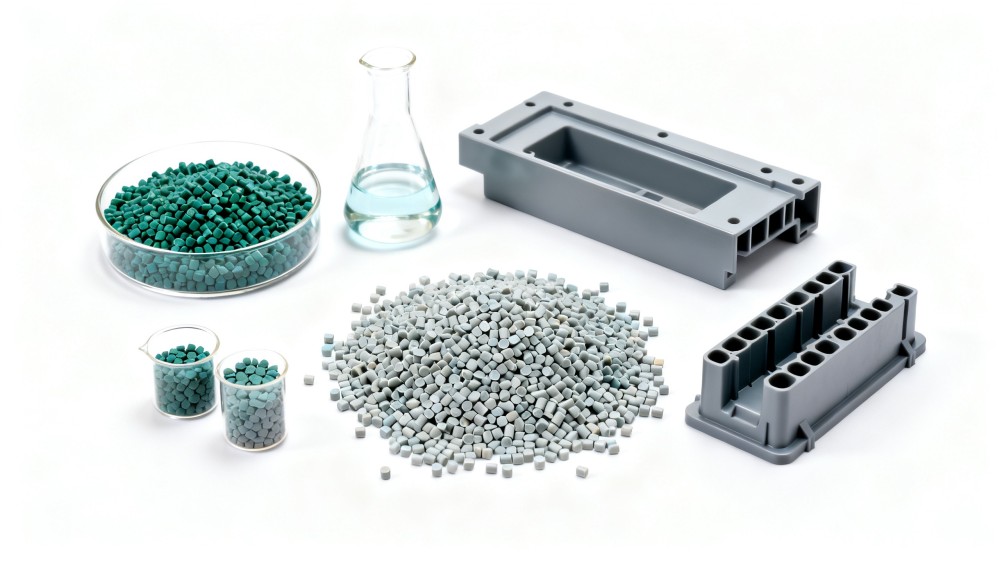
Searchers looking for insight on this topic are usually trying to answer a practical question: Why does recycled plastic that looks cost-competitive in a supplier quote become difficult to approve in real production? The answer is that recycled materials are influenced by a wider range of variables than prime resin, and those variables often only become visible during testing.
Quoted recycled plastics pricing may reflect broad market conditions such as feedstock availability, bale prices, reprocessing capacity, energy costs, and demand from converters. However, your usable cost depends on whether the material can consistently meet the process window and part requirements of your operation.
Once testing starts, buyers frequently discover hidden cost drivers such as:
- Higher reject rates caused by inconsistent melt flow or contamination
- Longer machine setup and tuning time
- Color instability between lots
- Mechanical property variation that affects part performance
- Odor, volatile content, or appearance issues in end-use products
- Additional laboratory and compliance verification expense
- Supply inconsistency that forces emergency substitution
In other words, recycled resin economics are determined not just by purchase price, but by conversion efficiency, quality stability, and qualification burden. This is especially important in heavy industry and engineered applications, where material failure can affect throughput, customer acceptance, warranty exposure, or even safety margins.
What technical teams should test before they compare recycled resin with virgin material
Technical evaluation is where many purchasing assumptions are either confirmed or overturned. If the material is intended for injection molding, extrusion, blow molding, compounding, or film applications, the test plan should reflect actual processing and end-use conditions instead of relying only on a supplier’s datasheet.
The most decision-useful testing typically includes the following categories:
1. Processing behavior
- Melt flow index or melt volume rate consistency
- Moisture sensitivity and drying behavior
- Thermal stability during repeated heat history
- Filterability and contamination load
- Cycle time impact and machine setting sensitivity
If a recycled polymer runs only within a narrow process window, its lower nominal price may not survive production reality.
2. Mechanical performance
- Tensile strength and elongation
- Impact resistance
- Flexural performance
- Creep or fatigue behavior where relevant
- Property retention across lots
For structural or semi-structural parts, average values are not enough. Variation between batches matters just as much as headline performance.
3. Aesthetic and functional quality
- Color consistency
- Surface finish
- Black specks, gels, or foreign particles
- Odor profile
- Dimensional stability and warpage
These factors are often decisive in packaging, consumer-facing products, appliances, and automotive interiors.
4. Chemical and regulatory suitability
- REACH, RoHS, and regional compliance documentation
- Food-contact or medical restrictions where applicable
- Heavy metals or restricted substances screening
- Traceability of post-consumer or post-industrial content
- Customer-specific approved material list requirements
Many buyers underestimate this step. A low recycled plastics price has limited value if your compliance team cannot clear the material for the target market or customer account.
Which hidden costs matter most to procurement, finance, and business evaluators
For procurement personnel and financial approvers, the key issue is total cost of ownership rather than invoice price. Recycled plastics can absolutely generate savings, but the savings need to survive commercial and operational scrutiny.
The most important hidden costs to model are:
Scrap and yield loss
A resin that is 8% cheaper but causes 5% more scrap may not be cheaper at all. In some high-volume lines, a small increase in reject rate can erase the entire raw material benefit.
Testing and qualification cost
Initial trials, lab work, customer submissions, and PPAP or other approval processes can be substantial. If the part has to be requalified repeatedly because of lot variation, administrative cost rises further.
Downtime and productivity loss
Extra purging, screen changes, mold cleaning, or process adjustments directly affect throughput. For continuous operations, these costs can exceed the resin delta very quickly.
Inventory and dual-sourcing complexity
Some companies maintain a backup virgin-grade strategy because recycled supply can be less predictable. That adds planning complexity and can dilute forecasted savings.
Claims, returns, or brand risk
If the application is visible, performance-sensitive, or customer-audited, one material-related issue can create costs far larger than the original purchase decision.
That is why strong organizations compare materials using a business case model that includes:
- Delivered resin cost
- Trial and approval expense
- Expected scrap rate
- Cycle time effect
- Downtime probability
- Compliance burden
- Supply risk premium
- Carbon or sustainability value, if monetized internally
How to judge whether a recycled plastic is truly fit for your application
Not every application needs the same level of caution. The right evaluation depends on the functional risk of the end use.
Low-risk applications
Non-visible, non-structural, non-regulated products may tolerate a wider range of recycled content. Here, cost and sustainability benefits may be captured relatively quickly if process stability is acceptable.
Medium-risk applications
Industrial housings, transport packaging, utility components, and many molded parts require closer control over consistency, mechanical performance, and appearance. Lot approval criteria become important.
High-risk applications
Automotive, electrical, pressure-related, medical-adjacent, food-contact, or specification-heavy uses demand a much more rigorous approach. In these cases, a recycled polymer is viable only if the supplier can support repeatable quality, technical data depth, and compliance traceability.
A practical approval framework should ask:
- Can the material hold stable performance over multiple production lots?
- Does it run at scale, not just in lab conditions?
- Are contaminants controlled to a measurable standard?
- Can the supplier provide clear source and composition transparency?
- Will the material still work if feedstock conditions shift?
- Can the business tolerate any quality variation that remains?
This is where technical teams, quality managers, and commercial stakeholders need to work together. Recycled plastics are not simply a purchasing category; they are a cross-functional risk decision.
Why supplier capability often matters more than the lowest recycled plastics price
Many procurement problems start with overemphasis on a low quote and underemphasis on supplier process discipline. In recycled polymers, supplier capability is often the strongest predictor of long-term value.
The best suppliers are not just selling pellets. They are controlling variability through sorting, washing, decontamination, compounding, filtration, additive balancing, and lot release protocols. They are also able to explain how feedstock shifts may affect the resin.
When comparing suppliers, decision-makers should examine:
- Feedstock origin: post-consumer, post-industrial, or blended streams
- Consistency of sorting and cleaning systems
- Quality control frequency and release criteria
- Availability of lot-specific test data
- Technical support during line trials
- Complaint response and corrective action capability
- Trade compliance and certification readiness
- Capacity stability during market volatility
This matters particularly in periods of commodity fluctuation. A supplier may offer attractive pricing when feedstock is abundant, but if process controls are weak, quality can become even more unstable as market conditions change. For buyers in the polymer sector, this makes supplier evaluation inseparable from pricing evaluation.
How recycled plastics fit into carbon neutrality and sustainable energy strategies without creating procurement mistakes
For many organizations, recycled resin purchasing is linked to ESG reporting, circular economy targets, and broader carbon neutrality commitments. That strategic goal is real and increasingly important. But sustainability value should not bypass technical validation.
The most effective companies avoid two common errors:
- Assuming all recycled content delivers equal operational value
- Treating sustainability claims as a substitute for performance evidence
A stronger approach is to integrate recycled material decisions into a balanced framework that includes:
- Lifecycle or carbon reduction benefit
- Application risk level
- Processing robustness
- Regulatory and customer acceptance
- Supply continuity
- Economics after qualification
This is particularly relevant for companies in energy, chemicals, industrial manufacturing, and materials-intensive sectors where procurement decisions are increasingly expected to support both cost discipline and decarbonization. In that context, recycled plastics are not only a materials issue, but also part of the larger industrial transition toward more resource-efficient supply chains.
A practical decision model for buyers: when attractive recycled pricing is actually worth it
If your organization is reviewing a recycled polymer opportunity, a useful decision sequence is:
- Screen the application risk. Decide whether the part can tolerate variation in aesthetics, performance, or documentation.
- Check supplier maturity. Validate feedstock control, QC systems, lot consistency, and technical support.
- Run realistic processing trials. Test on actual equipment under normal operating conditions.
- Measure total cost. Include scrap, downtime, qualification effort, and compliance cost.
- Assess long-term stability. Approve only after multiple lots or repeat production evidence where risk justifies it.
- Align with sustainability goals carefully. Count carbon and circularity benefits, but only after use-case viability is proven.
If a recycled resin passes those steps, then the attractive price is meaningful. If it fails them, the initial quote was never the true economic number.
In short, recycled plastics pricing looks attractive until testing starts because the market price reflects material availability, while your business case reflects usability. The difference between those two can be small in well-controlled applications and large in demanding ones. For procurement teams, engineers, quality managers, and executives, the smartest path is not to reject recycled plastics or accept them blindly, but to evaluate them through a disciplined total-value lens.
That approach leads to better sourcing decisions, more credible sustainability progress, and fewer surprises between quotation and production.
Related News
- Circular economy polymers: how to avoid quality issuesApr 28, 2026Circular economy polymers: learn how to avoid quality issues while supporting a carbon neutral industry, injection molding innovations, and low-carbon material utilization.
- Circular economy polymers: virgin or recycled blends?Apr 28, 2026Circular economy polymers: virgin or recycled blends? Explore low-carbon material utilization, injection molding innovations, and carbon neutral industry strategies to cut risk, ensure compliance, and improve sourcing decisions.
- Recycled Plastics Quality Gaps That Affect End UseApr 28, 2026Recycled plastics quality gaps can disrupt injection molding, compliance, and cost control in heavy industry. Learn how smarter polymer materials sourcing supports carbon neutrality and the energy transition.
- Recycled Plastics Pricing Looks Attractive Until Testing StartsApr 28, 2026Recycled plastics pricing in injection molding can look attractive, but testing reveals real costs tied to polymer materials, compliance, and carbon neutrality. Learn what buyers must check before approving.
Related News
- 00
0000-00
Agrochemical regulations: common export compliance mistakes - 00
0000-00
Circular economy polymers: how to avoid quality issues - 00
0000-00
Circular economy polymers: virgin or recycled blends? - 00
0000-00
Bio-based materials still face a performance trust gap - 00
0000-00
Industrial decarbonization targets slip when baselines are weak
Weekly Insights
Stay ahead with our curated technology reports delivered every Monday.