




Sustainable energy materials price trends for 2026




As 2026 approaches, sustainable energy materials are moving from a “future-focused” category into a core procurement, engineering, and investment issue. For most buyers and decision-makers, the key question is not whether prices will change, but which materials are likely to stay structurally tight, which may normalize, and how those shifts affect sourcing, project timing, compliance, and margins. The short answer: 2026 price trends will likely be shaped by a mix of uneven supply expansion, stricter sustainability standards, energy transition policy support, regional trade friction, and technology-driven demand from batteries, grid infrastructure, bio-based chemicals, and industrial decarbonization systems.
For procurement teams, technical evaluators, and business planners, the practical implication is clear: sustainable energy materials price trends for 2026 will not move as one unified market. Critical minerals, recycled feedstocks, bio-based inputs, specialty polymers, and carbon-related industrial materials will each follow different cost drivers. Companies that rely on simplified “green materials will get cheaper over time” assumptions may underestimate volatility, qualification delays, and compliance-related cost pressure.
What is the overall outlook for sustainable energy materials prices in 2026?
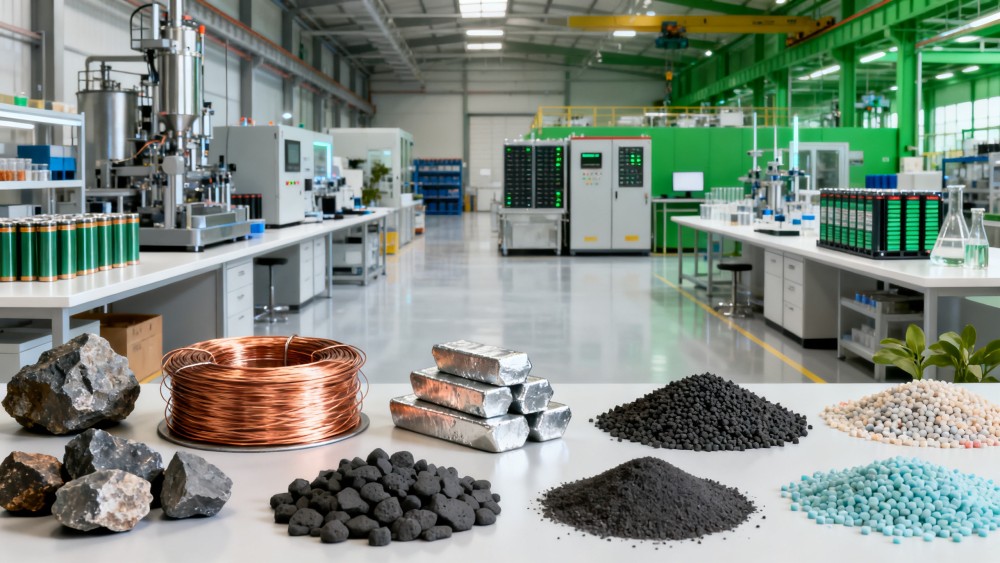
The most likely 2026 outlook is a market split between materials with improving supply depth and materials still facing structural tightness. In general, high-volume materials linked to maturing clean energy technologies may see more moderate pricing than during earlier supply shocks, while specialized, purity-sensitive, or compliance-heavy materials could remain expensive or volatile.
From a commercial perspective, readers searching for sustainable energy materials price trends for 2026 usually want a forward-looking judgment they can use for sourcing, budgeting, and risk management. Based on current market dynamics, several broad patterns stand out:
- Battery and electrification materials may remain sensitive to project delays, mining policy changes, refining bottlenecks, and regional industrial policy.
- Recycled and circular materials could see stronger demand premiums where traceability, carbon accounting, and quality consistency matter more than headline tonnage.
- Bio-based and low-carbon chemical feedstocks may stay costlier than conventional alternatives in many applications, especially where feedstock competition and certification add cost.
- Industrial decarbonization materials, including those used in energy storage, CCUS systems, and process efficiency upgrades, may show uneven pricing based on project pipelines and equipment localization.
In other words, 2026 is unlikely to deliver uniform price relief. Instead, it will reward companies that segment materials by application criticality, substitution flexibility, and compliance exposure.
Which materials are most likely to drive price risk in 2026?
Not all sustainable energy materials carry the same procurement risk. For most industrial buyers and evaluators, the highest-risk categories are those where supply concentration, processing complexity, qualification barriers, or policy dependence are strongest.
The main categories to watch include:
1. Battery metals and processed intermediates
Lithium, nickel, cobalt, graphite, manganese, and related processed compounds remain essential to energy storage and electrification. Even when raw resource availability improves, processed material pricing can still be unstable due to refining concentration, environmental restrictions, and changing cell chemistry preferences.
For technical and commercial teams, the issue is often not just commodity price direction but usable specification availability. Purity, morphology, consistency, and qualification timelines all affect actual delivered cost.
2. Copper, aluminum, and conductive materials for energy infrastructure
Grid expansion, charging networks, renewable installations, and electrified industrial systems continue to support demand for conductive metals. While these are more mature markets than some battery minerals, 2026 pricing may still be influenced by energy costs, mine supply discipline, smelting economics, and geopolitical trade measures.
3. Recycled polymers and engineering materials
In sustainable packaging, automotive, electrical, and industrial applications, recycled and bio-attributed polymers are increasingly required by customers and regulators. However, quality-certified recycled resins often do not follow the same price logic as virgin commodity plastics. They can command premiums when food-contact, engineering performance, or ESG reporting requirements limit available supply.
4. Bio-based feedstocks and renewable chemical inputs
These materials are affected by agricultural output, competing land use, energy markets, certification systems, and process scale. This means prices can be influenced by both commodity fundamentals and sustainability market structures.
5. Materials linked to carbon management and industrial storage systems
CCUS infrastructure, thermal management systems, sorbents, membranes, industrial storage materials, and specialty alloys can face price pressure due to project-specific demand spikes and limited supplier depth. In these markets, one large project wave can affect regional availability and lead times.
What factors will shape sustainable energy materials price trends in 2026?
For readers making forecasts or purchase plans, the most useful approach is to separate price drivers into five practical layers.
Supply expansion versus supply readiness
New mines, recycling plants, bio-refineries, and processing facilities may add capacity on paper, but real market impact depends on ramp-up speed, product quality, logistics, and customer qualification. In 2026, some supply additions may reduce speculative tightness without fully solving downstream availability issues.
Energy and processing costs
Many sustainable materials remain highly sensitive to electricity, natural gas, fuel, and chemical input costs. This is especially true in refining, smelting, polymer conversion, and advanced material processing. Even if raw material prices soften, conversion costs can keep final market prices elevated.
Trade compliance and industrial policy
Rules of origin, local content incentives, carbon border measures, environmental permitting, sanctions exposure, and anti-dumping actions can all affect final landed cost. For global buyers, a material that appears competitively priced at source may become less attractive once compliance burdens are included.
Technology shifts and material substitution
Price trajectories also depend on evolving technology choices. If manufacturers shift chemistry, redesign components, or optimize formulations, demand patterns can change quickly. This is especially relevant in batteries, engineered polymers, catalysts, and lightweighting materials.
Traceability and sustainability premiums
In 2026, “sustainable” is increasingly not just a marketing label but a documented procurement requirement. Auditable emissions data, recycled content proof, chain-of-custody records, and product stewardship documentation can create a price premium for compliant suppliers.
How should procurement and sourcing teams respond?
Procurement teams searching for 2026 price trends are usually trying to answer one operational question: what should we do differently now? The most effective response is not simply locking in volume early. It is building a material-specific sourcing strategy.
Key actions include:
- Segment by criticality: Separate strategic materials from replaceable inputs. Critical items need deeper supplier mapping and longer planning horizons.
- Model total cost, not unit price: Include freight, duties, certification, scrap rates, reformulation costs, and qualification risk.
- Use dual-track sourcing: Combine incumbent qualified supply with alternative regional or recycled-content options where feasible.
- Track compliance cost early: Carbon accounting, origin verification, product safety documentation, and environmental reporting can materially change the economics.
- Build trigger-based contracts: Instead of fixed assumptions, use indexed mechanisms or review triggers linked to energy, feedstock, or metal benchmarks.
For distributors and agents, there is also a strong commercial opportunity in helping customers interpret quality differences within “sustainable” categories. Market value is increasingly created by specification matching, documentation readiness, and reliable delivery rather than by low price alone.
What do technical evaluators and project managers need to verify before making material decisions?
Price matters, but many failed sustainable material transitions happen because companies optimize for headline cost while underestimating technical and operational constraints. Technical evaluators, quality managers, and project leaders should focus on the following checkpoints:
- Specification stability: Is the material consistently available at the required purity, viscosity, particle distribution, or performance grade?
- Process compatibility: Will switching to recycled, bio-based, or lower-carbon material affect throughput, corrosion, maintenance, or yield?
- Qualification cycle length: How long will validation, certification, and customer approval take?
- Safety and regulatory fit: Are there storage, handling, labeling, or emissions implications?
- Lifecycle value: Does the material reduce waste, energy use, or carbon exposure enough to justify a premium?
In many cases, the best buying decision for 2026 will not be the cheapest available sustainable input, but the one with the strongest balance of price visibility, process reliability, and compliance confidence.
Will sustainable materials become cheaper than conventional materials in 2026?
In some segments, the gap may narrow. In others, a premium is likely to remain. The answer depends on scale, policy support, technology maturity, and how “cost” is defined.
If the comparison is only invoice price, many sustainable materials may still look more expensive in 2026. But if the comparison includes carbon cost exposure, waste reduction, customer requirements, access to regulated markets, and long-term supply resilience, the business case can shift significantly.
This is especially important for enterprise decision-makers. A sustainable material premium may be justified if it:
- protects access to key customers or export markets,
- reduces future compliance liabilities,
- improves eligibility for public or industrial decarbonization programs,
- stabilizes supply through diversified sourcing, or
- supports product differentiation in high-value applications.
So the smarter 2026 question is not simply whether sustainable energy materials will be cheaper, but whether they will create lower strategic cost over the full planning horizon.
How should businesses build a practical 2026 price outlook?
A useful internal forecast should combine market intelligence with application-specific assumptions. Instead of one top-line forecast for all sustainable energy materials, companies should create a tiered outlook:
- Base case: expected demand, normal logistics, and no major policy shock.
- Tight supply case: delays in mining, processing, certification, or regional trade flow.
- Policy acceleration case: stronger-than-expected adoption due to subsidies, standards, or customer commitments.
For each material group, teams should assign likely effects on:
- price range,
- lead time,
- available supplier pool,
- specification risk,
- inventory strategy, and
- project execution timing.
This kind of structured view is far more useful than relying on generic “green market growth” narratives.
Conclusion: what is the smartest way to read sustainable energy materials price trends for 2026?
The biggest takeaway is that sustainable energy materials price trends for 2026 should be understood as a set of diverging markets, not a single trend line. Some materials may benefit from capacity growth and more efficient processing. Others will remain exposed to bottlenecks in refining, compliance, traceability, and project-led demand.
For buyers, engineers, project leaders, and executives, the right response is disciplined material segmentation, realistic total-cost analysis, stronger supplier qualification, and closer monitoring of policy and technology shifts. Companies that treat 2026 as a year for smarter sourcing and better specification governance—not just price chasing—will be better positioned to manage volatility and capture value from the global energy transition.
In short: expect selective easing, persistent premiums in critical niches, and rising importance of compliance-backed supply. The winners in 2026 will be the organizations that can connect price signals with technical fit, trade risk, and long-term industrial strategy.
Related News
- Sustainable energy materials price trends for 2026Apr 28, 2026Sustainable energy materials price trends for 2026: explore refining equipment, circular economy polymers, and low-carbon material utilization shaping the carbon neutral industry outlook.
- Why Non-Ferrous Metals Prices Stay Volatile in 2026Apr 28, 2026Why non-ferrous metals prices stay volatile in 2026: see how energy transition, carbon neutrality, heavy industry, carbon capture and injection molding reshape sourcing risk and smarter decisions.
- What shifts non-ferrous metals prices faster than demandApr 28, 2026Non-ferrous metals prices often move before demand shifts. Learn how non-ferrous alloys, mining technology, carbon neutrality, energy transition, and heavy industry risks reshape markets fast.
- Tracking Lumber Price Spikes: Building Materials TrendsApr 28, 2026Navigate lumber price spikes with our building materials market forecast. Stay ahead of building materials market price trends and industry news for construction sector to optimize procurement.
Related News
- 00
0000-00
Agrochemical regulations: common export compliance mistakes - 00
0000-00
Circular economy polymers: how to avoid quality issues - 00
0000-00
Circular economy polymers: virgin or recycled blends? - 00
0000-00
Bio-based materials still face a performance trust gap - 00
0000-00
Industrial decarbonization targets slip when baselines are weak
Weekly Insights
Stay ahead with our curated technology reports delivered every Monday.