




How agrochemical regulations affect market entry




Agrochemical regulations can determine whether a product reaches the market quickly or stalls in costly delays. For companies navigating the global energy matrix, understanding agrochemical regulations alongside chemical engineering standards is essential for market entry, risk control, and long-term competitiveness. This article examines how compliance frameworks shape approval pathways, sourcing decisions, and low-carbon material utilization across a carbon neutral industry.
For information researchers, technical evaluators, procurement teams, distributors, safety managers, and business decision-makers, the issue is not only whether an agrochemical product is effective. The practical question is whether it can be registered, transported, labeled, stored, audited, and sold across multiple jurisdictions without triggering avoidable cost, recall risk, or customs disruption.
In real market entry projects, regulation affects more than dossier filing. It influences feedstock sourcing, impurity limits, packaging design, batch traceability, emissions controls, warehouse segregation, and post-market stewardship. In sectors connected to heavy industry raw materials and chemical engineering, those regulatory effects can reshape lead times by 3–12 months and materially change the total landed cost of a product portfolio.
Why agrochemical regulations are a decisive market entry barrier
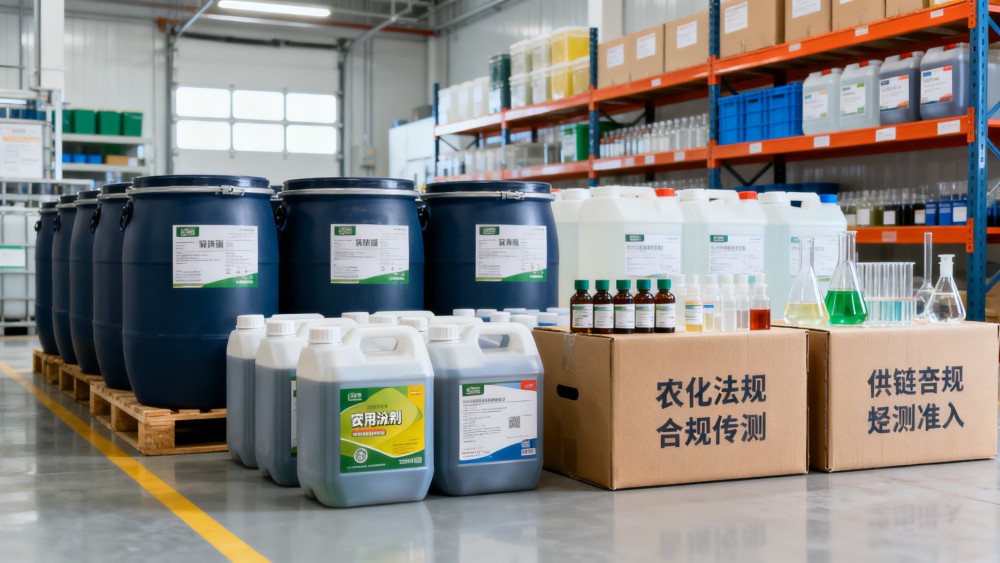
Agrochemical regulations are a gatekeeping system that determines whether a formulation, active ingredient, or intermediate can lawfully enter a target market. Requirements often cover toxicology, ecotoxicology, residue behavior, product chemistry, efficacy, packaging, and worker safety. Even when two countries accept similar active ingredients, their data formats, review logic, and label claims may differ enough to require separate compliance workstreams.
For B2B operators, the first challenge is timing. A technically complete product may still need 6–24 months for registration review, depending on the market category, local representative rules, and whether the active substance is already approved. A delay of even 8–12 weeks can affect seasonal demand windows, distributor commitments, and upstream procurement plans for solvents, surfactants, and packaging components.
The second challenge is cost structure. Regulatory entry is not limited to filing fees. Companies must budget for data gap analysis, dossier adaptation, translation, laboratory testing, stability studies, label revision, and possible reformulation. When impurity thresholds or co-formulant restrictions are tighter than expected, manufacturing plans may need to change at batch scale, not just on paper.
This is why agrochemical regulations matter to a broader industrial audience. GEMM’s perspective is especially relevant where chemical compliance intersects with raw material economics, trade policy, and supply chain resilience. If a feedstock source changes because of trade controls or carbon constraints, the regulatory profile of the final agrochemical product may also change, creating a second layer of market entry risk.
Core regulatory dimensions that influence entry approval
A practical review normally starts with 5 dimensions: active substance status, formulation composition, manufacturing consistency, market-specific labeling, and downstream stewardship obligations. These elements are interconnected. A compliant formula with non-compliant packaging language can still be blocked from sale, while a valid label cannot compensate for incomplete impurity documentation.
- Active ingredient approval status and permitted use pattern in the target country.
- Formulation review, including inert ingredients, solvents, surfactants, and preservative restrictions.
- Manufacturing process control, including batch-to-batch consistency and specification tolerances.
- Hazard communication rules such as label wording, signal words, SDS alignment, and transport classification.
- Post-registration duties including adverse effect reporting, change notification, and renewal timelines.
The table below summarizes how typical regulatory dimensions translate into commercial barriers during agrochemical market entry.
The key takeaway is that agrochemical regulations should be treated as a market design issue, not a final filing task. Companies that map these four dimensions early usually make better decisions on formulation architecture, supplier selection, and launch sequencing.
How regulations shape sourcing, formulation, and manufacturing decisions
In agrochemicals, market entry begins far upstream. Once a target market defines impurity limits, hazardous substance thresholds, or restricted adjuvants, procurement teams must verify whether their raw material basket can support those conditions. A solvent that is acceptable in one region may face use limitations in another, and a technical-grade intermediate sourced from a low-cost supplier may fail specification because of trace impurities above a regulator’s tolerance band.
This is where raw material intelligence becomes commercially valuable. Heavy industry and chemical engineering supply chains often operate on thin timing margins. A change in one input, such as a surfactant, emulsifier, or packaging polymer, can alter stability performance, storage classification, and transport documentation. In practice, that means regulatory review, quality control, and purchasing cannot work as separate functions if the launch target is within the next 2–3 quarters.
Manufacturing consistency is another overlooked factor. Authorities frequently expect defined specification ranges for active content, pH, density, particle size, moisture, and relevant impurities. If process variability is too wide, a dossier may be questioned even when average values look acceptable. For industrial plants, that often requires tighter process control windows, stronger incoming inspection, and documented deviation management across at least 3 consecutive production batches.
Carbon and sustainability pressures are also changing compliance choices. As companies push for lower-carbon feedstocks, recycled packaging, or more efficient energy use, they must confirm that these adjustments do not create new regulatory gaps. A bio-based solvent or recycled polymer drum may support sustainability goals, but it still needs to align with chemical stability, compatibility, contamination control, and transport safety expectations.
Operational checkpoints before locking the formula
Before finalizing a product for a new country, cross-functional teams should run a structured review covering technical, regulatory, and commercial readiness. Doing this 90–180 days before dossier submission can reduce rework and avoid unnecessary testing cycles.
- Confirm whether the active ingredient and each co-formulant are acceptable in the target market.
- Check if impurity specifications from current suppliers match expected registration data ranges.
- Review packaging materials for compatibility, migration risk, and labeling space requirements.
- Validate manufacturing reproducibility through at least 3 commercial-scale or representative batches.
- Align procurement contracts with change-control clauses so supplier shifts do not break compliance.
Typical sourcing and formulation trade-offs
The table below shows how regulatory requirements often force trade-offs between cost, speed, and compliance certainty.
The commercial lesson is straightforward: a low purchase price can become expensive if it causes reformulation, repeat testing, or delayed approval. For procurement and project teams, the better metric is compliance-adjusted total cost over the first 12–24 months of market entry.
Approval pathways, trade compliance, and cross-border launch planning
Agrochemical regulations vary by jurisdiction, but the approval pathway usually follows a staged pattern. Companies first assess whether the active substance is recognized, then determine whether a full dossier, a reference product route, or a data-bridging strategy is possible. Each route has different implications for cost, speed, and required local support. In cross-border operations, trade compliance rules add a second layer involving customs codes, restricted substance controls, transport class, and document consistency.
For importers and distributors, paperwork discipline is critical. Customs declarations, SDS versions, label text, and shipping names must align. A mismatch between transport documentation and market authorization details can create detention risk, even if the product is technically registrable. In seasonal agricultural markets, a hold of 10–20 days can mean missing the selling window entirely.
Decision-makers should also recognize the difference between legal market access and practical commercial entry. A product may be approved but still uncompetitive if local storage rules require expensive warehouse segregation, temperature control, or fire protection upgrades. Likewise, distributors may hesitate if claim language is narrow or if the renewal cycle creates uncertainty within a 2–3 year channel planning horizon.
This is why market entry planning must connect regulatory review with trade strategy. Companies dealing with oil-derived inputs, polymers, packaging materials, and specialty chemical intermediates need visibility into how international supply changes may affect registration continuity. A supplier switch made for tariff, freight, or carbon reasons can trigger a reportable change in some markets.
A practical 4-stage market entry sequence
A structured launch model helps reduce surprises and supports internal coordination across regulatory, technical, commercial, and logistics teams.
- Screening stage, usually 2–4 weeks: map active substance status, restricted materials, dossier route, and likely data gaps.
- Preparation stage, often 1–3 months: align suppliers, generate product chemistry data, draft labels, and confirm local representation needs.
- Submission and review stage, often 6–18 months: manage authority questions, testing updates, and document harmonization.
- Launch readiness stage, usually 4–8 weeks: finalize packaging, train channel partners, align warehouse controls, and monitor first shipments.
Common launch risks by project stage
The following matrix helps project managers and business evaluators identify where delays typically occur.
Cross-border success often depends less on one perfect dossier and more on disciplined coordination across documents, suppliers, and shipment execution. That is especially true when agrochemical market entry depends on global chemical and material supply chains.
What procurement, quality, and safety teams should evaluate before purchase or distribution
For buyers, distributors, and quality managers, agrochemical regulations should be converted into measurable screening criteria. Instead of asking only whether a supplier can provide a certificate, teams should verify whether the supplier can support registration continuity, batch consistency, and post-market changes. A product that passes initial review but lacks robust change notification can become a recurring operational risk within 6–12 months.
Quality control teams should pay close attention to specification discipline. Key items often include active content range, impurity profile, moisture or volatile content, physical stability, container compatibility, and shelf-life support. For many formulations, shelf-life evidence across 12–24 months under defined storage conditions becomes commercially important because distributors need confidence in inventory turnover and regional warehousing plans.
Safety managers need a separate review lens. They should confirm transport classification, storage segregation needs, PPE recommendations, spill response measures, and waste handling language. In facilities handling multiple chemical categories, even one agrochemical product with specific fire, reactivity, or ventilation controls can affect warehouse layout and standard operating procedures.
For business evaluators, the right approach is to combine technical compliance with commercial resilience. That means comparing not just price per ton or per liter, but approval stability, document accuracy, lead-time predictability, and the cost of a compliance-triggered interruption. In many B2B procurement settings, the more reliable supplier wins because avoiding one failed shipment can offset a higher unit price.
A six-point procurement checklist
- Request current technical specifications with impurity and tolerance data, not only marketing sheets.
- Check whether the supplier can provide batch traceability for at least 3 recent production lots.
- Verify change-control procedures for raw materials, process parameters, packaging, and manufacturing site.
- Review shelf-life support, storage limits, and transport documentation consistency.
- Assess whether local labeling and SDS updates can be delivered within 5–15 working days when rules change.
- Confirm whether the supplier has a practical response plan for recall, complaint handling, and compliance queries.
How different buyer roles evaluate the same agrochemical product
Different stakeholders prioritize different criteria. A structured comparison avoids internal misalignment during vendor selection.
When these four perspectives are aligned early, companies are far less likely to approve a low-cost option that later causes registration amendments, warehouse restrictions, or customer complaints.
Implementation priorities, common mistakes, and strategic next steps
The most common mistake in agrochemical market entry is treating regulation as a downstream administrative task. In reality, compliance affects product architecture, supplier qualification, contract language, launch timing, and sustainability planning. Companies that integrate these factors from the start generally reduce rework, protect margin, and improve distributor confidence.
A second mistake is over-relying on one market’s precedent. Similar products can face different review expectations across jurisdictions, especially around impurities, label claims, environmental fate, or packaging disposal instructions. This is why cross-functional governance matters. A project owner should be appointed with authority to align regulatory, technical, procurement, and logistics tasks on a weekly or biweekly basis during the critical submission phase.
The third mistake is ignoring change control after approval. Market entry is not complete at first sale. Supplier shifts, packaging updates, plant transfers, and sustainability-driven material changes may all require review. In a carbon neutral industry transition, companies increasingly explore lower-emission inputs and circular packaging models, but each change must be tested against product performance and market authorization continuity.
From a strategic standpoint, the strongest companies treat agrochemical regulations as a source of competitive discipline. Better compliance intelligence can improve portfolio selection, reduce stranded development costs, and support more resilient sourcing decisions in volatile commodity environments. That is particularly important for organizations operating across chemical raw materials, polymers, energy-linked inputs, and trade-sensitive supply networks.
Frequently asked questions from market entry teams
How early should regulatory assessment begin?
A practical window is 6–12 months before the intended submission date, or earlier if the active substance, formulation type, or sourcing model is new to the target market. That allows enough time for gap analysis, supplier review, and possible reformulation without disrupting seasonal sales planning.
What usually causes the biggest delay?
The largest delays often come from incomplete dossier preparation, supplier specification mismatch, and slow responses to authority questions. In operational terms, a missing impurity explanation or inconsistent label language can be more damaging than a higher filing fee because it interrupts the full approval timeline.
Can sustainability upgrades create compliance problems?
Yes. Lower-carbon solvents, recycled packaging, and alternate energy-efficient production methods may support ESG goals, but they still need review for stability, contamination risk, hazard communication, and registration impact. Sustainability changes should be assessed through the same change-control system used for formulation or supplier changes.
What should distributors ask suppliers before launch?
Distributors should ask about approval scope, label restrictions, shelf-life, storage conditions, transport class, complaint handling process, and update speed when regulations change. A useful benchmark is whether the supplier can issue corrected compliance documents within 5–10 working days when needed.
Agrochemical regulations affect market entry at every stage, from raw material selection and formulation design to customs execution and post-market continuity. For companies working across chemical engineering, commodity-linked supply chains, and low-carbon transformation, compliance is not only a legal obligation but a strategic operating variable.
GEMM supports this decision-making environment by connecting trade compliance insight with raw material intelligence, technology trend analysis, and supply chain visibility. If your team is evaluating agrochemical entry risks, planning a sourcing shift, or building a more resilient compliance workflow, now is the right time to refine the roadmap. Contact us to discuss your application, request a tailored market entry framework, or learn more about practical solutions for compliant growth.
Related News
- Non-ferrous metals supply risk is no longer just a mining issueApr 28, 2026Non-ferrous metals and non-ferrous alloys supply risk now spans mining technology, carbon neutrality, energy transition, carbon capture, and heavy industry resilience—discover what smart buyers must monitor.
- How agrochemical regulations affect market entryApr 28, 2026Agrochemical regulations shape market entry, sourcing, and compliance costs. Learn how chemical engineering standards and low-carbon material utilization drive faster, safer global launches.
- Non-Ferrous Metals Supply Risk Is Shifting by RegionApr 28, 2026Non-ferrous metals supply risk is shifting by region, impacting injection molding, ferrous metallurgy, recycled plastics, carbon capture, and the energy transition. Explore smarter sourcing now.
Related News
- 00
0000-00
Agrochemical regulations: common export compliance mistakes - 00
0000-00
Circular economy polymers: how to avoid quality issues - 00
0000-00
Circular economy polymers: virgin or recycled blends? - 00
0000-00
Bio-based materials still face a performance trust gap - 00
0000-00
Industrial decarbonization targets slip when baselines are weak
Weekly Insights
Stay ahead with our curated technology reports delivered every Monday.